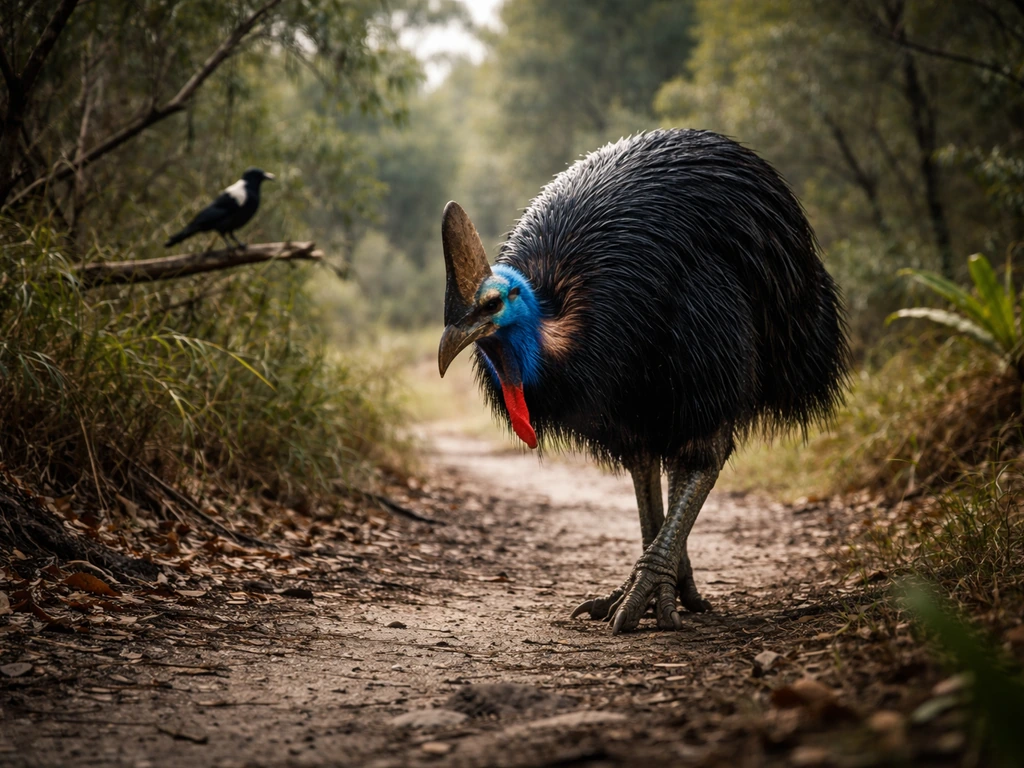
The cassowary is the most dangerous bird in Australia by any serious measure. It is a large, flightless species capable of killing a person with a single kick, and it holds the distinction of being one of only two bird species worldwide confirmed to have caused human deaths by direct physical attack. That said, the magpie is the bird that actually injures the most Australians each year, mostly through swooping incidents during spring nesting season. So the honest answer depends on what kind of danger you mean: raw severity, or sheer frequency. If you are asking specifically about the biggest predatory bird, the answer depends on which region and hunting style you mean. For most Australians going about daily life, the magpie is the more likely threat. For hikers and wildlife workers in far north Queensland rainforests, the cassowary is the one to take seriously. Cassowaries are also notably tall, so it helps to know how tall one can be before you’re out in cassowary territory how tall a cassowary can be.
What Is the Most Dangerous Bird in Australia? Risks and Safety

What does 'most dangerous' actually mean here?
The word 'dangerous' covers a lot of ground, and who's asking changes the answer considerably. There are at least three distinct risk profiles worth separating out.
- Severity of individual injury: how badly can this bird hurt or kill a person in a single encounter?
- Frequency of incidents: how many people actually get hurt each year across Australia?
- Context-specific risk: what is your real chance of a serious encounter based on where you are and what you're doing?
A family in suburban Sydney has essentially zero chance of meeting a cassowary. A birdwatcher in the Daintree Rainforest has a real, non-trivial chance. A school kid on a bike in Canberra during September is far more likely to be swooped by a magpie than threatened by anything else. So the practical framing is: the cassowary wins for worst possible outcome, the magpie wins for most common actual harm, and for anyone working with livestock or pets in northern Australia, there are a few other species worth knowing about too.
Australia's most dangerous birds, ranked by scenario
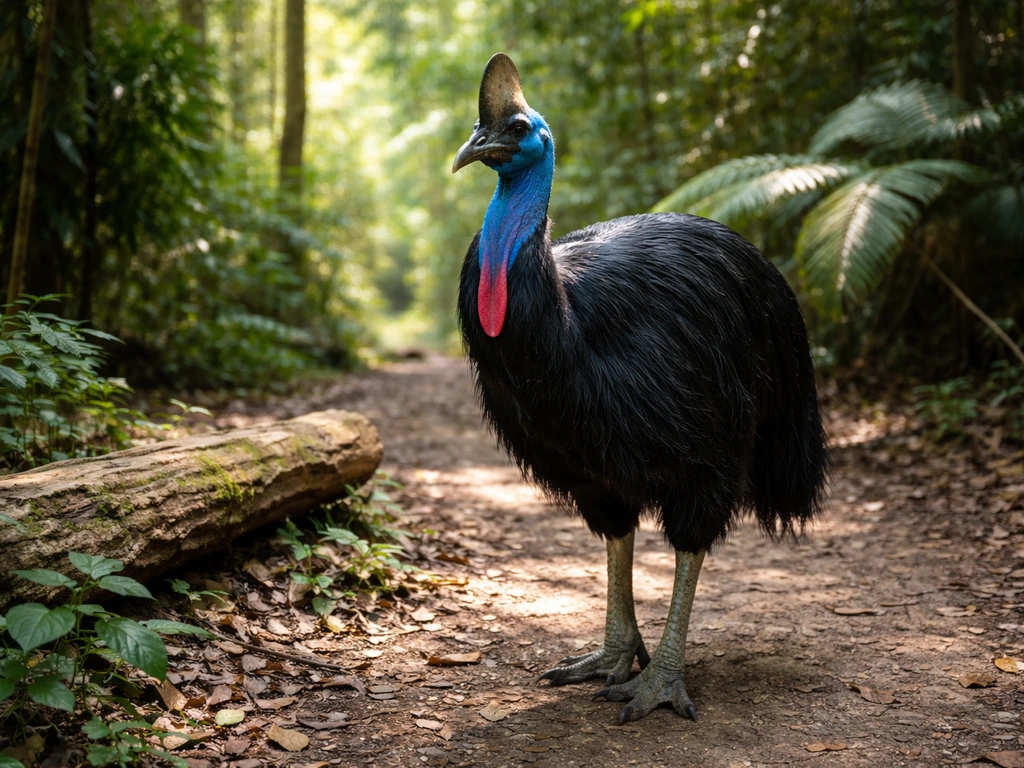
Cassowary: highest injury severity
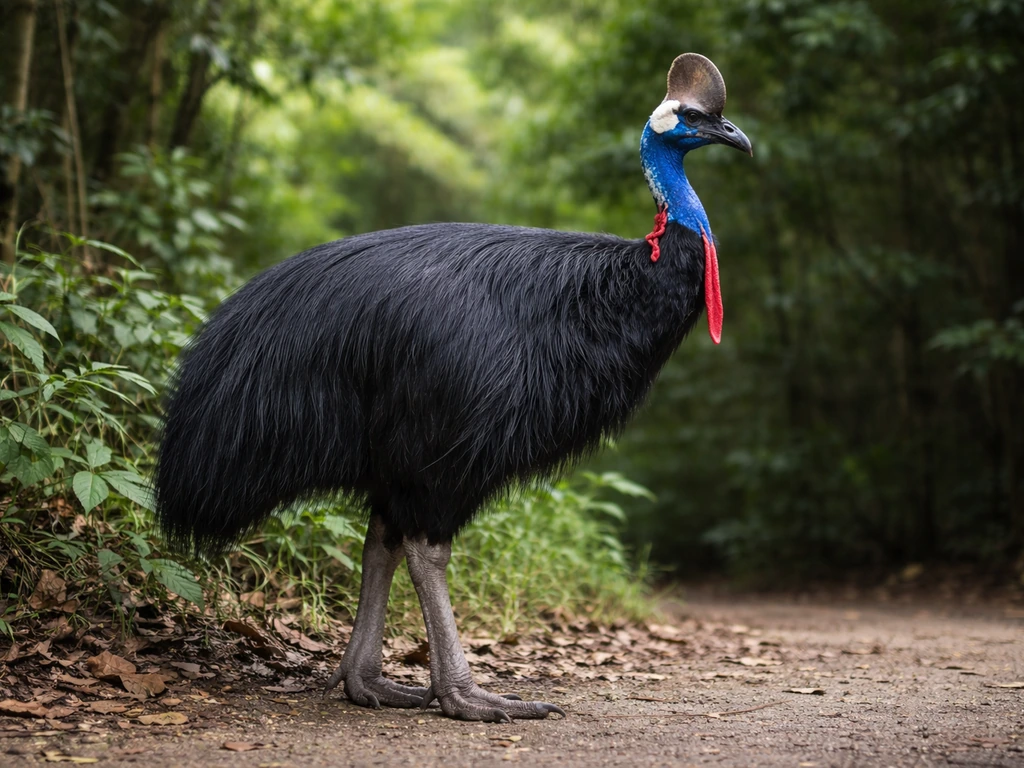
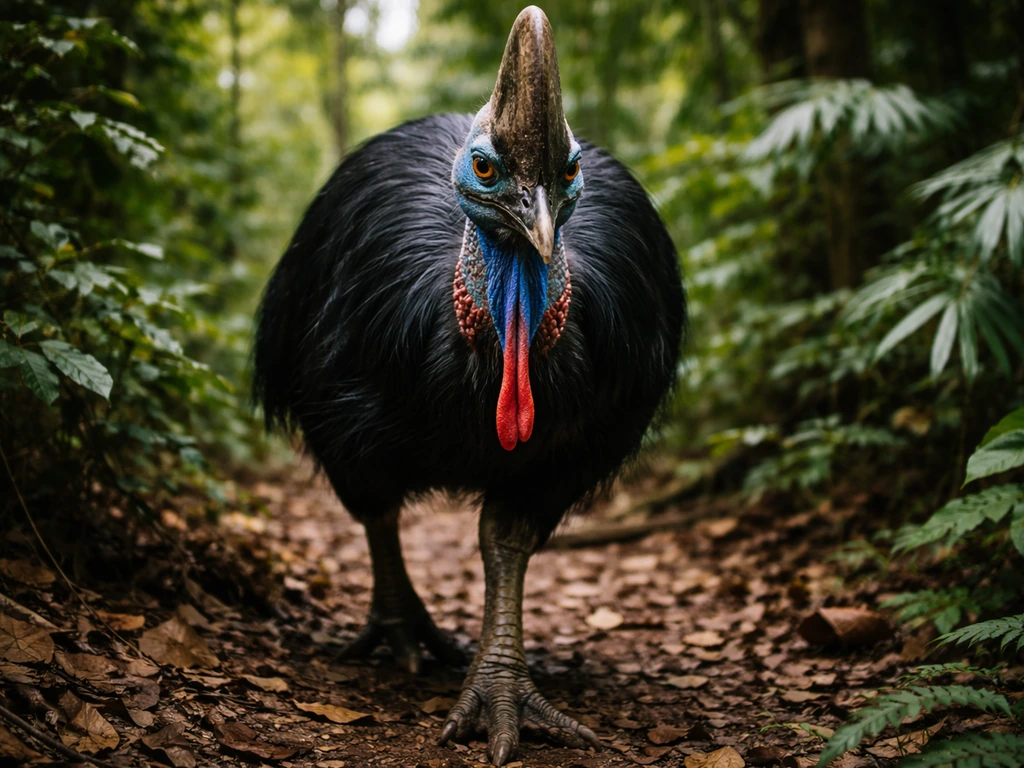
The southern cassowary (Casuarius casuarius johnsonii) is a genuinely formidable animal. Adults stand up to 1.8 metres tall and can weigh over 70 kilograms. The inner toe on each foot carries a dagger-like claw up to 12 centimetres long. A peer-reviewed study published in the Journal of Zoology, drawing on 221 cassowary attacks recorded in Queensland, found 150 attacks against humans. Seven of those resulted in serious injuries including puncture wounds, lacerations, and broken bones. One attack was fatal. For context, cassowaries and ostriches are the only birds on record confirmed to have killed people through direct physical assault. That is a short, sobering list.
Critically, that same study found that 75% of human attacks involved cassowaries that had previously been fed by people. Feeding a cassowary does not make it friendlier. It conditions the bird to approach humans expecting food, and when a human fails to produce it, aggression follows. Male cassowaries teaching chicks to forage can also become dangerously redirected when humans start providing handouts, drawing the chicks toward people instead of natural food sources.
Magpie: highest frequency of actual injuries
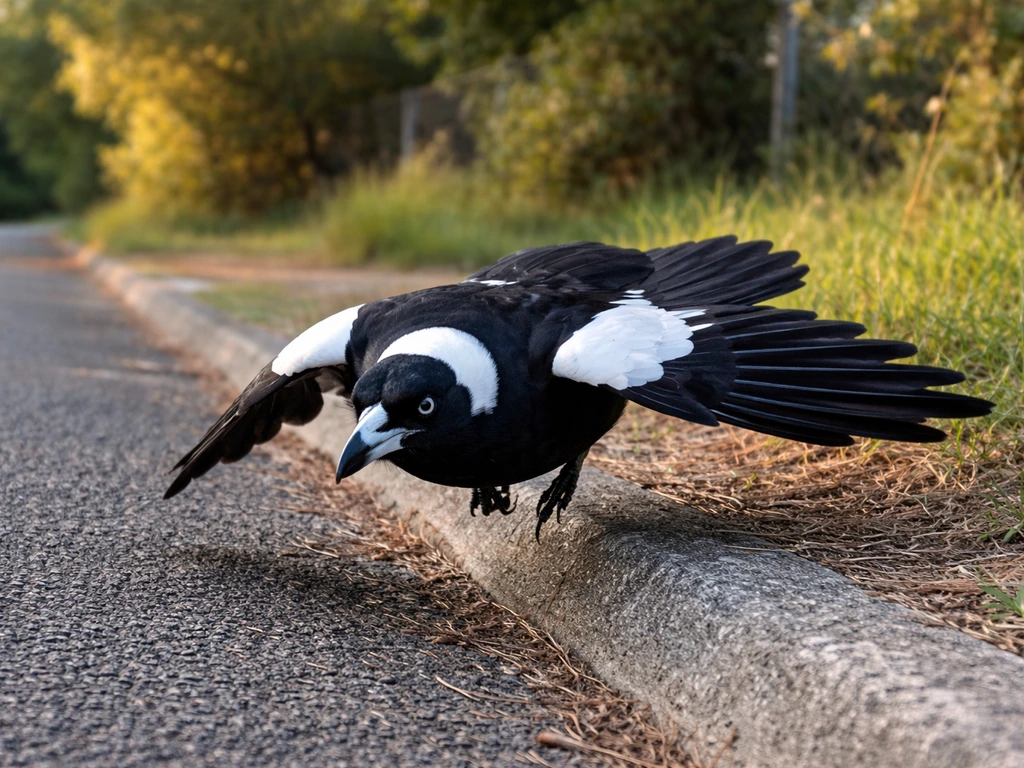
The Australian magpie swoops with precision and persistence, and it remembers faces across multiple seasons. During spring nesting (typically August through November), a breeding male will defend a territory aggressively against perceived threats, including cyclists, joggers, and anyone who gets within a certain radius of the nest. Analysis of Australian hospital emergency data from 1986 to 1994 recorded 59 cases where a magpie was directly coded as the cause of an injury. AIHW analysis of Australian hospital emergency data reported 59 cases of emergency department presentations where a magpie was coded as a factor in causing an injury 59 cases where a magpie was directly coded as the cause of an injury. That figure only counts emergency department presentations, so the real number of incidents is considerably higher. Injuries range from direct pecks to the face and scalp to falls from bicycles and trips caused by people flinching mid-stride.
Other birds worth knowing about
Wedge-tailed eagles are large enough to knock a small child or pet off balance and have been documented attacking lambs and small animals. Plovers (masked lapwings) are aggressive nest defenders that swoop and can carry a small spur on the wing. Emus are powerful enough to kick hard and can be unpredictable when cornered or when people get between a parent and chicks. None of these reach the injury threshold of a cassowary, but all are worth respecting.
| Bird | Worst possible injury | How often people are hurt | Who's at risk |
|---|---|---|---|
| Southern cassowary | Puncture wounds, lacerations, broken bones, death (one recorded fatality) | Rare: 150 human attacks recorded in Queensland research database | Hikers, wildlife workers, and anyone in far north Queensland rainforest |
| Australian magpie | Lacerations to face/scalp, eye injuries, fall-related fractures | Common: dozens of emergency presentations annually across Australia | Cyclists, joggers, schoolchildren during spring nesting season |
| Emu | Kicks causing bruising, lacerations | Uncommon | Rural workers, wildlife parks, anyone who corners one |
| Wedge-tailed eagle | Talon lacerations, knockdown of small children or pets | Rare | People in open country with small children or small animals |
How attacks actually happen and what makes them serious
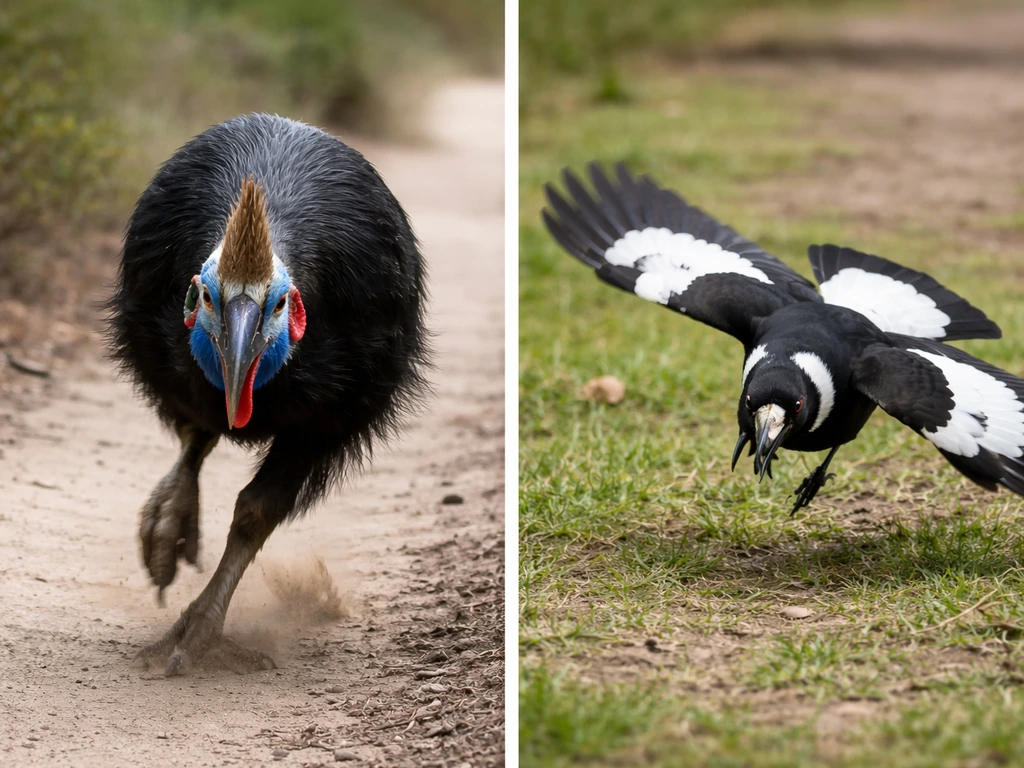
With cassowaries, the 71% of attacks that involved chasing or charging are telling. The bird does not just lash out randomly. It charges, and if you cannot put a tree or solid barrier between you and it, a kick is coming. Fifteen percent of recorded attacks involved kicking directly. The claws do the damage, and because the strike is delivered from a powerful leg, the wounds are deep. That is exactly the category of injury (deep puncture from an animal) that raises tetanus risk and almost always needs medical assessment. Healthdirect notes that puncture wounds are deep wounds caused by sharp objects and can include animal claw injuries, and advises on appropriate care and assessment deep puncture from an animal.
With magpies, the attack pattern is a fast, low swoop from behind, often repeated in quick succession. The primary direct injuries are to the back of the head, the ears, and the eyes. Eye injuries from beak contact are the most medically serious outcome. The indirect injuries (falls, bicycle accidents) are actually responsible for a significant share of the hospital presentations. Arm-waving or erratic behaviour in response to a swoop can make things worse, as the magpie reads it as an escalation and often attacks more aggressively.
What to do if you're attacked or threatened
During a cassowary encounter
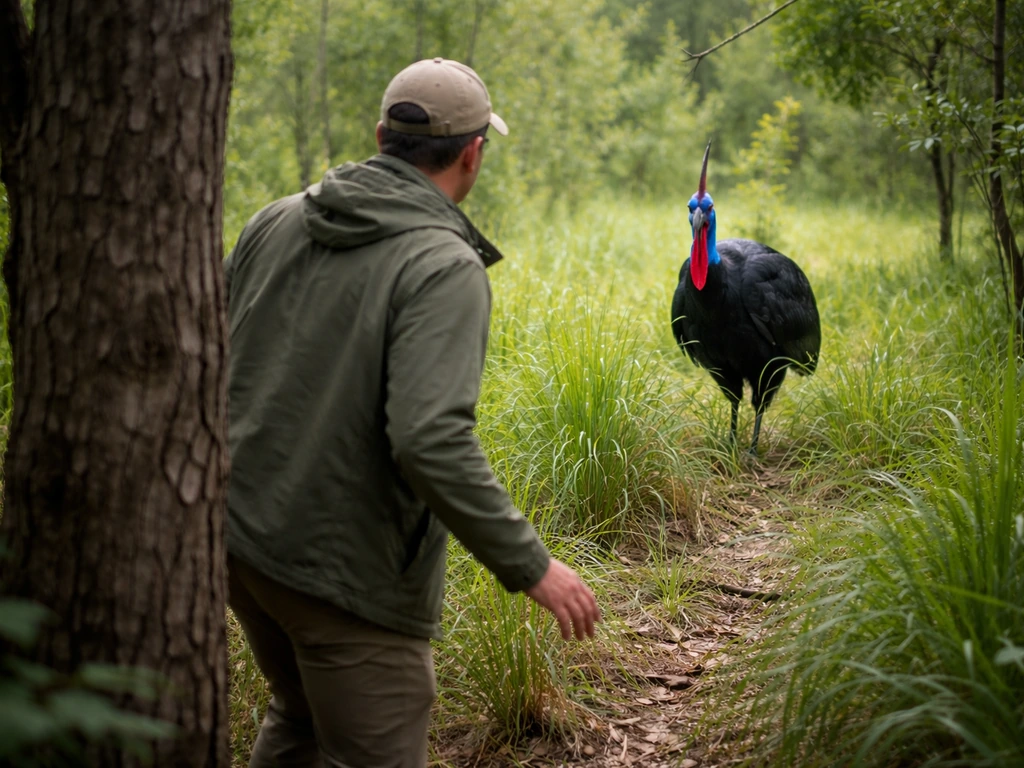
- Stay calm and do not run. Running triggers a chase response in large birds.
- Back away slowly while keeping the cassowary in your line of sight.
- Put a tree, a large rock, or any solid object between you and the bird.
- Do not crouch down or make yourself smaller; stay upright.
- If knocked down, curl into a ball and protect your head and vital organs.
- Do not attempt to pick up, chase, or corner the bird.
- If you are in Queensland, report the incident or a sick/injured cassowary via the Queensland Government specialist line: 1300 130 372.
During a magpie swoop
- Walk, do not run, out of the bird's territory as quickly and calmly as possible.
- Protect your head with a broad-brimmed hat, sunglasses, or an umbrella.
- Cyclists should dismount and walk through the swoop zone rather than speeding up.
- Do not wave your arms or act erratically; this escalates the bird's response.
- If you are escorting children, cover their heads and move them out of the area without rushing.
- Avoid approaching the nest. Once you are clear of the territory threshold, the swooping stops.
First aid after a bird attack
For any wound where the skin is broken, clean the area with water and mild soap immediately. Apply pressure if there is bleeding. Deep puncture wounds from cassowary claws need medical assessment without delay: they are tetanus-prone, and Healthdirect guidance recommends seeking care when the wound is deep or dirty and your last tetanus booster was more than five years ago. The Australian Red Cross first aid guidance for animal injuries is clear that puncture wounds or any broken-skin injuries from animals warrant medical advice and possible treatment. For magpie injuries involving the eye, even minor ones, get medical attention promptly. Eye injuries from bird beaks can introduce infection or cause damage that is not immediately obvious.
Where and when encounters are most likely
Cassowary hotspots and timing
The southern cassowary's Australian range is almost entirely limited to the wet tropics of far north Queensland: the Daintree, Mission Beach, Cape Tribulation, and surrounding rainforest corridors. Population estimates place around 4,000 birds remaining in the wild in Australia. Encounters are most likely when you move through dense rainforest on foot or along roads that cut through cassowary habitat. Road strikes are a major cause of cassowary death, so slow driving in cassowary territory is both a safety and conservation priority. Fruit-bearing season (roughly March through June, when cassowaries are actively foraging for fallen fruit) tends to bring birds closer to trails and roadsides. Male cassowaries are also more defensive when they have chicks nearby, typically between June and October.
Magpie swooping season and locations
Magpie swooping season runs from roughly August through November across most of southern and eastern Australia, peaking in September and October. Only a small proportion of male magpies actually swoop people, but the ones that do are highly consistent, targeting the same routes and individuals across multiple seasons. Parks, bike paths, school routes, and suburban areas with large established trees are the most common swoop zones. The bird is defending a radius around its nest, so identifying the nest location (usually in a tall tree) and routing around it by 50 to 100 metres is usually enough to avoid repeat encounters.
Practical avoidance checklist
- In cassowary country: stay on marked trails, drive slowly on rainforest roads, never feed cassowaries, and keep children and dogs close.
- In magpie season: wear a hat and sunglasses on known swoop routes, add cable-tie 'spikes' to a bike helmet, and take alternative routes around active nesting trees.
- Everywhere: do not approach any bird that is showing signs of distress or defensive behaviour, and never get between a parent bird and its chicks.
- If you see a sick, injured, or orphaned cassowary, do not attempt to handle it. Call the Queensland wildlife line on 1300 130 372.
Conservation context: why protecting these birds matters even when they're dangerous
The southern cassowary is listed as Endangered under Australia's Environment Protection and Biodiversity Conservation Act. With roughly 4,000 individuals remaining in the wild, it is one of Australia's most at-risk large animals. The threats driving that decline are habitat clearing, road strikes, dog attacks, and the very human feeding behaviour that also makes cassowaries more likely to attack people. In other words, the practices that put people at risk (feeding, approaching, habituating birds to humans) are the same practices pushing the species closer to extinction. The Australian Government's recovery plan for the species prioritises maintaining habitat corridors, reducing road mortality, and preventing human habituation.
Magpies, by contrast, are thriving. Their range has actually expanded with suburban development, and their conservation status is of no concern. But they are a protected native species under Australian law, meaning it is illegal to harm or kill them even during swooping season. The practical and legal response to a problem magpie is to avoid the territory during nesting, use protective measures, and report persistent high-risk swooping to local councils who have management options including (in rare cases) approved relocation.
The cassowary is also a keystone species for the rainforest ecosystems it inhabits. It is one of the only animals large enough to disperse the seeds of around 100 rainforest plant species, some of which have fruits too large for any other creature to swallow and pass intact. Losing cassowaries would change the structure of the Daintree and Cape Tribulation rainforests over generations. That ecological role gives the 'dangerous bird' story a more layered meaning: the animal that could seriously injure you on a rainforest track is also one of the primary reasons that track is surrounded by functioning rainforest at all.
If the cassowary's size and physical power make you curious about how it compares to other large dangerous birds globally, the species sits in genuinely rarefied company. The question of why the cassowary specifically is so dangerous comes down to a combination of size, claw morphology, and temperament that is worth exploring in more depth on its own terms. And if you are wondering how tall a cassowary actually stands in person, the answer is more striking than most people expect.
FAQ
If I see a cassowary near a road or trail, what should I do immediately?
Back away slowly and put solid distance between you and the bird (stay behind a barrier, vehicle, or thick vegetation line). Do not approach for photos, do not try to “shoo” it, and never attempt to feed or entice it with fruit. If it is on or near a roadway, keep your vehicle moving slowly and give it time to clear the area.
Is it safe to run if a magpie swoops me?
Running can increase the chance of falls, especially if you flinch, look down, or swerve. The safer approach is to stay calm, keep moving steadily, and avoid sudden jerky arm movements that read as escalation. If you are biking, dismount early in high-risk routes during peak season and walk past the nest area.
Do I need medical care for a magpie injury even if it looks minor?
Yes, especially for any eye or face wound, even if there is only a small peck or scratch. Eye injuries can cause delayed problems like infection or internal damage that may not be obvious right away. Seek prompt medical assessment, and if you are unsure, err on the side of being seen the same day.
What tetanus timing matters for bird claw puncture wounds?
Seek medical assessment without delay for deep or puncture-type wounds from cassowaries, and treat tetanus status as urgent if your last booster was more than five years ago. Punctures are hard to fully clean and commonly need evaluation for tetanus prophylaxis and infection risk.
What should I do if I cannot tell whether a wound is a puncture or a scrape?
Assume higher risk if you suspect a puncture (cassowary-style claw injuries can be small at the surface but deep underneath). Clean with water and mild soap, control bleeding with gentle pressure, and get medical advice when skin is broken, particularly if you have any deep pain, swelling, or restricted movement.
Why is feeding cassowaries so dangerous, even if the bird seems calm?
Handouts teach cassowaries to approach humans for food, which changes their normal foraging behavior. When a person fails to produce food, the bird can switch to chasing or charging, and males with chicks can become more protective and more likely to redirect toward people.
How can I tell if a magpie is likely to swoop on my route?
Look for repeated behavior across seasons, such as the same tree-line or path consistently triggering swoops by the same bird. If you have previously been swooped at a specific spot, treat that exact route segment as high risk during August to November, especially in September and October.
Does wearing a helmet fully prevent magpie injuries?
A helmet can reduce the severity of head impacts, but it does not eliminate risk. Magpies may still injure ears and eyes, and you can still suffer indirect injuries from sudden reactions, falling off a bike, or tripping. Use helmets plus route planning around known nest areas.
What’s the best way to avoid cassowaries while hiking in far north Queensland rainforest?
Stay alert on footpaths, avoid moving close to birds you notice near trails, and use daylight hours when visibility is better. When possible, follow established routes and do not camp or leave food out near habitat. If fruit is in season and cassowaries are foraging, keep extra distance from roadside edges and track margins.
If a cassowary attacks or charges, is there a protective barrier that works?
Yes, distance plus solid barriers are key. Put something between you and the bird, such as a vehicle, fence, or thick solid obstacle, rather than trying to physically block it with arms or improvised items. The goal is to prevent a kick from reaching you.
Are there other bird threats in northern Australia besides cassowaries?
Yes. The article notes multiple species that can seriously injure people or animals depending on the context, such as wedge-tailed eagles for small animals and emus when cornered or when protecting chicks. In practice, treat large ground birds and aggressive nest defenders with extra caution, especially near known breeding areas.
What should I report, and to whom, if magpies keep attacking the same spot?
Report persistent, high-risk swooping to local councils or relevant wildlife authorities. Provide the location (park, street, or specific route segment), the dates or months it occurs, and what triggers it (for example, cyclists or joggers near a particular tree). Management options may include targeted safety measures, and relocation is rare.