Darwin studied finches. Specifically, he collected birds from the Galápagos Islands during his 1831–1836 voyage on HMS Beagle, and the group that ended up mattering most to science was a set of ground-dwelling finch species found nowhere else on Earth. These birds are now commonly called Darwin's finches, and they became one of the clearest early illustrations of how species diverge and adapt over time. If you searched this question expecting a single named bird (like the dodo, where was the dodo bird found?, or a specific famous species), how did the dodo bird evolve is a common mix-up worth clearing up right away.
What Bird Did Darwin Study? Galápagos Finches Explained

Maya Hennessy
23 Mar 2026
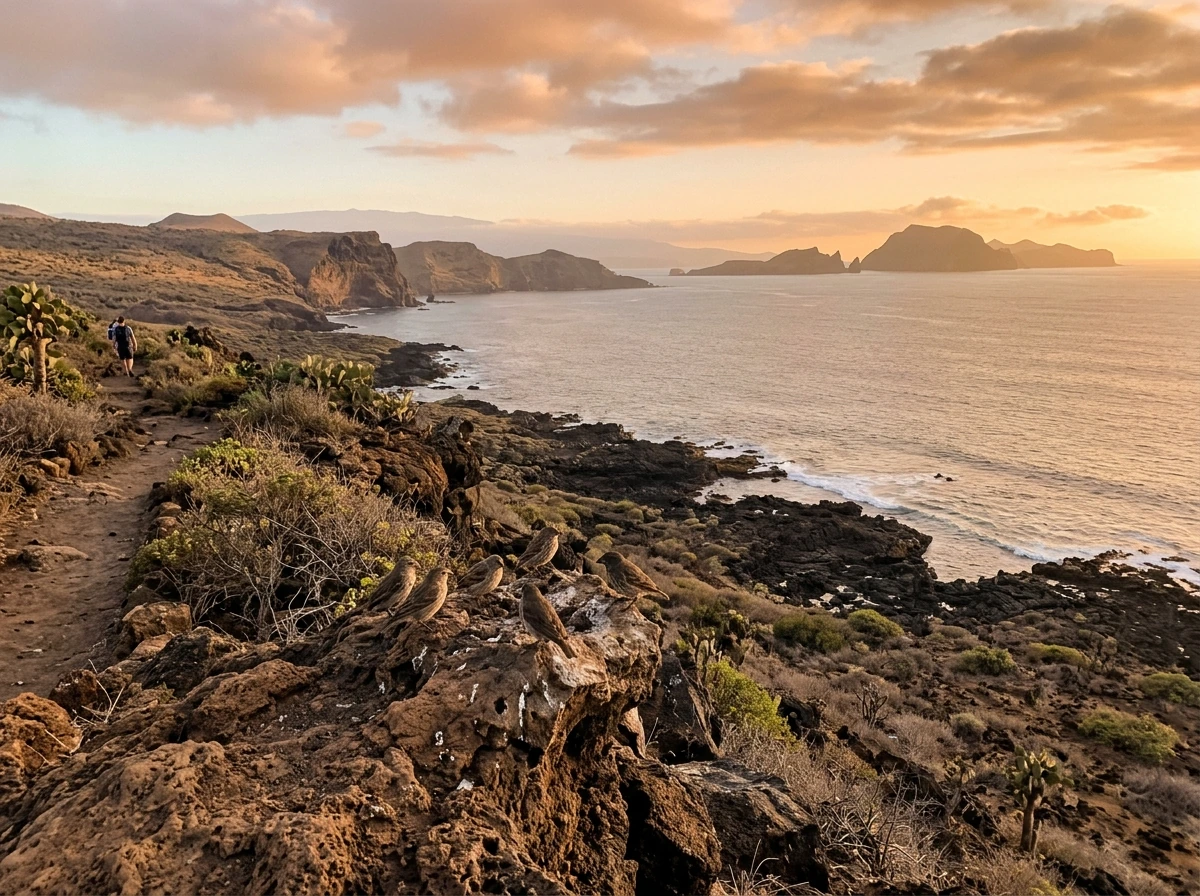
The direct answer: Galápagos finches
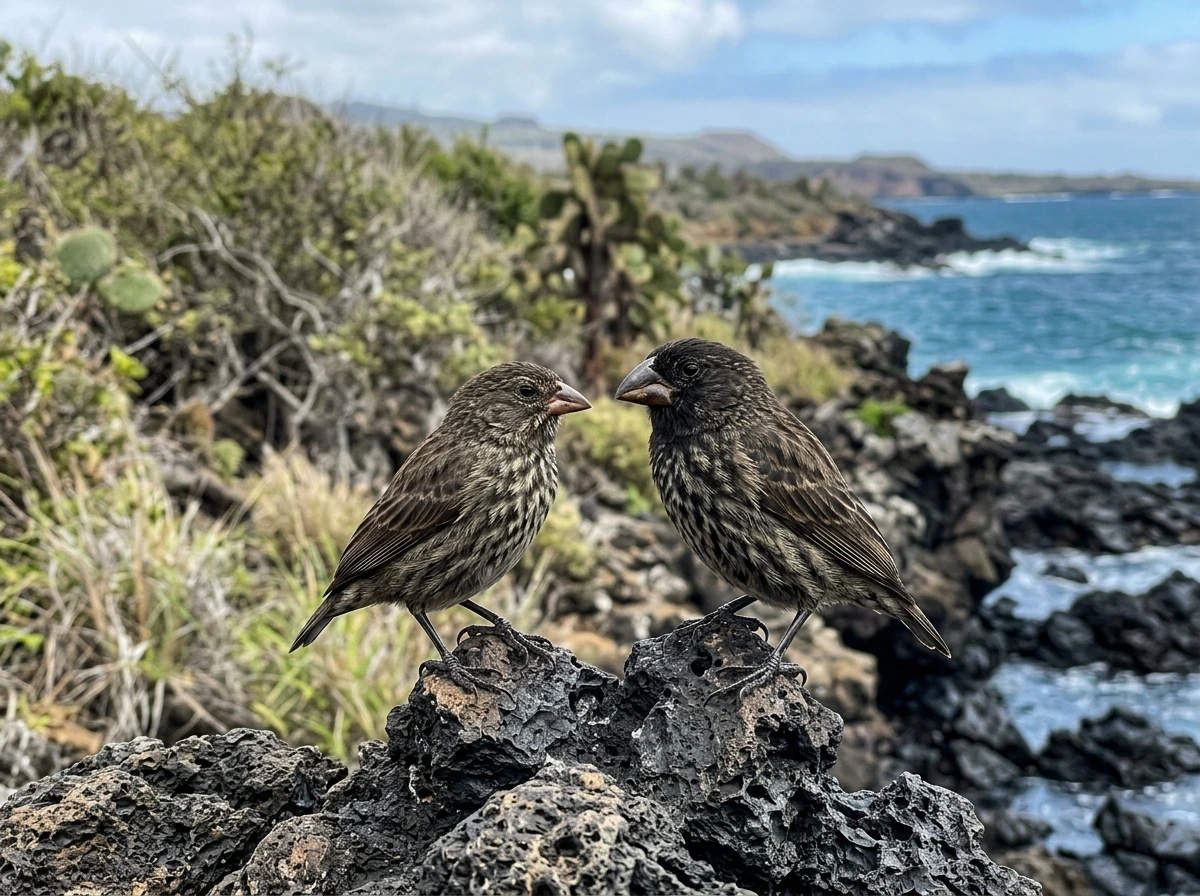
The birds Darwin studied that became central to evolutionary theory are the Galápagos finches, a group of closely related species spread across the Galápagos archipelago. Darwin collected specimens from multiple islands during his visit in September and October of 1835. At the time, he didn't fully recognize what he had. He actually labeled several of them loosely as blackbirds, gross-bills, or simply finches, without realizing they all formed a single remarkable group.
The scientific significance only clicked after Darwin returned to England. In January 1837, the ornithologist John Gould examined Darwin's collection and reported that what Darwin had brought back were in fact 'a series of ground Finches… an entirely new group, containing 12 species.' Gould's assessment was the turning point. He described them as 'Ground Finches' so distinct from anything previously known that they warranted their own classification, and he noted they were 'strictly confined to the Galapagos Islands.' That moment reframed how Darwin thought about variation and adaptation.
Which specific birds: the Galápagos finch species
Gould's 1837 paper (formally titled in Darwin's records as 'Remarks on a Group of Ground Finches from Mr. Darwin's Collection, with Characters of the New Species') identified 12 species from Darwin's haul. Today, the group is recognized as containing around 15 to 18 species depending on taxonomic classification, spread across the Galápagos Islands and one species on Cocos Island. They belong to the family Thraupidae (tanagers), which is itself an interesting update: earlier classifications placed them among the finch family Fringillidae, but modern genetic work has re-sorted them.
What made these birds visually striking and scientifically useful was their beak variation. Different species on different islands had developed beaks suited to very different food sources: stout, crushing beaks for hard seeds; long, probing beaks for cactus flowers; sharp, narrow beaks for insects. Same ancestral stock, wildly different tools. That pattern of divergence from a common ancestor across isolated island habitats is now called adaptive radiation, and the Galápagos finches are its most cited example.
| Common Name | Beak Type | Primary Food Source | Island Habitat |
|---|---|---|---|
| Large ground finch (Geospiza magnirostris) | Very large, crushing | Hard seeds | Multiple islands |
| Medium ground finch (Geospiza fortis) | Medium, versatile | Seeds of varied size | Multiple islands |
| Cactus finch (Geospiza scandens) | Long, curved | Cactus flowers and seeds | Low-altitude islands |
| Woodpecker finch (Camarhynchus pallidus) | Straight, probing | Insects (uses tools) | Highland forests |
| Warbler finch (Certhidea olivacea) | Thin, pointed | Insects | Multiple islands |
What Darwin actually learned from them
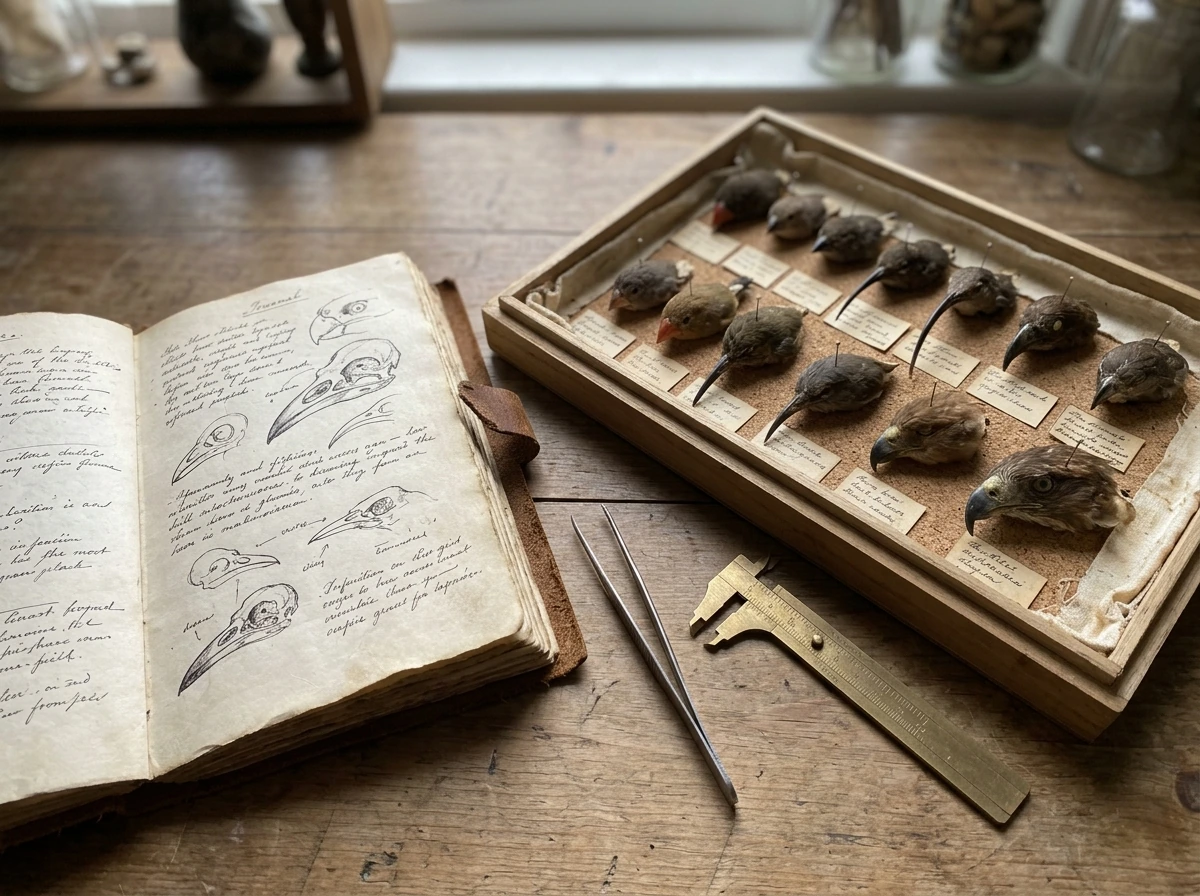
Here's the honest part of the story: Darwin didn't walk off the Galápagos and immediately announce he'd cracked evolution. He was actually careless about labeling which finch came from which island, which created real problems for later analysis. It was Gould's 1837 reclassification, combined with the records of other crew members who had been more careful with their own specimens, that allowed Darwin to piece together the island-by-island variation pattern.
What the finches ultimately taught Darwin was that species are not fixed. Isolated populations, given enough time and different environmental pressures, diverge into new forms. The finches weren't proof of evolution on their own, but they were compelling evidence that fit the broader argument Darwin was building alongside observations of mockingbirds, tortoises, and other Galápagos wildlife. By the time he published On the Origin of Species in 1859, the finches were part of a larger, carefully assembled case.
How to verify this yourself today
If you want to go to the primary sources, the best place to start is Darwin Online (darwin-online.org.uk), which hosts Gould's 1837 paper as an ancillary text alongside Darwin's own voyage notes and correspondence. You can read Gould's original description of the ground finches as 'an entirely new group' in his own words. Darwin's own account in The Voyage of the Beagle (1839, also freely available through Darwin Online and Project Gutenberg) includes his observations of the Galápagos birds, though he is notably cautious and somewhat vague about finches specifically in that text.
For a reliable modern synthesis, the Natural History Museum London's website covers Darwin's finches with up-to-date taxonomy and the history of the collection. The Smithsonian National Museum of Natural History is another solid reference. For the evolutionary science side, Peter and Rosemary Grant's decades-long field study on Daphne Major island is the definitive modern extension of Darwin's work, documented in their book The Beak of the Finch (Jonathan Weiner, 1994) and their own scientific papers.
- Darwin Online (darwin-online.org.uk): primary texts including Gould's 1837 paper and The Voyage of the Beagle
- Project Gutenberg: free full text of The Voyage of the Beagle
- Natural History Museum London website: Darwin's finches species overview and collection history
- Smithsonian National Museum of Natural History: evolutionary biology resources
- The Beak of the Finch by Jonathan Weiner (1994): accessible account of the Grants' field research
Common mix-ups and "Darwin bird" confusion
A few misconceptions come up regularly when people search this question, and it's worth naming them directly.
Mix-up 1: confusing finches with mockingbirds
Darwin actually paid more attention to the Galápagos mockingbirds during the voyage itself than to the finches. He noted that mockingbirds varied between islands and was struck by that variation. If you are specifically asking whether dodo DNA could be recovered or tested, that depends on whether usable genetic material still exists from preserved remains. Some historians argue the mockingbirds were more immediately influential on his thinking than the finches were. But Gould's 1837 reclassification of the finches is what gave the story its most dramatic form, and the finches are what history remembered and named after Darwin.
Mix-up 2: thinking Darwin studied a single named species
There is no single 'Darwin's bird.' The whole point was the group: 12 to 18 related species, each slightly different, each adapted to a different ecological niche on different islands. When people expect a single famous bird (the way the dodo is one bird, or the passenger pigeon is one species), they're looking for something that doesn't exist in this case. The finches matter as a group, not as individuals.
Mix-up 3: assuming Darwin's study happened on the Galápagos
Darwin spent only five weeks in the Galápagos in 1835. The actual scientific work happened back in London, mostly by Gould, after Darwin returned. Darwin's contribution was collecting the specimens and eventually connecting the dots. The idea that Darwin sat on a volcanic island watching finches and suddenly understood evolution is a clean story, but the reality was messier and more collaborative.
Why this matters for island birds today
Darwin's finches aren't just a history lesson. Several species in the group are currently listed as vulnerable or critically endangered, largely because of introduced species, habitat loss, and a parasitic fly (Philornis downsi) that attacks nestlings. The woodpecker finch and the mangrove finch (Camarhynchus heliobates) are among the most at risk. The mangrove finch has a population estimated at fewer than 100 individuals, making it one of the rarest birds on Earth.
This connects directly to a pattern that shows up across island bird species globally. Island birds evolved in isolation, which made them spectacularly well-adapted to their specific environments and spectacularly vulnerable to outside threats. The dodo, which went extinct in Mauritius in the 17th century, is the most famous example of that vulnerability, which bird became extinct in mauritius in the 17th century and you can ask specifically when did the dodo bird go extinct or did a dodo bird hatch recently to learn the timeline. and the story of how and why island birds disappear is something worth understanding alongside Darwin's original observations. The finches that taught us so much about how birds diversify are now themselves a conservation challenge, which is a sobering full-circle moment.
Darwin's work on island bird variation was an early signal that isolation drives diversity, and that the same isolation that creates unique species also makes them fragile. Modern conservation biology takes that lesson seriously: island endemics (species found only on one island or archipelago) are disproportionately represented on extinction lists worldwide. Understanding what Darwin studied, and why those birds mattered, gives real historical grounding to the conservation challenges scientists are still working on today.
The short version, if you need it fast
- Darwin studied Galápagos finches, specifically a group of ground finch species he collected in 1835
- John Gould identified them in January 1837 as 'an entirely new group' of 12 species, all confined to the Galápagos
- Their beak variation across islands became a key illustration of adaptive radiation and species divergence
- Darwin also observed mockingbirds and tortoises, but the finches are what history named after him
- Primary sources are available free through Darwin Online and Project Gutenberg
- Several Darwin's finch species are endangered today, particularly the mangrove finch with fewer than 100 individuals remaining
FAQ
Was Darwin studying one specific “Darwin’s finch” species, or a group of finches?
He was studying a set of related finch species rather than a single named species. The scientific breakthrough came from recognizing that multiple collected forms across islands belonged to one broader group with distinct beak adaptations.
Why does the story say Darwin did not label the finches by island correctly?
Darwin’s field labels were inconsistent, so the original specimens were not always clearly tied to the exact island they came from. Later crew records and Gould’s reclassification helped reconstruct the island-to-species pattern that makes adaptive radiation possible to analyze.
Which part of the work happened in the Galápagos, and which part happened after Darwin returned?
Darwin’s main role on the islands was collecting specimens. The key scientific interpretation, including the ground finches being recognized as a distinct group, happened largely after he reached England, with specialists like John Gould examining the collection.
What did Gould contribute beyond just naming them?
Gould’s value was reframing Darwin’s mixed assortment into a coherent set of ground finches that were distinct enough to form a new group, with a specific count of species from the specimens Darwin brought back.
How many species of Darwin’s finches are there today, and why the number changes?
Different taxonomic approaches yield different counts, commonly around 15 to 18 species. The variation comes from how researchers split or lump closely related populations and how new genetic or morphological evidence is interpreted.
Did Darwin only study finches during the Beagle voyage?
No. Many historians note Darwin was particularly struck by island differences in mockingbirds during the voyage. Finches became the flagship example mainly because Gould’s later reclassification made their structure and island confinement especially clear.
Where were Darwin’s finches collected from, if not all from the main Galápagos islands?
Most species are native to the Galápagos archipelago, and the group also includes one species found on Cocos Island. That detail matters when you are mapping “which island” to “which finch,” because Cocos is outside the Galápagos proper.
Are Darwin’s finches actually in the finch family (Fringillidae)?
No, modern taxonomy places them in the tanager family (Thraupidae). Earlier classifications treated them differently, but genetic work reshuffled their family assignment.
What was the most useful trait Darwin’s finches showed for evolutionary thinking?
Beak form and function across islands. Different species evolved beaks suited to different diets, like hard seeds versus cactus flowers versus insects, which provided a clear way to connect variation to ecology.
How did finches support Darwin’s argument if Darwin did not figure it out immediately?
They offered a pattern that matched what Darwin was compiling from multiple sources: populations can diverge under isolation and environmental pressures. The finches were not a standalone proof, but they fit the broader evolutionary case that became fully articulated in his later writings.
Can I trace Darwin’s original records to see what he wrote about the birds?
Yes. Darwin’s own voyage account and his correspondence include observations, though they can be cautious or less specific about finches. For the deeper “what were these specimens” clarification, Gould’s 1837 ground finches description is typically the key primary piece.
What is the biggest common misconception when someone searches this question?
The misconception is looking for “the” single bird Darwin studied. The historically important outcome is the group-level pattern of multiple closely related finch species with island-specific adaptations.
Are Darwin’s finches still present today, and are any threatened?
Yes, and some are highly threatened. Several species are listed as vulnerable or critically endangered due to factors like introduced species, habitat loss, and nestling impacts from the parasitic fly Philornis downsi.
Why do island birds like Darwin’s finches tend to be vulnerable to extinction?
Isolation often produces narrow ecological ranges and small populations, which makes island endemics sensitive to new predators, diseases, habitat disruption, and other outside pressures. That combination is why island species can be both spectacularly specialized and disproportionately at risk.