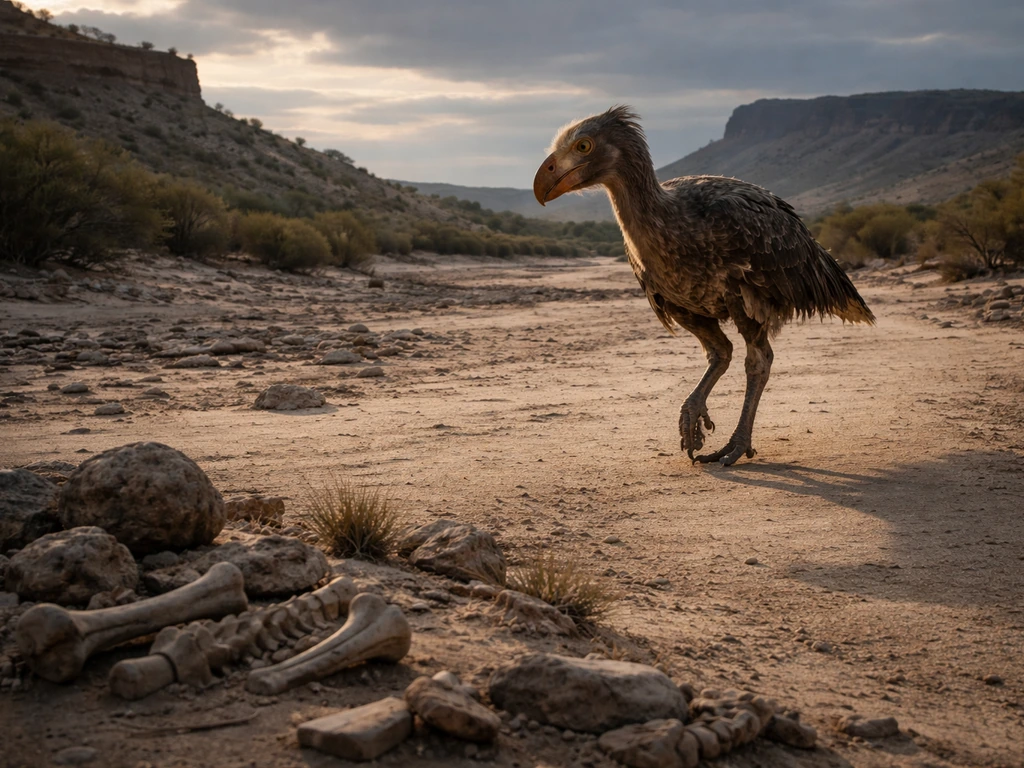
The 'doo doo bird' is almost certainly the dodo (Raphus cucullatus), and yes, it is completely extinct. The last uncontrovertibly confirmed sighting was recorded in 1662 by a Dutch sailor named Volkert Evertsz, who encountered dodos on a small islet near Mauritius after a shipwreck. Most references pin the dodo's extinction to somewhere between 1662 and the early 1680s, with Encyclopaedia Britannica citing 1681 as the commonly used endpoint. The honest scientific answer is that no single year can be stated with total certainty, but the mid-to-late 17th century is rock solid.
When Did the Doo Doo Bird Go Extinct? Date and Proof

Maya Hennessy
5 May 2026
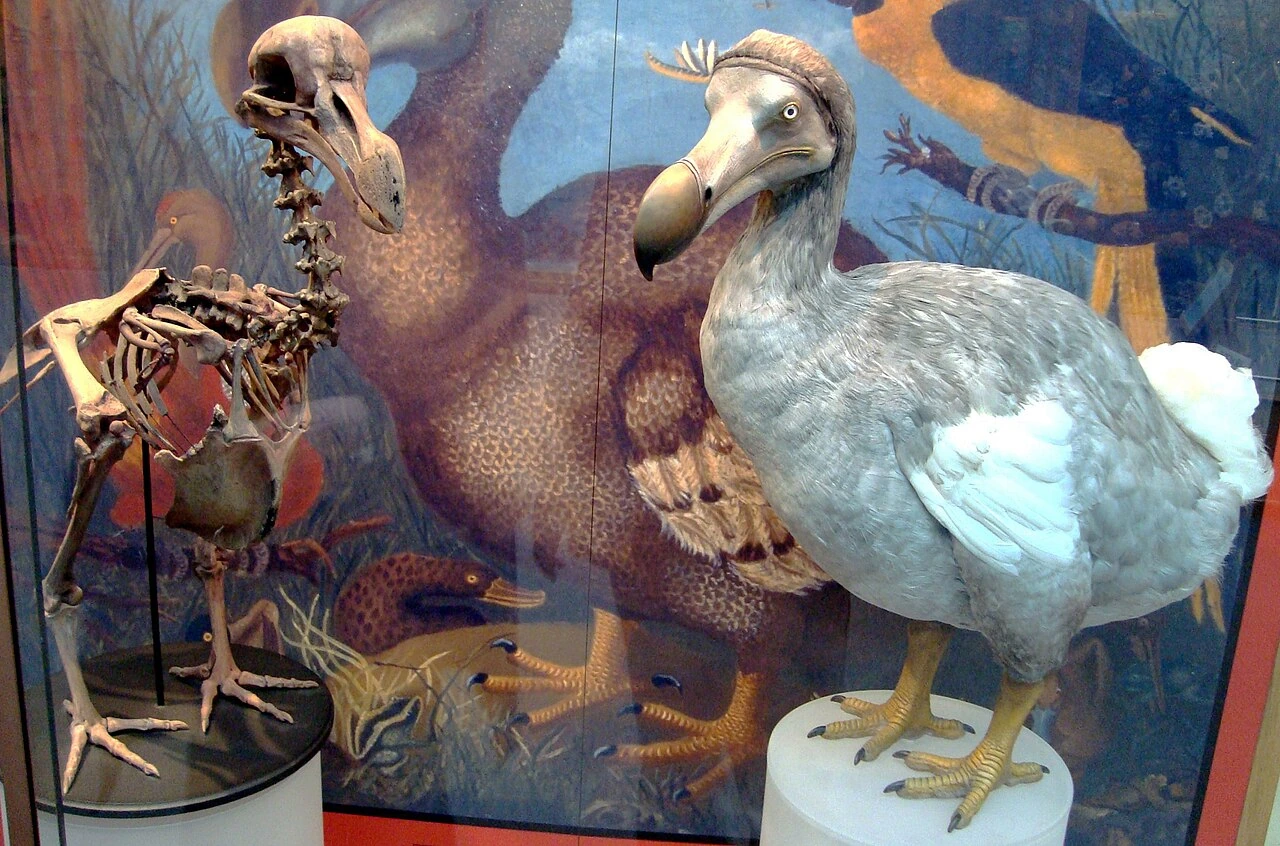
What exactly is the 'doo doo bird'?
The phrase 'doo doo bird' does not appear in any serious ornithological reference as a recognized common name. It is playful wordplay, not a formal taxonomic label. The connection to the dodo comes from the name's own history: the word 'dodo' has an onomatopoeic dimension, linked by some researchers to the pigeon-like two-note call the bird may have made (doo-doo being a rough approximation). So when people say 'doo doo bird,' they are almost always pointing at the dodo, whether they realize it or not.
The dodo's accepted scientific name is blank" rel="noopener noreferrer">Raphus cucullatus, first formally described by Linnaeus in 1758. You may also see the older synonym Didus ineptus in historical literature. The species was a large, flightless pigeon endemic to the island of Mauritius in the Indian Ocean. blank" rel="noopener noreferrer">GBIF describes the dodo as an extinct flightless bird endemic to Mauritius. It had no close surviving relatives, though the Rodrigues solitaire (Pezophaps solitaria) was a related flightless bird that also went extinct around the same era.
Is the doo doo bird (dodo) extinct?
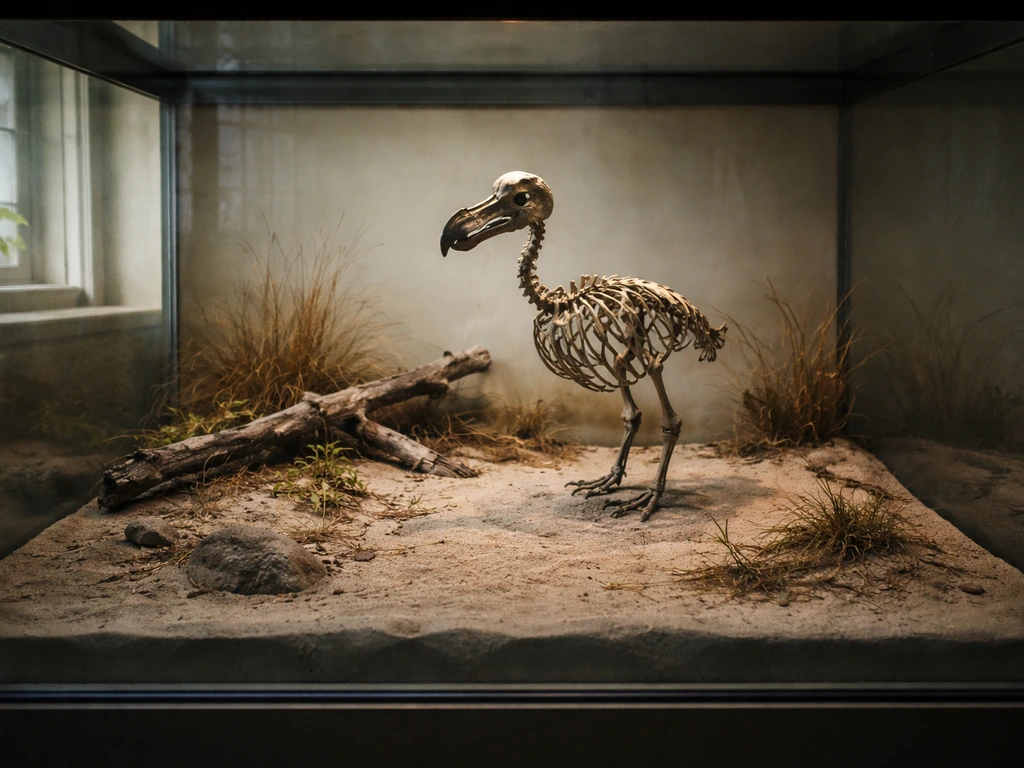
Completely and definitively, yes. There are no captive specimens, no credible modern sightings, and no population anywhere on Earth. The dodo is one of the most thoroughly documented extinction cases in natural history, which is ironic given how brief the window was between European contact with Mauritius (1598) and the bird's disappearance roughly 80 years later. What we have left are subfossil bones, a small number of historical illustrations, written accounts from sailors and colonists, and a handful of partial specimens in museum collections. If you are curious about whether any other recently discussed giant birds are still around, see is the elephant bird still alive as a related check.
When did the dodo go extinct? The real answer is a range, not a single year
The 1662 sighting by Volkert Evertsz is the anchor point the scientific community keeps returning to. He described encountering dodos on an islet and was able to catch them by hand, which tells you the birds still had no fear of humans even at that late stage. That account is considered the last confirmed, independently corroborated sighting in the historical record.
But 'last confirmed sighting' and 'extinction date' are not the same thing. A 2003 paper in Nature by David Roberts and Andrew Solow applied statistical modeling (using a Weibull distribution fitted to historical sighting data) and concluded that the dodo likely persisted beyond 1662, possibly into the 1690s, before the final individuals disappeared. Their analysis produces a later estimated extinction date with a confidence interval, rather than a hard cutoff year. Britannica, meanwhile, uses 1681 as a practical endpoint, which sits comfortably within that range.
So if you need a single number: the dodo is generally considered to have gone extinct around 1681, with the last confirmed sighting in 1662. If you need the scientifically honest version: extinction occurred sometime in the latter half of the 17th century, most likely between 1662 and the early 1690s.
| Reference / Approach | Date Given | Basis |
|---|---|---|
| Last confirmed sighting (Evertsz) | 1662 | Primary historical account from a shipwreck survivor |
| Encyclopaedia Britannica | 1681 | Commonly cited endpoint in reference literature |
| Roberts & Solow (Nature, 2003) | Post-1662, possibly into the 1690s | Statistical modeling of sighting-record data |
| Dutch diaries / ship records | Mid-to-late 1600s | Archival historical documentation reviewed in peer-reviewed literature |
How scientists actually figure out when a bird went extinct

Determining an extinction date is harder than it sounds, and the dodo is a good example of the process. If you are curious about how extinction timing compares across species, see when did the elephant bird go extinct as a related example of date uncertainty and historical evidence. Scientists piece together evidence from several categories, and none of them alone is conclusive.
- Historical written accounts: Ship logs, diaries, and colonial records from sailors and settlers. These are the primary source for dodo sightings and are exactly what Roberts & Solow analyzed statistically. The Evertsz 1662 account is the last in this chain.
- Specimen dates: Museum collections hold bones, partial skins, and other physical remains. Radiocarbon dating of subfossil bone material can bracket when dodos were alive, though this method rarely pinpoints extinction precisely.
- Bone histology: More recent studies have used microscopic analysis of dodo bone tissue to reconstruct life history, growth rates, and ecology, helping scientists understand the species' biology right up to extinction.
- Absence of records: A prolonged gap in sightings across multiple independent sources is itself evidence. When no credible account appears after a certain date despite continued human presence in the area, that silence carries weight.
- Statistical modeling: The Roberts & Solow approach treats sighting records like any time-series dataset and estimates the probability that the species survived beyond the last observation, producing a date range rather than a single year.
This layered approach is standard for other famous extinct birds too. The moa of New Zealand and the elephant bird of Madagascar were reconstructed using similar combinations of fossil records, subfossil bones, and historical accounts, each producing date ranges rather than definitive extinction years.
Why did the dodo disappear so fast?
The dodo's extinction is a textbook case of compounding human impacts hitting a species that had evolved with zero mammalian predators. Within roughly 80 years of sustained European contact, it was gone. The causes are well established and came in three main waves.
- Direct hunting: Sailors found dodos easy to catch because the birds had no instinctive fear of humans. They were killed for food, though accounts suggest the meat was not especially prized. The ease of capture made overhunting rapid.
- Introduced predators: This is widely considered the decisive blow. Dutch colonists brought rats, pigs, cats, dogs, and monkeys to Mauritius. These animals raided dodo nests, destroying eggs and killing chicks. A ground-nesting bird that laid a single egg per clutch had no defense against this kind of sustained nest predation.
- Habitat destruction: Mauritius was progressively cleared for agriculture and settlement, shrinking the forest habitat dodos depended on. With nowhere left to live and breed safely, surviving adults could not replace losses.
The combination of slow reproduction (one egg at a time, ground-level nests) and no evolutionary experience with mammalian threats made the dodo uniquely vulnerable. This same pattern drove the extinction of many island birds across the Pacific, Indian Ocean, and beyond, including other flightless species that could not simply fly away from danger.
How to verify the extinction date yourself
If you want to go deeper or check these claims against primary sources, here is where to start and what to look for.
- Roberts & Solow (2003) in Nature: Search for 'When did the dodo become extinct?' in Google Scholar or your library database. This is the foundational peer-reviewed paper on the statistical extinction date. Look at their confidence intervals and how they treat the 1662 sighting as the last confirmed data point.
- GBIF (Global Biodiversity Information Facility): Search for Raphus cucullatus on gbif.org. The GBIF backbone taxonomy provides the accepted scientific name, taxonomic history, and links to occurrence records and specimen data. This is a good way to confirm you are looking at the right species.
- AMNH Ornithology Collections Database: The American Museum of Natural History maintains a searchable database of bird specimens. Searching for Raphus cucullatus there will show you what physical material survives, including bones and partial specimens, with collection metadata.
- Encyclopaedia Britannica's dodo entry: A reliable starting point for the 1681 date and a summary of the extinction story. Use it as a gateway, then follow the primary sources it references.
- Natural history museum collections globally: The Oxford University Museum of Natural History and the Natural History Museum London both hold dodo material. Their online collection portals let you check specimen provenance and dates.
One thing to watch for: if you see an extinction date listed as a single year with no range or uncertainty noted, treat it as a simplification. The scientific literature is clear that extinction dates are estimates based on evidence, not moments anyone witnessed. The 1662 sighting is the hard evidence; everything after that is inference, and good inference at that, but inference nonetheless.
If you come across the term 'doo doo bird' in a context that does not obviously point to the dodo, it is worth considering whether the source might be using it as a nickname for a different species entirely. Some local or regional nicknames can map onto unrelated birds, and this site covers a wide range of extinct and endangered species where name confusion is common. Some local or regional nicknames can map onto unrelated birds, and this site also covers extinction questions like is the bird from rio extinct for clearer context. In those cases, cross-referencing the described physical traits, geographic range, and extinction timeframe against known species is the best way to identify what bird is actually being discussed.
FAQ
Is there any confirmed sighting after Volkert Evertsz in 1662?
No. The 1662 account is the last corroborated, independently supported observation in the historical record. Later claims are based on interpretations of written descriptions, not new hard evidence of surviving dodos.
Why do some sources give a single year like 1681 instead of a range?
They are using a practical endpoint, not a measured last moment. When an article needs a clean date, it often chooses a year that falls within a broader statistical or evidentiary window.
What does the Nature 2003 modeling actually assume about sightings?
It treats historical “sightings” as data that do not all mean the species definitely existed on that exact date. By fitting a distribution to how sightings disappear over time, it estimates a likely extinction period and uncertainty rather than a hard cutoff.
Can we pinpoint extinction to a specific month or season?
Not reliably. The records are sparse and irregular, and they usually do not provide date precision tied to breeding season or population crashes, so any month-level claim would be guesswork.
Did the dodo go extinct at the same time across all islands or locations?
Most evidence concerns Mauritius, where the dodo lived, and extinction there. Related flightless birds on nearby islands like Rodrigues were lost around the same general era, but that does not mean the timing matched exactly on a month-by-month basis.
Were there ever any dodos kept in captivity that could extend the extinction timeline?
There is no credible evidence of sustained captive dodos surviving into later decades. The absence of reliable captive records is one reason the extinction window still clusters in the late 17th century.
If the last confirmed sighting is 1662, why do estimates extend into the 1680s or 1690s?
Because extinction is not the same as the last direct report. A population can persist at low numbers for some time without being seen or documented, especially when collectors focus on other priorities and when reporting is inconsistent.
What kinds of evidence are used to date dodo extinction?
Scientists combine subfossil or bone material, historical illustrations, and written accounts from sailors and colonists. Each category has gaps, and the timing comes from where multiple lines of evidence converge, not from any single artifact.
How can I tell whether someone saying “doo doo bird” is referring to the dodo?
Check context clues like location (Mauritius), traits (large flightless pigeon), and the historical timeframe (late 1600s). The phrase is not a formal scientific common name, so misidentification is possible if those clues do not match.
What is the fastest “best answer” to the question “when did the doo doo bird go extinct”?
Use “around 1681” as the common practical endpoint, while remembering the last confirmed sighting was in 1662 and the scientifically honest window is the latter half of the 17th century, likely between 1662 and the early 1690s.
Next Article
When Did the Terror Bird Go Extinct? Timeline, Causes
Timeline for when terror birds went extinct, last appearances, causes, and how to verify dates using fossil evidence.