
The Goliath bird-eater (Theraphosa blondi) is a New World species. Its native range sits entirely in northern South America, which places it firmly in New World biogeography. If you've seen sources calling it Old World, they're wrong, and there are a few specific reasons that confusion keeps spreading online. If you're also wondering where the cassowary bird lives, its range is in the forests of New Guinea and nearby islands where does the cassowary bird live.
Are Goliath Bird Eaters Old World or New World?

Maya Hennessy
24 May 2026
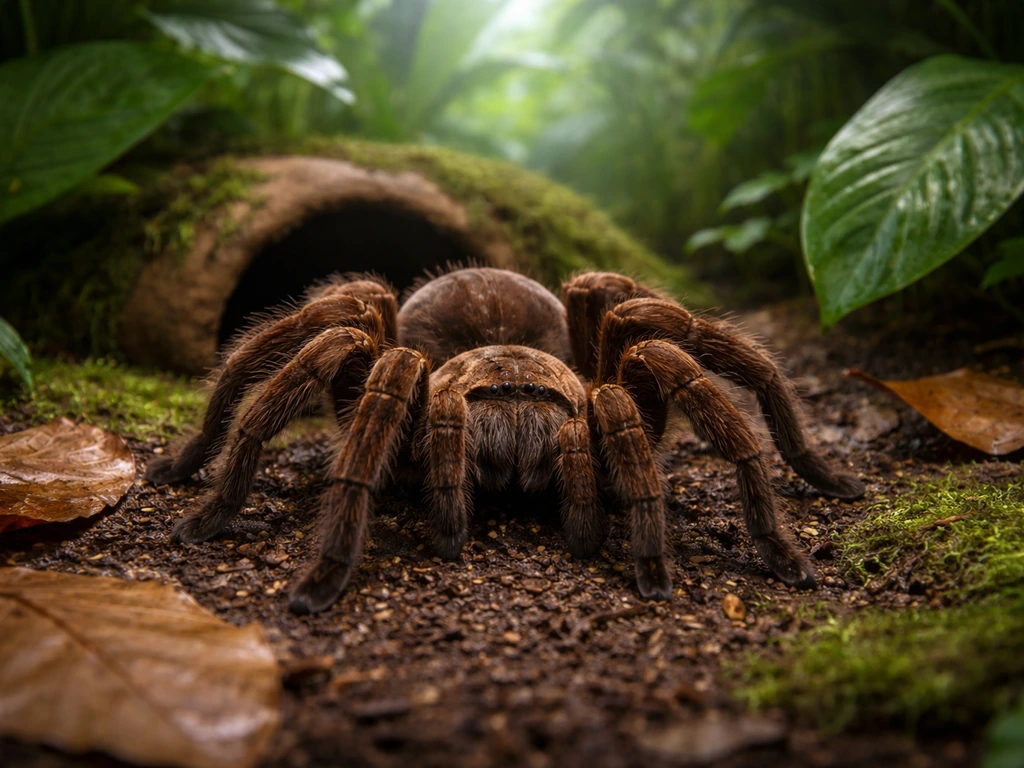
Old World or New World: the direct answer

In biogeography, the Old World refers to Africa and Eurasia, while the New World refers to the Americas. Theraphosa blondi lives in South America, full stop. That makes it a New World tarantula, and that classification is consistent across every authoritative reference that covers it, from the World Spider Catalog to GBIF occurrence records to care sheets that explicitly label it a 'New World terrestrial tarantula.' There is no credible taxonomic or biogeographic argument for placing it in the Old World.
Where Goliath bird-eaters actually live
Theraphosa blondi is native to the upland and lowland rainforests of northern South America. The core of its range covers Suriname, Guyana, French Guiana, and northern and eastern Brazil, with populations also reported in southern Venezuela and eastern Colombia. Within that range it favors swampy, humid forest floor habitats, where it lives in deep burrows it lines with silk. It's a terrestrial spider, so you won't find it climbing high into the canopy. It forages along the ground and ambushes prey rather than building a web to catch it.
That combination of geography and habitat is entirely Neotropical, meaning it belongs to the tropical Americas biogeographic zone. This is the same general part of the world that produces so many notable large invertebrates, and it overlaps with the range of species like the cassowary's distant ecological counterparts in terms of being massive, ground-dwelling animals that surprise people with how big they get.
What 'bird-eater' actually means (and what the name covers)
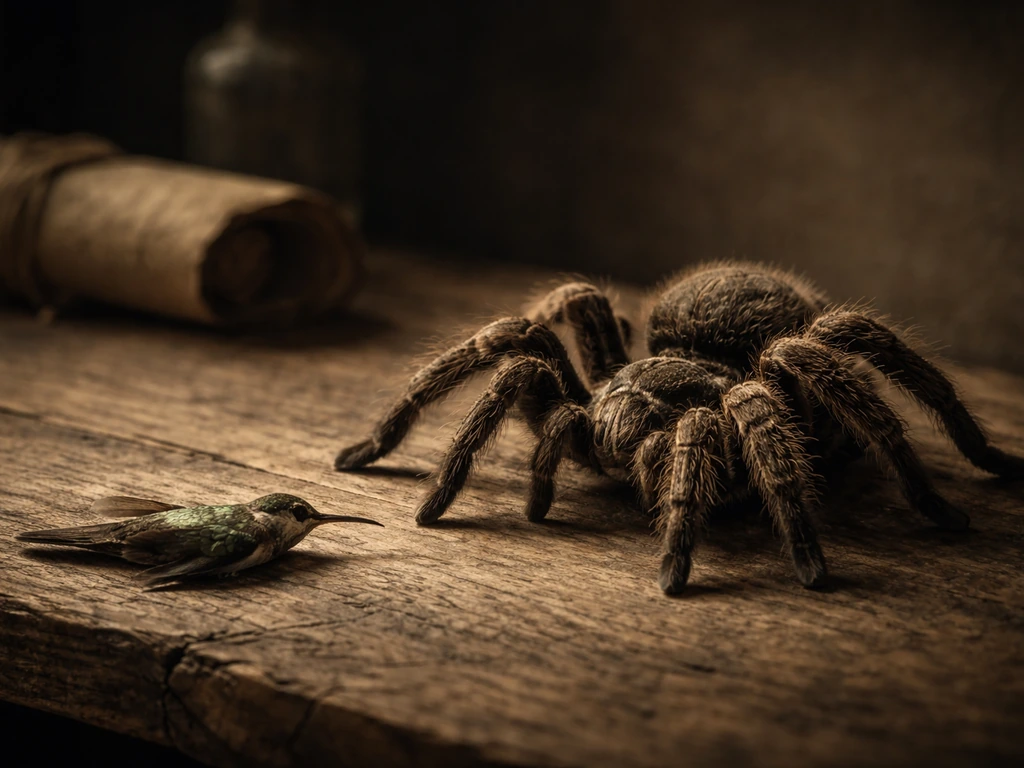
The 'Goliath birdeater' name comes from an 18th-century engraving that showed a large tarantula eating a hummingbird. The image circulated widely and the name stuck. In practice, Theraphosa blondi does occasionally take small vertebrate prey including birds, frogs, lizards, and mice, but the bulk of its diet is invertebrates. The 'bird-eater' label is more about the spider's potential than its daily menu.
The bigger issue with the name is that it's not exclusive to Theraphosa blondi. The phrase 'bird-eater' gets applied to several tarantula species across different genera, and even within the genus Theraphosa there are three recognized species: T. Britannica also notes that the common name “Goliath birdeater” is used for Theraphosa blondi, with “Goliath bird-eater” being widely used as well. blondi (the classic Goliath birdeater), T. stirmi (the burgundy Goliath bird-eater), and T. apophysis (the pinkfoot Goliath bird-eater). All three are large, all three come from overlapping Neotropical ranges, and all three get lumped under 'Goliath bird-eater' by non-specialist sources. This intra-genus confusion is one of the main places where misleading classifications creep in.
Taxonomy at a glance
| Level | Classification |
|---|---|
| Kingdom | Animalia |
| Phylum | Arthropoda |
| Class | Arachnida |
| Order | Araneae |
| Family | Theraphosidae |
| Subfamily | Theraphosinae |
| Genus | Theraphosa |
| Species | Theraphosa blondi (Latreille, 1804) |
The species was formally described by Pierre André Latreille in 1804. The World Spider Catalog, which is the go-to authoritative index for spider taxonomy, places it in family Theraphosidae (the tarantulas) under subfamily Theraphosinae. GBIF uses the same scientific name and provides georeferenced occurrence data that maps directly to northern South America.
How to verify this yourself using reliable sources
If you want to confirm the classification independently rather than taking anyone's word for it, here's the most efficient path. Go to GBIF (gbif.org) and search for Theraphosa blondi. The species page shows occurrence records plotted on a map, and every cluster of points is in northern South America. No Old World occurrences exist because none were ever reported. That's your range-map confirmation.
For taxonomy, the World Spider Catalog (wsc.nmbe.ch) is the primary authority for spider nomenclature. It lists Theraphosa blondi with full synonymy and taxonomic history. NCBI's taxonomy database also includes the species within Theraphosidae, which is useful as a cross-check for how biodiversity databases handle the classification. Between a range map on GBIF and a taxon entry on the World Spider Catalog, you have everything you need to settle this question definitively.
- Search 'Theraphosa blondi' on GBIF and open the 'Occurrences' map tab to see all georeferenced records.
- Check the World Spider Catalog entry for Theraphosa blondi to confirm family, subfamily, and any synonyms.
- Cross-reference with Britannica or a peer-reviewed natural history source to confirm the common name mapping.
- If a source claims Old World origin, check whether it's conflating Theraphosa with an Old World genus like Poecilotheria or Haplopelma, which is a common mix-up in hobbyist forums.
Why this confusion keeps happening online
There are a few overlapping reasons people end up with the wrong answer on this. First, the term 'bird-eating spider' or 'bird-eater' is applied to tarantulas from multiple genera, and some of those genera do have Old World representatives. When someone reads a general article about 'bird-eating spiders' that lumps together Old World and New World species under a shared common name, it's easy to come away thinking the label covers a single biogeographic group when it doesn't.
Second, within hobbyist communities, tarantulas are often categorized as Old World or New World for care purposes, and that distinction matters practically because Old World species tend to have more potent venom and different humidity requirements. When that care-sheet framing gets muddled or copied incorrectly, you get misclassifications that spread across forums and informal sites.
Third, the three Theraphosa species (blondi, stirmi, apophysis) are sometimes treated interchangeably in non-specialist coverage, and if one source mislabels one of them, that error gets copied. None of the three are Old World, but the confusion between them adds noise to search results. When you see conflicting claims, the fix is always to go back to the scientific name and a primary database rather than trusting the common-name description alone.
Conservation status and natural history context
As of now, the IUCN has not formally assessed Theraphosa blondi for its Red List, meaning the species doesn't carry an official Vulnerable or Endangered designation the way many charismatic vertebrates do. That absence of assessment doesn't mean it's thriving without concern. Its rainforest habitat in northern South America faces ongoing pressure from deforestation and land conversion, and the species is collected for the exotic pet trade, which adds localized pressure on wild populations.
Ecologically, it plays the role you'd expect from a large terrestrial predator in a tropical rainforest: it prunes invertebrate populations and occasionally takes small vertebrates, and it's also prey for larger animals. Its burrows create microhabitats used by other species.
None of this is unlike what a large ground-foraging bird might do in the same ecosystem, which is part of what makes it an interesting comparison point for anyone thinking about how size and ecological niche play out across very different animal groups. If you're asking the same kind of question about extinct birds, the biggest extinct birds are a different story worth comparing.
This site covers related questions about large and notable animals, including what makes the biggest extinct birds so striking in terms of scale, and the Goliath bird-eater fits neatly into that same category of 'largest of its kind' natural history stories. If you're comparing giants across time, this is where discussions of what is the biggest extinct bird connect to living land predators like the Goliath bird-eater biggest extinct birds.
The fact that its conservation status hasn't been formally assessed is itself a conservation red flag. Invertebrates in general are under-assessed relative to vertebrates, and a species this high-profile (it holds records as the world's largest spider by mass) arguably deserves a formal status review. Until that happens, range data from GBIF occurrence records and regional biodiversity surveys are the best tools available for tracking how populations are holding up across Suriname, Guyana, Brazil, and the rest of its Neotropical range.
FAQ
Why do some websites call the Goliath bird-eater an Old World species?
Most of the time it comes from common-name grouping. “Bird-eater” is used for multiple tarantulas across different genera, and some genera include Old World species. If a site copies a generic “bird-eating spider” description without checking the scientific name, it can attach the wrong biogeography to Theraphosa blondi.
If I have a tarantula sold as a “Goliath bird-eater,” how can I tell whether it is Old World or New World?
Use the scientific name on the label or listing. Theraphosa blondi is New World (northern South America). Be especially careful if the listing just says “Goliath bird-eater,” because it can be used for other Theraphosa species (like stirmi or apophysis) that are also New World, and for entirely different “bird-eater” tarantulas from other genera.
Does the fact that it sometimes eats birds mean it could be Old World?
No. The “bird-eater” name is about occasional or potential prey items, not geography. Biogeography is determined by where the species naturally occurs, and Theraphosa blondi’s natural range is in northern South America.
Are there any Old World occurrences of Theraphosa blondi, like accidentally established populations?
You should assume there are none unless a credible scientific database reports otherwise. GBIF occurrence data for Theraphosa blondi clusters in northern South America, and there are no established Old World records reported in mainstream occurrence datasets.
How do “Old World” and “New World” matter for care, and does that affect this species?
In hobby contexts, the labels are mainly used to guide husbandry differences (for example, typical humidity patterns and handling approaches vary by group). Since Theraphosa blondi is New World, you should follow New World care guidance, not any care-sheet advice that is written for Old World terrestrial tarantulas.
What is the fastest way to verify the classification yourself if you encounter conflicting claims?
Cross-check two things tied to the scientific name: a taxon page in a primary spider taxonomy database (for nomenclature and classification) and an occurrence map in GBIF (for confirmed geographic records). If both point to northern South America under the same name, the Old World claim is incorrect.
Is Theraphosa blondi the same as the “burgundy” or “pinkfoot” Goliath bird-eater?
No. “Burgundy Goliath bird-eater” and “pinkfoot Goliath bird-eater” refer to different species within the Theraphosa genus. However, all three are New World, so they are not Old World either. Confusing these species is a common reason people get inconsistent results in search.