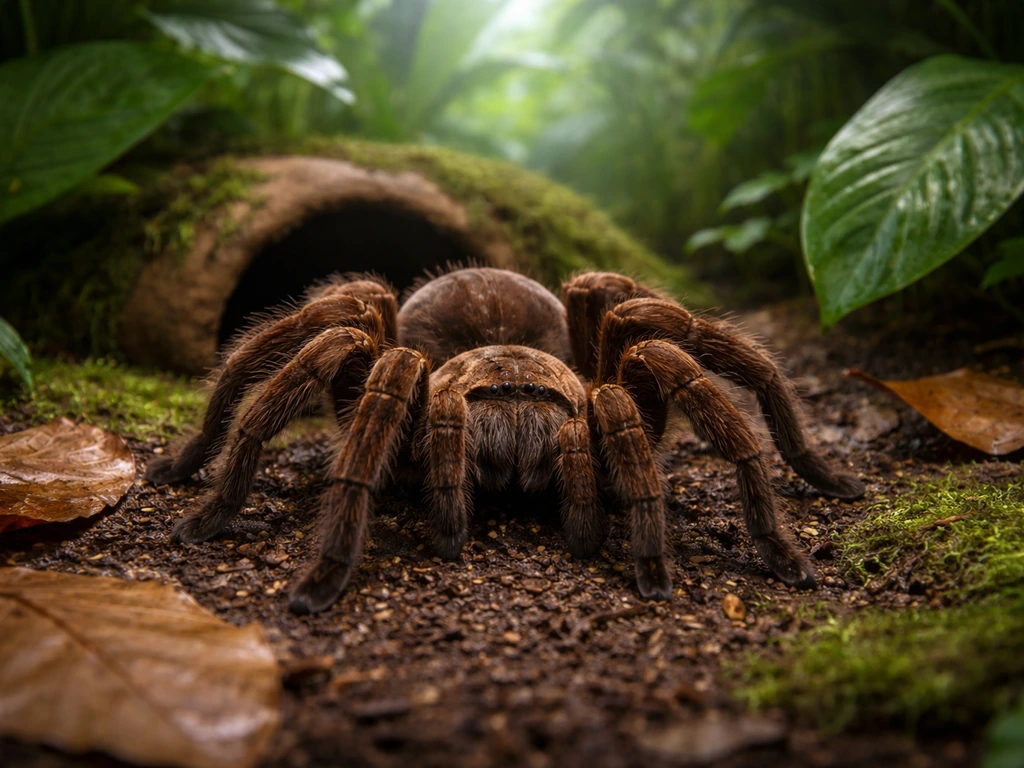
The goliath bird-eating spider is not currently listed as endangered. As of 2026, Theraphosa blondi, the species officially known by that common name, does not appear on the IUCN Red List with a threatened or endangered classification. That said, the picture is more complicated than a clean "all clear," and if you want to understand what that actually means for the species, it's worth spending a few minutes with the details.
Is the Goliath Bird-Eating Spider Endangered?

Maya Hennessy
27 May 2026
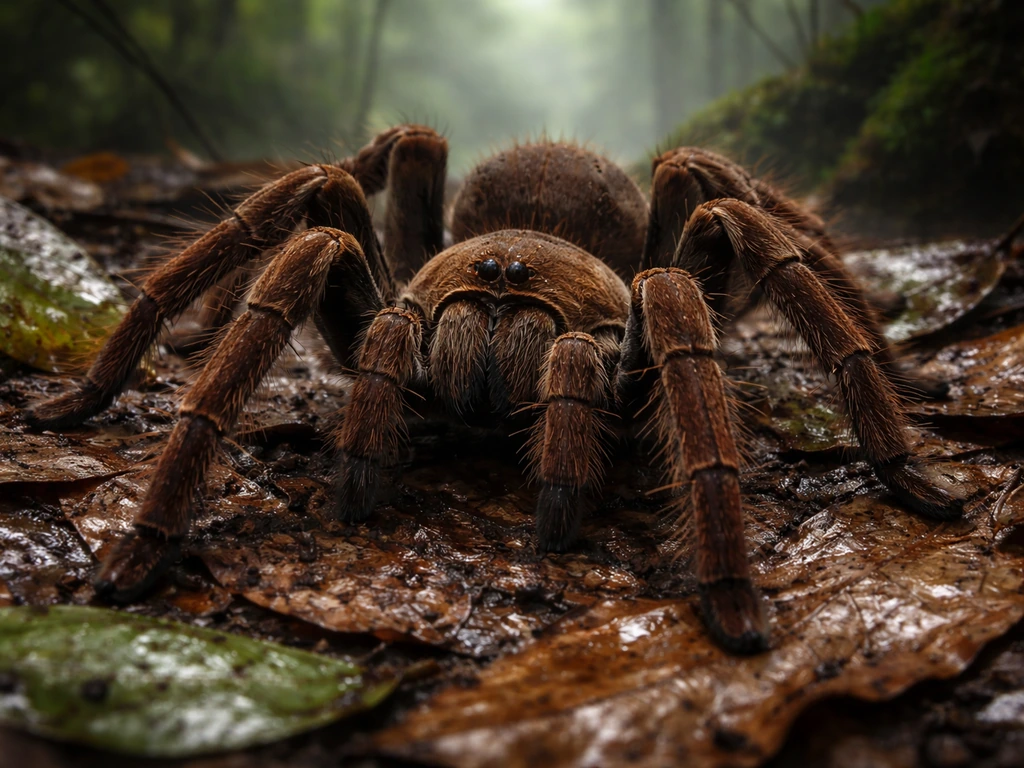
Quick answer: endangered or not
No, the goliath bird-eating spider is not classified as endangered by major conservation bodies. The IUCN Red List, which is the global standard for assessing species risk, does not currently carry a formal threatened-category listing for Theraphosa blondi. This doesn't mean the species is thriving without any pressures, but it does mean it hasn't crossed the documented thresholds that trigger official endangered status. Think of it as: not yet flagged, not necessarily out of the woods.
Identify the exact species (and why names get mixed up)
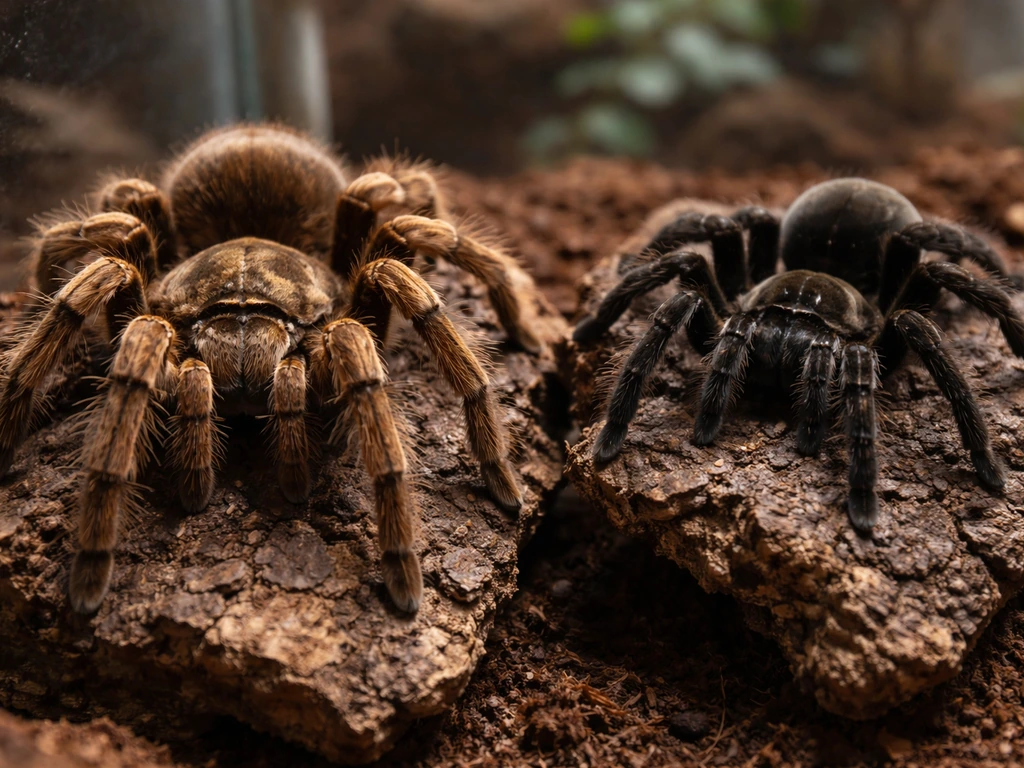
When people search for "goliath bird-eating spider," they're almost always referring to Theraphosa blondi, a massive theraphosid tarantula native to the rainforests of northern South America, particularly Venezuela, Brazil, Guyana, and Suriname. blank" rel="noopener noreferrer">Britannica and the Smithsonian's National Zoo both tie that common name directly to this single species. The Smithsonian explicitly calls it the "goliath bird-eating tarantula" and links it to T. The Smithsonian’s National Zoo lists the species as Theraphosa blondi for the animal it calls the “goliath bird-eating tarantula.” blank" rel="noopener noreferrer">the “goliath bird-eating tarantula”. blondi, so there's institutional consensus on the naming.
Where the confusion creeps in is the broader tarantula trade and hobby community. Many large theraphosid spiders get marketed or casually described as "bird-eaters," which leads people to assume there's a whole category of species under that umbrella. But when people ask whether goliath bird eaters are old world or new world, they are usually talking about where the “bird-eating tarantula” common name is applied in the pet trade, not about a separate bird-eater species category bird-eaters.
There isn't, at least not officially. If someone tells you a different species is the "real" goliath bird-eater, they're either using a regional nickname or conflating it with related tarantulas like Theraphosa stirmi or Theraphosa apophysis, which are in the same genus but are distinct species. For conservation purposes, and for answering your question accurately, T. blondi is the species that counts.
How conservation status is determined (IUCN-style explained)
The IUCN Red List categories work on a spectrum, running from Least Concern at the safe end, through Near Threatened, Vulnerable, Endangered, and Critically Endangered, all the way to Extinct in the Wild and Extinct. Getting assigned to one of those threat categories requires documented evidence: measurable population decline over a specific time frame (usually 10 years or three generations), a shrinking geographic range, small and fragile population size, or quantitative analysis showing a high probability of extinction within a given period.
The challenge with invertebrates, including spiders, is that population data is often sparse. Researchers don't have the same long-term monitoring datasets for tarantulas that exist for, say, birds or large mammals. When a species hasn't been formally assessed, or when the data to assess it thoroughly doesn't exist, it sometimes ends up listed as Data Deficient or simply not assessed at all. That's a different thing from being listed as Least Concern, and it's an important distinction for a species like T. blondi.
| IUCN Category | What It Means |
|---|---|
| Extinct (EX) | No living individuals remain anywhere |
| Extinct in the Wild (EW) | Survives only in captivity |
| Critically Endangered (CR) | Extremely high risk of extinction in the wild |
| Endangered (EN) | Very high risk of extinction in the wild |
| Vulnerable (VU) | High risk of becoming endangered |
| Near Threatened (NT) | Close to qualifying as threatened |
| Least Concern (LC) | Population stable, no major risk |
| Data Deficient (DD) | Not enough information to assess |
| Not Evaluated (NE) | Has not been assessed yet |
Current status and what the official sources say

As of May 2026, Theraphosa blondi does not have a formal IUCN Red List assessment placing it in any threatened category. It is not listed as Vulnerable, Endangered, or Critically Endangered. Because comprehensive invertebrate assessments are often underfunded and slow-moving, many tarantula species fall into a gray zone where official evaluation simply hasn't happened at the level of rigor applied to vertebrates. This makes it harder to say definitively "the species is fine" versus "we just don't have enough data to know for sure."
CITES, the international treaty that controls trade in wild-caught animals and plants, also does not list T. blondi on its Appendices, which means there are no internationally enforced trade restrictions on the species based on extinction risk. Some national laws in range countries provide local protections, but those vary and aren't always consistently enforced.
Main threats and what's driving decline (if any)
Even without an official endangered listing, T. blondi faces real pressures that conservation scientists watch carefully. These are the same kinds of drivers that push species toward threatened status over time, and understanding them matters for anyone interested in where this species could be heading.
- Habitat loss: Deforestation in the Amazon basin and surrounding rainforest regions is the primary long-term threat. T. blondi is a ground-dwelling burrowing spider tied closely to humid lowland rainforest, and as that habitat fragments or disappears, suitable territory shrinks.
- Wild collection for the pet trade: Goliath bird-eaters are highly sought after in the exotic pet and tarantula hobby market. Wild-caught individuals are still collected in some range countries, which adds pressure on local populations even if captive breeding reduces some demand.
- Climate change: Shifts in rainfall patterns and temperature in South American rainforests affect the humid microhabitats these spiders depend on for burrowing and breeding.
- Limited data: The lack of robust population monitoring means declines could be occurring without triggering formal assessments. This is a structural gap in invertebrate conservation globally.
This mirrors the pattern seen with many species on this site's broader radar, where habitat destruction is the common thread linking endangered birds, extinct birds, and at-risk invertebrates alike. Whether you're looking at the pressures facing the cassowary in its forest habitat or trying to understand why certain animals disappear, deforestation keeps showing up as the central driver. If you're also wondering where does the cassowary bird live, the habitat focus you see here is the same kind of habitat-loss concern that can affect other species like this. T. blondi's story is no different in that respect.
What to do next today: verify, track updates, and interpret conflicting info

Conservation status can change, and the sources you check matter. Here's how to verify the current status yourself and make sense of any conflicting information you encounter.
- Go directly to the IUCN Red List at iucnredlist.org and search "Theraphosa blondi." This is the authoritative global source. If a formal assessment exists, it will be there with a category, date, and the evidence behind it.
- Check CITES at cites.org and search the species database. This tells you whether international trade controls are in place based on extinction risk.
- If you see a website or social media post claiming T. blondi is endangered, look for a source. Claims without a link to IUCN, CITES, or a peer-reviewed study are often based on outdated information, misidentified species, or general concern rather than a formal assessment.
- For the most current research, search Google Scholar for "Theraphosa blondi conservation" or "Theraphosa blondi population" filtered to recent years. This surfaces any new field studies that may have informed or will inform future IUCN assessments.
- Check whether the species you're reading about is actually T. blondi. Given the naming confusion discussed above, some sources reporting on "bird-eating spider" conservation may be referring to a different theraphosid species, which would have its own separate status.
- Bookmark the IUCN page for the species and revisit it periodically. IUCN assessments are updated on rolling schedules, and a species can move from Not Evaluated to a threat category relatively quickly if new population data comes in.
One last thing worth flagging: because this site focuses primarily on birds, you might be wondering why a spider article shows up here at all. Conservation science doesn't respect taxonomic boundaries when it comes to its principles. The same frameworks used to track endangered and extinct birds, from the IUCN categories to the habitat-loss drivers, apply directly to invertebrates like T. blondi.
Understanding how status is determined and what threatens a species is the same skill set whether you're researching the cassowary, looking into what the largest birds to ever live faced before extinction, or trying to figure out if the world's biggest spider is in trouble. If you’re also curious about what is the biggest extinct bird and how “extinct” is determined, the same IUCN-style thinking applies.
If you're wondering what was the largest bird to ever live, the answer involves extinct giants from different periods rather than any living species. The tools and logic are identical.
FAQ
If it is not endangered, could the goliath bird-eating spider still be at risk locally in parts of its range?
Yes. A species can be unlisted globally yet face localized declines from deforestation or collection pressure in specific countries. That is why you may see regional reports of habitat loss even when the IUCN global status does not flag a threat category.
Why do some hobby pages claim it is threatened or protected if the IUCN does not list it as such?
Common causes are outdated claims, confusion with different Theraphosa species, or mixing legal trade rules with conservation status. Another possibility is that they are referring to local wildlife regulations in one country rather than an international Red List assessment.
What does it mean if a tarantula is “not assessed” versus “Data Deficient” for conservation?
“Not assessed” means no formal evaluation has been completed yet, while “Data Deficient” means evaluators attempted an assessment but could not determine risk due to limited evidence. Both differ from being categorized as Least Concern.
Is the goliath bird-eating spider protected from international wildlife trade?
According to the article, it is not on CITES Appendices, so there are no worldwide CITES-based trade restrictions tied to extinction risk. That does not automatically mean trade is unregulated, since range-country laws can still restrict capture or export.
Does “spider habitat loss” translate into measurable population decline for this species?
Not always, and that is part of the data gap. Habitat destruction can reduce suitable forest area and prey availability, but confirming decline requires field surveys or population estimates over time, which are often limited for large invertebrates.
Could pet trade harvesting be a concern even if the species is not on CITES?
It can be. Even without CITES listings, domestic or non-international trade can still extract animals from the wild, especially where enforcement is weak. For risk signals, look for reports of increasing scarcity, local population complaints, or tighter national regulations.
How can I tell if someone is referring to the right species when they say “goliath bird-eating spider”?
Use the scientific name as the deciding factor. In this context, “goliath bird-eating spider” should correspond to Theraphosa blondi. If a source mentions a different Theraphosa name, like stirmi or apophysis, it is likely a different species.
What is the fastest way to verify the current conservation status yourself?
Check the IUCN Red List entry for Theraphosa blondi, then cross-check whether any CITES Appendices include the species. If you want a more practical view, also review conservation or wildlife authority pages for the specific range countries where it occurs.
Next Article
Are Goliath Bird Eaters Old World or New World?
Goliath bird-eater tarantula is Old World, native to West and Central Africa, with taxonomy and why name confusion happe