No condor species is fully extinct today, but the answer depends on which condor you mean and what you consider 'extinct. ' The California condor was extinct in the wild as of 1987, when every last wild individual was captured and moved into captive breeding programs. People also ask whether the California condor is the largest bird in the world is the california condor the largest bird in the world.
Is the Condor Bird Extinct? Status, Causes, and Recovery

Maya Hennessy
1 Jun 2026
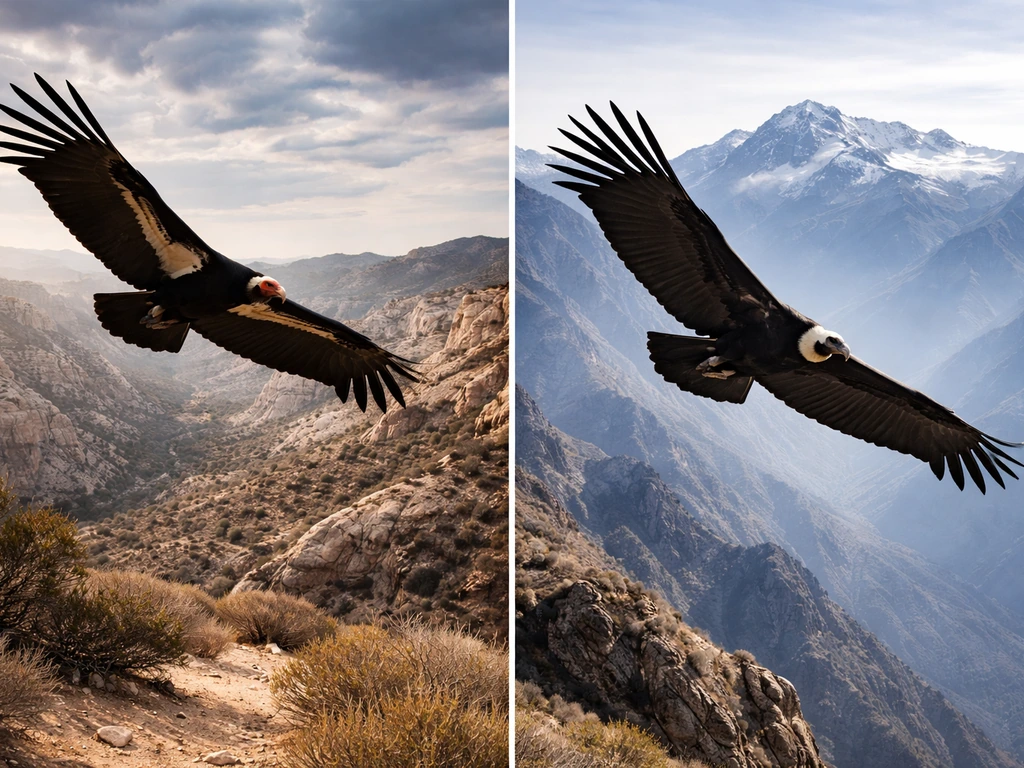
It has since been reintroduced and now numbers over 560 birds, though it remains Critically Endangered on the IUCN Red List. [The Andean condor never reached that low point and is currently classified as Near Threatened. ](https://portals. iucn.
org/library/sites/library/files/documents/2016-093. pdf) So: not extinct, but the California condor came about as close as a species can get without disappearing entirely.
Which condor are we talking about?
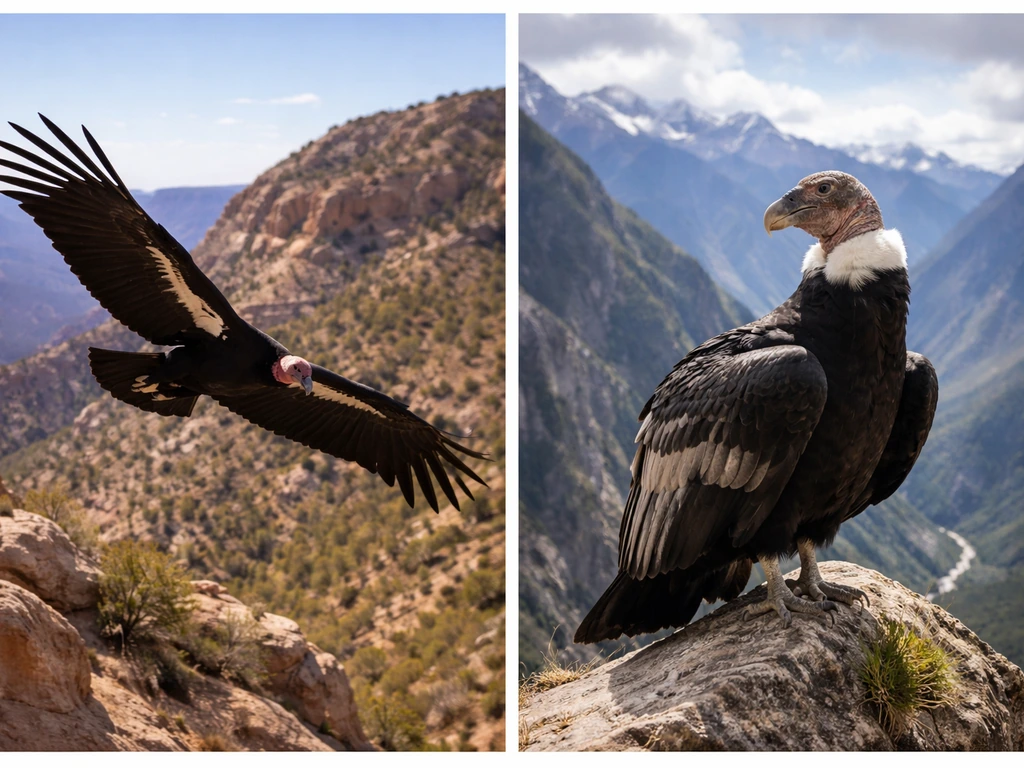
When people search 'condor bird,' they almost always mean one of two living species: the California condor (Gymnogyps californianus) or the Andean condor (Vultur gryphus). These are separate species in separate genera, and their conservation stories are very different. There is also a historically extinct condor species, the Californian terratorn relatives and related New World vultures that vanished long ago, but those aren't what most people are asking about.
The California condor is native to North America and has the more dramatic recent history, having been brought back from a population of just 22 individuals in the 1980s. The Andean condor ranges across much of South America, from Venezuela and Colombia down through the Andes to Patagonia and parts of Brazil. Both are massive, long-lived birds, and both face human-caused threats, but their current status and the urgency around them are quite different.
Current status by species: the direct answer
| Species | Scientific Name | IUCN Status | Wild Population (approx.) | Extinct? |
|---|---|---|---|---|
| California condor | Gymnogyps californianus | Critically Endangered | 347 (as of 2022) | No — but was extinct in the wild 1987–1992 |
| Andean condor | Vultur gryphus | Near Threatened | Declining, exact count uncertain | No |
| Extinct condor relatives (prehistoric) | Various | Extinct | 0 | Yes — gone thousands of years ago |
The California condor's 'Critically Endangered' status means it faces an extremely high risk of extinction in the wild. That's the last stop before 'Extinct in the Wild' and 'Extinct' on the IUCN scale. The Andean condor's 'Near Threatened' status means it's not currently in immediate danger but is close to qualifying as threatened if its population trend doesn't improve. Many readers also wonder, is the Andean condor the largest bird? Neither species is extinct right now, but neither is safe either. In general, condors are not considered dangerous to people, but they can still be vulnerable to the threats created by humans condors dangerous.
What brought condors to the edge historically

The California condor's collapse was driven by a combination of factors that compounded over decades. Shooting and direct persecution were major early drivers, as condors were historically killed by ranchers who mistakenly blamed them for livestock deaths. Habitat loss reduced the open foraging areas these birds need. Then there was poisoning: both secondary poisoning from carcasses laced with pesticides or poisons meant to kill predators, and lead poisoning from ingesting bullet fragments in carcasses left by hunters. Lead poisoning remains the single biggest ongoing threat to wild California condors today, according to the U.S. Fish and Wildlife Service.
By 1987, only 27 California condors existed on Earth, all of them alive only because of emergency human intervention. The last wild individual was trapped on April 19, 1987, making the species functionally extinct in the wild. That's not ancient history. It happened within living memory, which is part of what makes the condor's story so striking.
The Andean condor's decline follows a similar script: hunting, poisoning (including retaliatory killings by farmers who view condors as threats to livestock), habitat degradation, and slow reproductive rates that make population recovery difficult. Andean condors don't breed until around age five to seven, and they typically raise only one chick every other year. That biology makes any population loss extremely hard to recover from naturally.
How scientists decide a species is extinct (or isn't)
Extinction isn't declared lightly or quickly. The IUCN uses a defined category system: 'Extinct' means there is no reasonable doubt that the last individual has died, based on exhaustive surveys over an appropriate timeframe. 'Extinct in the Wild' means a species survives only in captivity or cultivation, not in its natural habitat. 'Critically Endangered' means the wild population faces an extremely high risk of extinction but still exists.
For the California condor in 1987, 'extinct in the wild' was effectively the correct category, though the species never received that official IUCN designation because captive birds kept the species from crossing that final threshold. Scientists confirm a species is still alive through direct observation, camera traps, acoustic monitoring, and in some cases genetic sampling from environmental DNA. For condors specifically, wild populations are actively tracked by recovery programs using wing tags and radio transmitters, so population counts are relatively precise compared to many other threatened species.
It's worth understanding that IUCN Red List assessments don't happen on a fixed schedule. A species can be reassessed sooner than its standard review cycle if significant new information becomes available, whether that's a population crash or a recovery milestone. That means the listed status at any given moment reflects the most recent assessment, not necessarily the absolute current situation on the ground.
Conservation and recovery: what's actually happening today
The California condor comeback
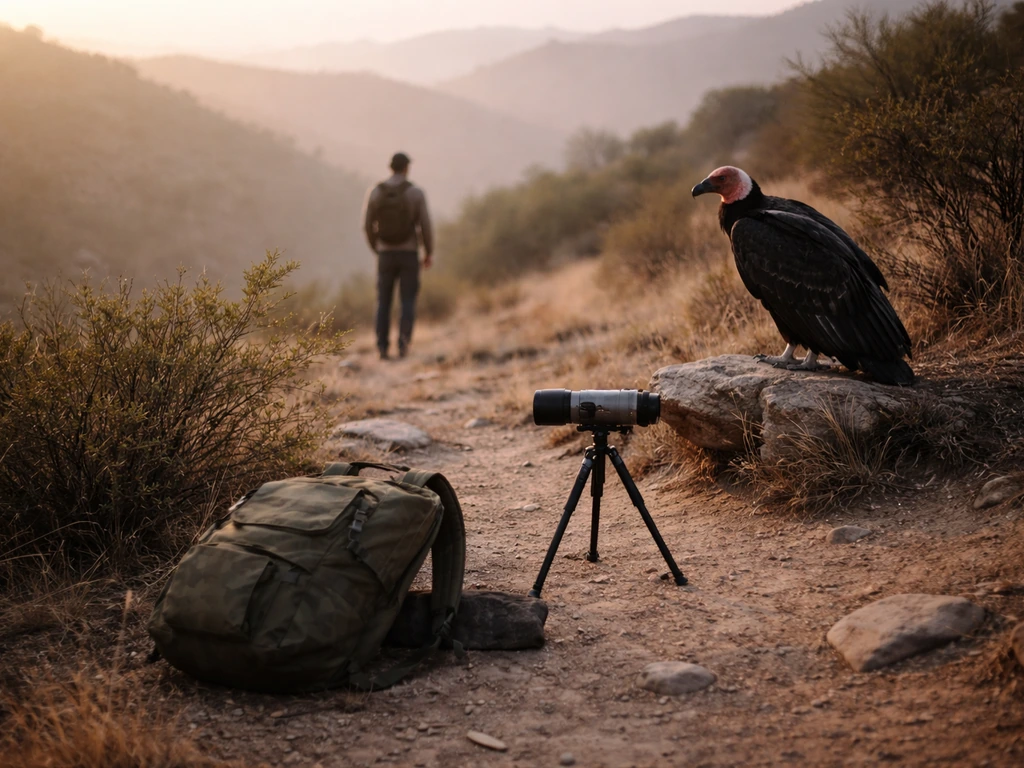
The California condor recovery program is one of the most intensive wildlife conservation efforts ever attempted. Starting in 1992, captive-bred condors were reintroduced to the wild at carefully selected sites. By 2022, the wild population had grown to 347 birds, with another 214 in captivity, giving a total of 561 individuals. The U.
S. Fish & Wildlife Service’s California Condor Recovery Program reports that since 1992, reintroducing captive-bred condors has helped produce that growth, including [the 2022 breakdown of 347 in the wild and 214 in captivity (561 total). ](https://www. fws.
gov/program/california-condor-recovery) In April 2024, the San Diego Zoo Wildlife Alliance announced the hatching of the 250th California condor chick born through the recovery program, and noted that more than half of all living California condors were now free-flying.
Reintroduction sites now span multiple states and countries: Vermillion Cliffs in northern Arizona, Big Sur and the Ventana Wilderness in California, Pinnacles National Monument, the Yurok Ancestral Territory within Redwood National Park, Bitter Creek National Wildlife Refuge, and a sixth site in northern Baja California, Mexico. First wild-hatched chick in the reintroduced population: 2004. First year more condors flew free than lived in captivity: 2008. These are real milestones in a story that was almost catastrophically over by 1987.
The USFWS recovery goal is specific: two geographically distinct self-sustaining wild populations of at least 150 birds each, with a minimum of 15 breeding pairs in each population, plus a third captive population as a safety net. The program isn't there yet, and lead poisoning from spent ammunition in carcasses continues to suppress wild survival rates. Switching to non-lead ammunition is the most important single action hunters in condor range can take to support recovery.
Andean condor conservation
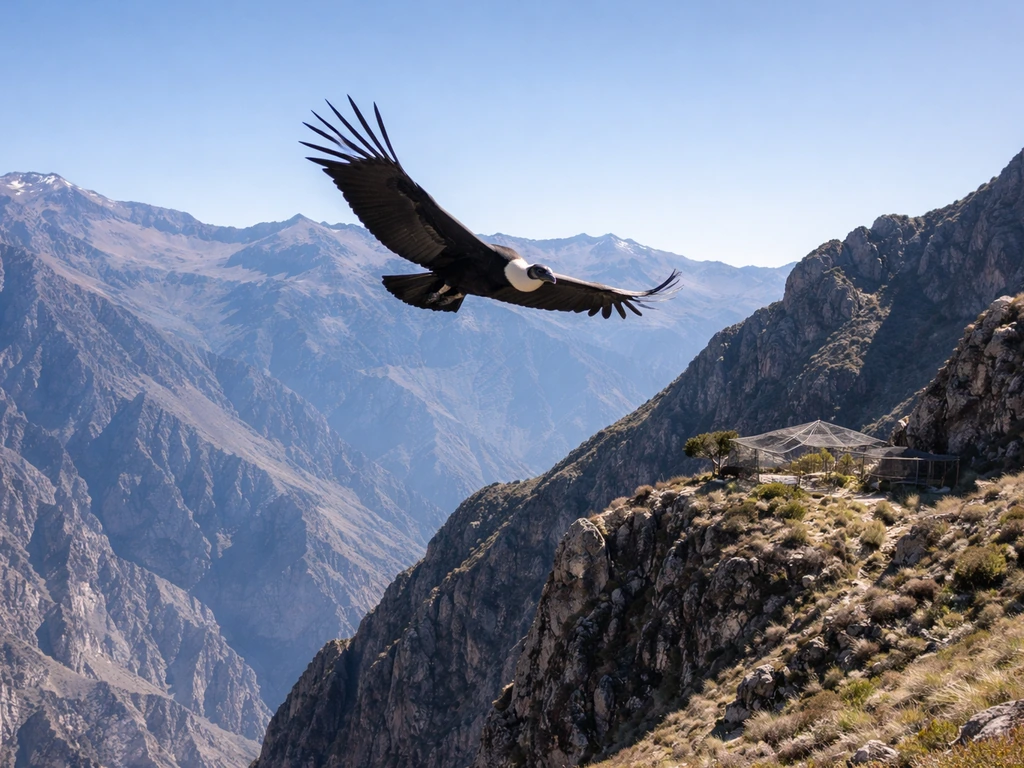
The Andean condor receives protection across most of its range countries and is listed under Appendix I of CITES, which prohibits international commercial trade. Captive breeding and reintroduction programs exist in several South American countries, and community education efforts aim to reduce persecution by farmers. The species' Near Threatened status reflects that these efforts have so far prevented a collapse similar to what happened in North America, but the population trend is declining, which means the situation still warrants close attention.
How to check the latest status yourself
Conservation statuses change as new assessments come in, so if you want the most current information, go directly to the authoritative sources rather than relying on any single article (including this one). Here are the most reliable places to check:
- IUCN Red List (iucnredlist.org): Search the species by common or scientific name. The page will show the current category, assessment date, population trend, and threat details. Look for the assessment date to know how recent the data is.
- BirdLife International DataZone (datazone.birdlife.org): BirdLife is the official IUCN Red List authority for birds. Their species factsheets are detailed and updated with assessment history.
- U.S. Fish and Wildlife Service (fws.gov): For the California condor specifically, USFWS maintains a dedicated Recovery Program page with current population counts and program updates.
- San Diego Zoo Wildlife Alliance: Publishes news releases and program updates on condor chick milestones and reintroduction progress.
- USGS Publications Warehouse: For peer-reviewed scientific papers on population status and recovery research.
When you land on an IUCN or BirdLife page, look for three things: the Red List category (the colored box near the top), the population trend arrow (increasing, stable, decreasing, or unknown), and the assessment date. If the assessment is more than five years old, it's worth checking BirdLife's DataZone for any newer assessment, since birds are periodically reassessed on a rolling basis.
Quick steps to answer your specific condor question
- Identify which condor you mean: California condor (North America, Gymnogyps californianus) or Andean condor (South America, Vultur gryphus). If you're researching prehistoric or fossil condor relatives, that's a separate search.
- Go to the IUCN Red List or BirdLife DataZone and search for the species by name. This takes about 30 seconds and gives you the official current status.
- Read the category: Extinct means gone. Extinct in the Wild means only captive individuals survive. Critically Endangered means wild populations exist but face extremely high extinction risk. Near Threatened means close to qualifying as threatened.
- Check the population trend arrow on the IUCN page. A downward arrow alongside any threatened category is a warning sign regardless of the current category label.
- If you want program-specific updates on the California condor, go directly to the USFWS California Condor Recovery Program page for the most recent population counts and reintroduction news.
The condor story is one of the most dramatic in conservation history: a species that touched the edge of oblivion and was pulled back by deliberate, expensive, sustained human effort. It's also a story that isn't finished. The California condor is still Critically Endangered, lead poisoning is still killing wild birds, and the Andean condor's population is still declining.
If you're curious about how condors compare in size to other large birds, or whether they qualify as birds of prey, those are worth exploring alongside the extinction question since they give useful context for understanding what kind of animal we're actually trying to save. These two facts are why many people ask, is the Andean condor a bird of prey birds of prey.
FAQ
If the California condor is not extinct now, why do people still say it “went extinct”?
They are usually referring to “extinct in the wild” in 1987, when no free-ranging condors remained and the entire wild population had been replaced by captive birds. That is different from the species being extinct everywhere (no living individuals), and the recovery program has restored birds to the wild since the early 1990s.
So is any condor species globally extinct at this time?
No. The two condor species most people mean, the California condor and the Andean condor, still have living populations. There are other condor-like extinct forms in the fossil record, but those are not the targets of today’s conservation status checks.
What is the difference between “Extinct” and “Extinct in the Wild,” and which one applies to condors historically?
“Extinct” means there is no reasonable doubt the last individual is dead, based on thorough surveys. “Extinct in the Wild” means the species exists only in captivity or cultivation, not in its natural habitat. For the California condor, the situation in 1987 matched the “extinct in the wild” meaning, even though the official IUCN label was not used in the same way described in the article.
How do scientists make sure condors are still alive in the wild?
They combine methods such as direct sightings, camera traps, acoustic monitoring, and sometimes genetic checks using environmental DNA. For California condors specifically, recovery teams also track individuals through wing tagging and radio transmitters, which improves confidence in counts and survival estimates.
Could the IUCN status be out of date, and does it ever change suddenly?
Yes. The Red List is reassessed when new evidence appears, such as a rapid population decline or a major recovery milestone, so the status you see reflects the timing of the most recent assessment rather than a daily reality. If a population trend has shifted since the last review, you may need a newer update source.
What does “Critically Endangered” mean in practical terms for the California condor?
It indicates an extremely high risk of extinction in the wild, which is the category right before “Extinct in the Wild” on the IUCN pathway. In practical terms, recovery is still actively constrained by ongoing threats, especially lead poisoning from contaminated carcasses and ammunition fragments.
Can lead poisoning be prevented at the population level, or is it only an individual problem?
It can be addressed beyond individual cases by changing what hunters use. Switching to non-lead ammunition reduces the amount of lead fragments left in carcasses, which lowers both direct lead poisoning and secondary impacts when scavengers consume contaminated remains.
Why does the Andean condor recover more slowly than it seems it should?
Its slow reproductive schedule is the key bottleneck. It typically does not start breeding until about age five to seven, and it usually raises a single chick about every other year. That means population losses are not easily compensated for by rapid breeding.
Does reintroduction guarantee that condors will become fully self-sustaining in the wild?
Not automatically. The recovery goal includes specific benchmarks, such as two geographically distinct wild populations with enough breeding pairs, plus a captive safety net. Ongoing mortality risks, like poisoning from bullets, can keep survival too low for populations to sustain themselves without continued management.
What’s the most common conservation mistake people make when talking about condors?
Assuming all “condors” share the same status. California and Andean condors face different conservation trajectories and have different urgency levels, and lumping them together can hide what actions matter most for each species.