
If you're searching for condors in Brazil, the bird you're almost certainly thinking about is the Andean condor (Vultur gryphus), and the honest answer is: it barely occurs in Brazil at all. The Andean condor's core range runs along the Andes mountain chain from Venezuela and Colombia down to Patagonia, and Brazil sits mostly outside that range. Scientific records place it as an occasional visitor to southwestern Brazil at most, with at least one documented record of a single immature bird. That's it. If someone told you condors are regularly found across Brazil, that's not accurate.
Where Is the Condor Bird Found in Brazil? Range and Habitat

Maya Hennessy
6 Jun 2026
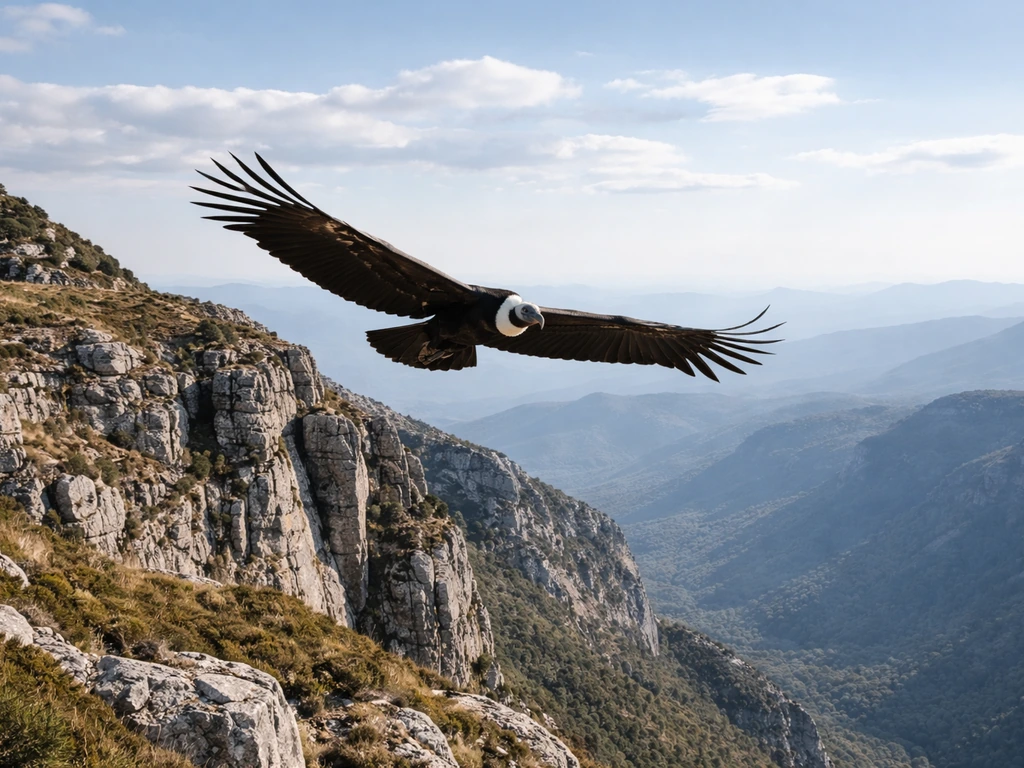
Which condor are we actually talking about?
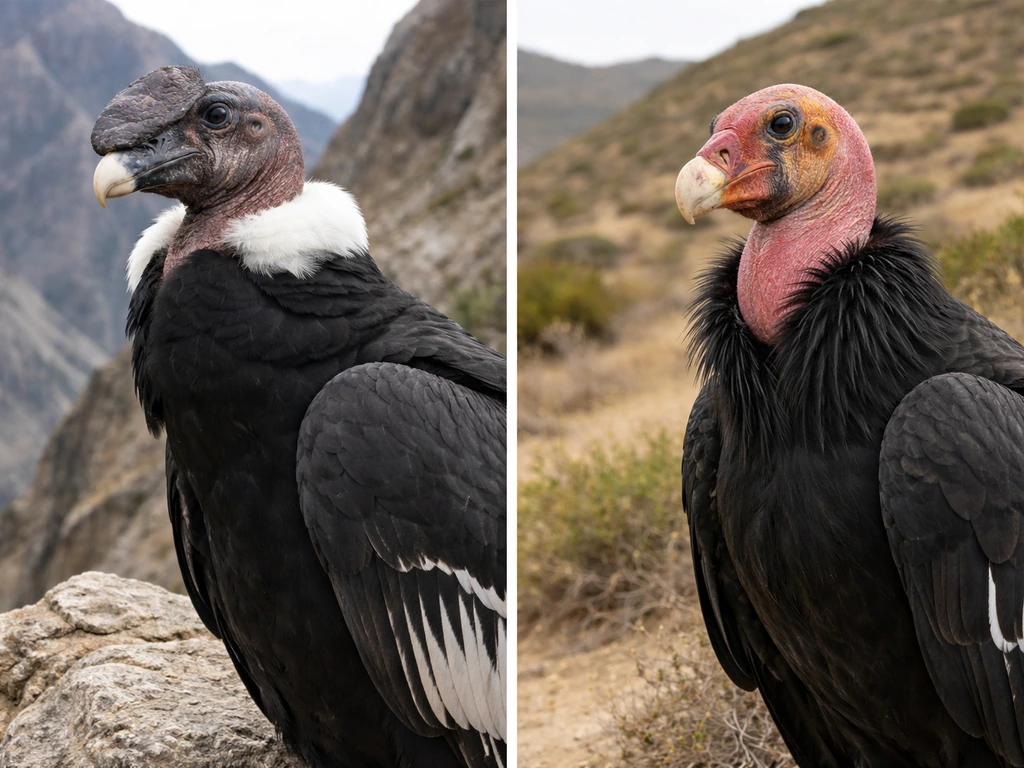
There are two birds most people call a "condor": the Andean condor (Vultur gryphus) and the California condor (Gymnogyps californianus). The California condor lives exclusively in North America, specifically parts of California, Arizona, Utah, and Baja California in Mexico. The California condor is sometimes described as the largest bird in the world, which is why people often look up that comparison is the california condor the largest bird in the world. It has zero presence in South America and zero relevance to Brazil. So if your question is about Brazil, you're asking about the Andean condor.
The Andean condor is one of the largest flying birds in the world by wingspan, stretching up to around 3.2 meters (about 10.5 feet) tip to tip. It's a scavenging vulture that soars on thermal currents over open Andean terrain, and its range is tightly tied to the geographic corridor of the Andes. Whether the Andean condor is a bird of prey depends on how you define the term, but it is best described as a scavenging vulture is the Andean condor a bird of prey. Brazil, being dominated by the Amazon basin, the Cerrado, and Atlantic Forest, doesn't offer much of the high-altitude open habitat this bird depends on.
Does the Andean condor actually live in Brazil?
Officially, no, not in any meaningful breeding or resident sense. GBIF (the Global Biodiversity Information Facility) describes the Andean condor as occasionally ranging into "southwestern Brazil" as an extension of its broader Andean distribution, but it frames this as a peripheral, occasional occurrence, not a stable population. A peer-reviewed overview of migratory birds in Brazil explicitly characterizes the species' occurrence there as "occasional" and notes only one record of an immature individual documented in the country.
Brazil's own bird reference community backs this up. WikiAves, Brazil's most comprehensive citizen-science bird encyclopedia (known locally as "condor-dos-andes"), states outright that it is very rare to see this species in Brazil. Interestingly, WikiAves also references Brazilian paleontological findings, meaning fossil evidence of condors from the distant past exists in Brazil, but that historical presence is a completely different story from modern occurrence.
So to be clear: there is no established resident Andean condor population in Brazil. What exists is a thin paper trail of rare, likely vagrant sightings from the southwestern edge of the country, where Brazil's territory nudges closest to the Andean foothills via its border with Bolivia.
Where in Brazil would you even look?

If a condor ever does cross into Brazil, southwestern Brazil is by far the most plausible location. This is the part of the country closest geographically to Bolivia and the eastern Andean slopes, which is where the condor's range genuinely thins out into lowland terrain. States like Mato Grosso do Sul and parts of Mato Grosso border this transitional zone. The Pantanal region, while not classic condor habitat, sits in this general southwestern corridor.
That said, don't expect to find one there on a weekend trip. Any sighting in Brazil would most accurately be described as a vagrant occurrence, similar to how rare seabirds occasionally appear far outside their normal range during unusual weather or dispersal events. Because the Andean condor is so rare in Brazil, it is not known to be dangerous to people there. The Brazilian records that do exist appear to be isolated individual sightings rather than evidence of a breeding or wintering population.
Habitat and elevation: what this bird actually needs
Understanding why Brazil is essentially off the map for condors requires knowing what the Andean condor needs to survive. It is built for high-altitude, open landscapes where it can spot carrion from the air and catch powerful thermal updrafts to soar for hours without flapping.
- Elevation: typically forages from around 3,000 to 5,000 meters, though some individuals have been recorded up to 5,500 meters above sea level
- Terrain: open grasslands, alpine páramo, rocky Andean scrub, and cliff faces for roosting and nesting
- Visibility: non-forested, wide-open spaces where it can scan large areas for carcasses while soaring
- Roosting sites: rocky cliffs and ledges, used for both overnight roosting and nesting (a single egg per breeding cycle)
Brazil's landscape is almost the opposite of this. The Amazon rainforest covers a massive portion of northern and western Brazil. The Cerrado savanna of central Brazil is more open, but it sits at relatively low elevations (mostly 300 to 900 meters) and lacks the cliff structures condors use for roosting. The Atlantic Forest along the southeastern coast is dense and tropical. None of these biomes offer the combination of high elevation, open terrain, and cliff topography that the Andean condor is ecologically wired for.
Conservation status and why Brazil barely factors in
The Andean condor is currently listed as Vulnerable on the IUCN Red List, and its survival challenges are serious across its entire range. Understanding those threats also explains why even the marginal possibility of seeing one in Brazil is shrinking rather than growing.
| Threat | How it affects condors |
|---|---|
| Pesticide and lead poisoning | Condors scavenge carcasses that may contain lead ammunition fragments or poison bait, which causes fatal contamination. Pesticide poisoning is cited as currently the greatest threat to the species. |
| Shooting and persecution | Condors are sometimes killed by farmers who (incorrectly) believe they attack livestock. Persecution has historically been widespread across parts of the Andes. |
| Electrocution and power line collisions | Large soaring birds are vulnerable to collisions with and electrocution by power lines, especially near agricultural areas. |
| Habitat loss | Conversion of open Andean grasslands to farmland reduces available foraging territory and disrupts the carrion availability the species depends on. |
Brazil doesn't host a condor population large enough to have active reintroduction or monitoring programs specifically for this species within its borders. The meaningful conservation work happens in core Andean countries: Argentina, Chile, Peru, Bolivia, and Colombia have active monitoring programs, protected areas, and in some cases captive-breeding and reintroduction efforts. The USGS publication entry “Lead poisoning in captive Andean condors (Vultur gryphus)” highlights lead ingestion as a documented threat in captive birds, supporting the broader concern that lead poisoning is a meaningful risk for the species. Argentina in particular has been a focus of condor recovery initiatives, with birds fitted with transmitters tracked across wide territories.
For Brazil, the conservation story is more about whether range contraction in neighboring Bolivia or Argentina might further reduce even the rare vagrant occurrences currently on record. If core Andean populations decline, the odds of any bird making it to southwestern Brazil drop accordingly. This connects the broader question of the Andean condor's endangered status directly to its near-absence in Brazil.
How to verify sightings and find current data
If you want to check whether there are any verified condor records from Brazil right now, here are the most reliable sources to use today, as of mid-2026.
- GBIF (gbif.org): Search for Vultur gryphus and filter by country = Brazil. GBIF aggregates museum specimens, citizen science, and research datasets, so you'll get a realistic picture of how many occurrence records exist and what their evidence quality looks like (basis of record, coordinates, dates).
- eBird (ebird.org): Check the Andean Condor species page and its Status and Trends range map, which is built from 2009-2023 data. If any Brazilian records exist in the eBird dataset, they'll appear as isolated points, not range-filling coverage.
- WikiAves (wikiaves.com.br): Brazil's leading citizen-science bird platform. Search 'condor-dos-andes' to see any photos, dates, and locations submitted by Brazilian birders. As of available data, records are extremely sparse.
- IUCN Red List (iucnredlist.org): The species account for Vultur gryphus includes a range map and range description. Compare it directly with Brazil's geography to see how marginal the Brazilian range really is.
- Xeno-canto (xeno-canto.org): Less relevant for condors specifically (since vocalizations aren't the main identification tool), but cross-referencing recordings tagged to Brazil can help verify any claim of a local sighting.
When evaluating any reported sighting, look for supporting evidence: a photograph, a GPS-linked eBird or GBIF submission, or a record that has been reviewed by a regional bird records committee. For a range context based on real eBird sightings, you can also check eBird Status & Trends range maps for the Andean condor, which use eBird data from 2009, 2023 to show where records occur. Unverified reports of condors in Brazil should be treated skeptically given how genuinely rare the occurrence is. A large dark soaring bird in Brazil is far more likely to be a king vulture, a black vulture, or one of several large hawk-eagles than an Andean condor.
What this means if you're planning to see one
If your goal is actually seeing an Andean condor in the wild, Brazil is the wrong destination. The best places to find them reliably are in the high Andes: the Colca Canyon area in Peru, Torres del Paine National Park in Chilean Patagonia, and parts of northwestern Argentina around the Quebrada de Humahuaca or Los Cardones National Park. In those locations, condors soar predictably over cliff faces and valleys, often close enough to observe in detail. In Brazil, you'd be banking on a once-in-decades vagrant occurrence.
The condor's story in Brazil is essentially a story of edges: the outer geographic edge of the species' range, the outer edge of plausible habitat, and an extremely thin edge of recorded occurrences. That makes it fascinating from a natural history perspective (and the fossil record shows condors had a much deeper connection to South American prehistory), but it makes Brazil a poor target for anyone trying to find one today.
FAQ
I saw a huge dark bird soaring in Brazil, how can I tell if it was really an Andean condor?
If you are in Brazil, the most likely “condor-like” bird is a king vulture or black vulture (both common enough to be mistaken from the air), or a large eagle or hawk-eagle. The Andean condor’s best field clues are a heavy, broad-wing soar with very strong sun angle visibility plus a pale head and neck at distance, but those traits are hard to confirm without clear photos.
Are there any verified records of Andean condors in Brazil recently?
Yes, but only as rare individuals. A credible record would usually include photographic evidence, a geo-tagged observation, or a submission that went through review by a bird records group. Treat social-media posts with no location details or no images as unconfirmed, especially because multiple large vultures can look similar when soaring.
Does a sighting in Brazil mean condors are breeding or staying there?
A single Brazil record does not mean a breeding population exists. For an Andean condor to be considered established, you would expect repeated sightings across multiple years in the same area, ideally with evidence of immatures progressing to mature birds and observations of consistent seasonal use.
Where in southwestern Brazil would someone have the best chance of seeing one?
The highest-likelihood area is southwestern Brazil, particularly the belt of states that runs close to the Bolivian foothills (for example, Mato Grosso do Sul and adjacent parts of Mato Grosso). Within that region, look for open terrain near escarpments or river corridors that could temporarily substitute for the condor’s more typical high, cliff-backed Andean setting.
Is there a specific season when an Andean condor might show up in Brazil?
Don’t rely on the calendar alone. Because Brazilian occurrences, if they happen, are vagrants, unusual movements can be tied to weather, storms, or dispersal rather than a predictable “season.” If you want to time your search, focus on periods when large soaring-vulture movements are already being reported by local birders in that region.
How does distance from the Andes affect how believable a condor report is?
If a report comes from far from the Andes, it should be doubly scrutinized. The farther east and north you are within Brazil, the more likely the bird is another large raptor or vulture, since the Andean condor’s distribution is tightly linked to the Andean corridor.
If condors existed in Brazil long ago (fossils), why don’t we see them today?
While the species can be present as fossils from past ecosystems, that does not translate into modern sightings or current habitat suitability. Recent occurrence is what matters for “where it is found now,” and Brazil’s modern ecological conditions do not match the high-elevation open terrain condors depend on.
Could Brazil ever have a reintroduction or active monitoring program for the Andean condor?
Yes, but only indirectly. Brazil does not run a species-specific condor monitoring or reintroduction program because there is no resident population to manage. Any future change would depend on trends in core Andean countries and whether juveniles or dispersing birds reach Brazil more often.
Next Articles

Are Condor Birds Dangerous? Safety Guide for Encounters
Learn if condor birds are dangerous, key do’s and don’ts, warning behaviors, and what to do near nests or injured birds.

Is the Condor Bird Extinct? Status, Causes, and Recovery
Learn if any condor species are extinct, current status for California and Andean condors, and recovery efforts.

Is the Andean Condor a Bird of Prey? Raptor Facts
Is the Andean condor a bird of prey? Yes, a scavenging raptor. Learn traits, taxonomy, and how it compares to eagles