Vultures live on every continent except Australia and Antarctica, but exactly where a vulture lives depends entirely on which species you mean. The Turkey Vulture ranges across almost all of the Americas. The Griffon Vulture nests on cliff faces in Europe, Africa, and parts of Asia. The African white-backed vulture roams sub-Saharan savannas.
Where Does Vulture Bird Live? Habitat by Region

Maya Hennessy
28 May 2026
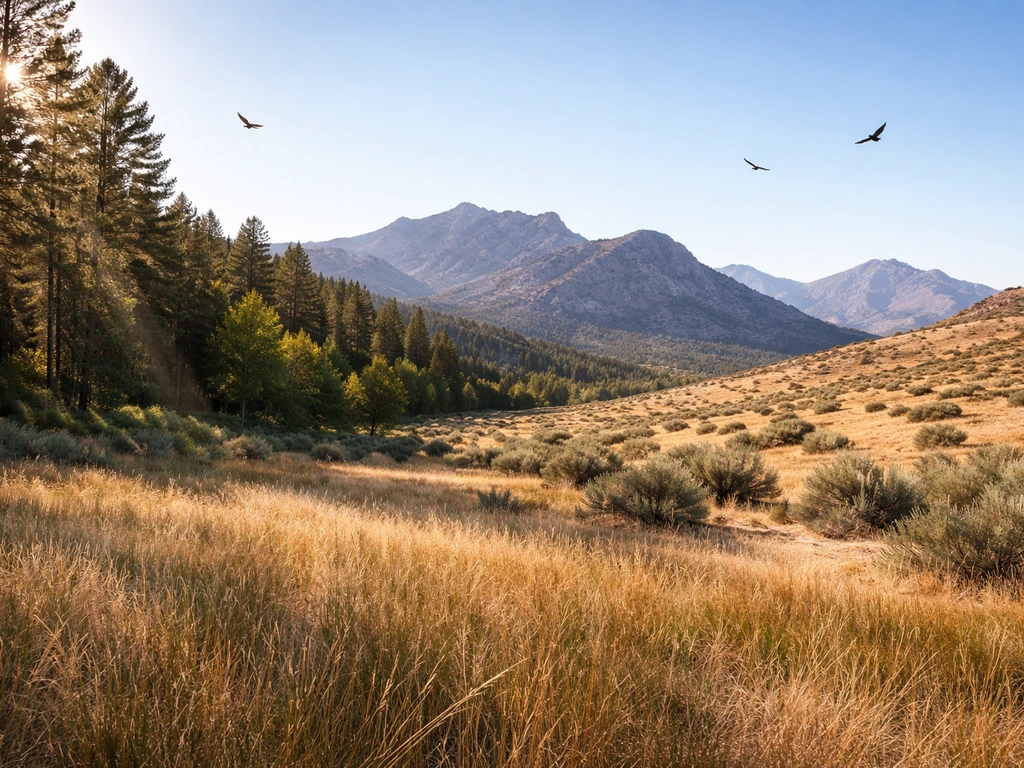
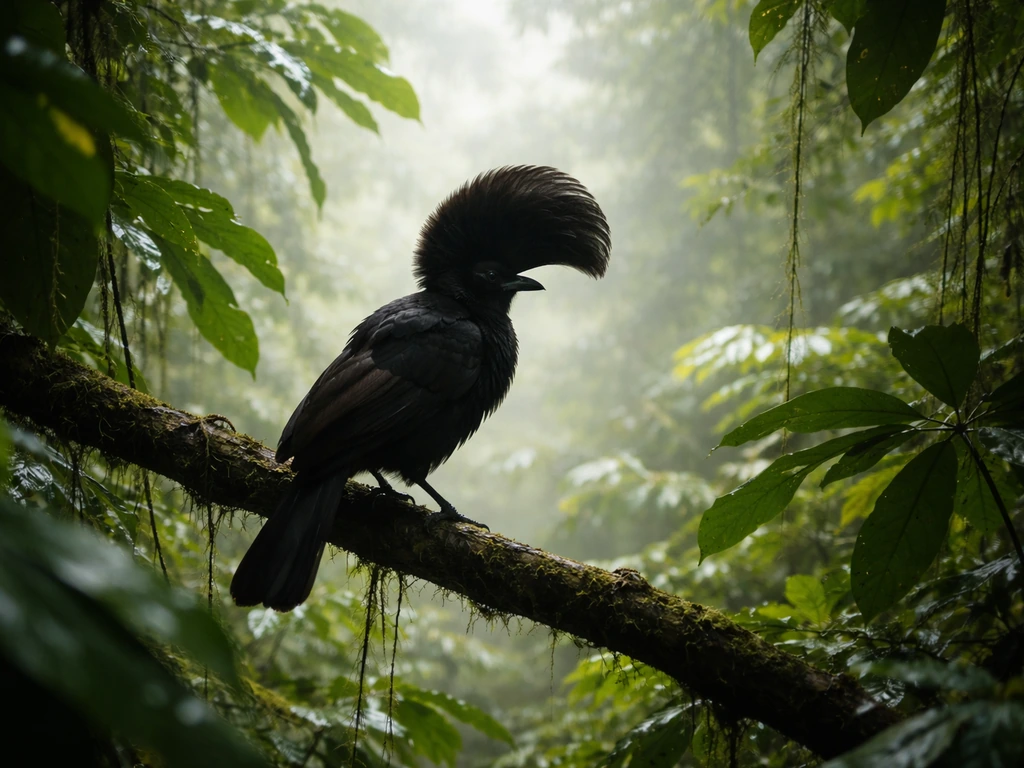
There is no single answer to "where does the vulture bird live" because vultures split into two completely separate evolutionary lineages covering wildly different geography. If you meant the umbrella bird rather than a vulture, the question where does the umbrella bird live is similar in that it depends on the exact species and region you are asking about where does the vulture bird live.
Once you know which group (or ideally which species) you're asking about, pinpointing the habitat becomes straightforward.
What "vulture bird" actually means (and why habitat depends on species)
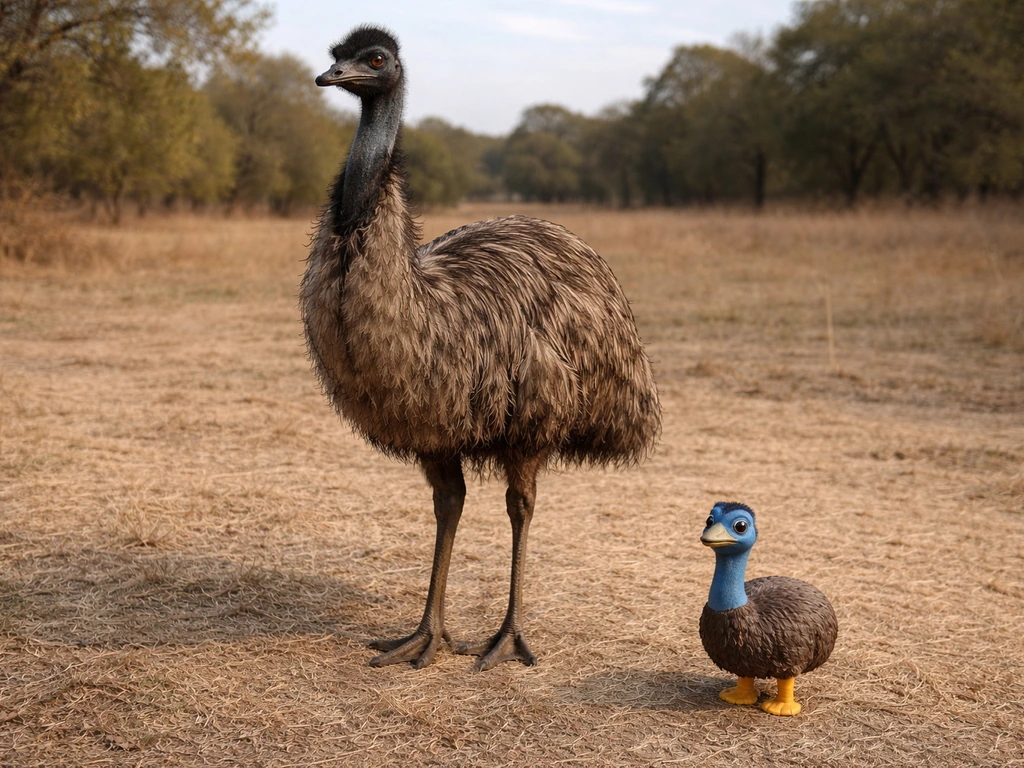
"Vulture" is a common name, not a scientific one, and it covers two distinct bird families that are not closely related. Limu emu is a name people sometimes use online when they mean a fictional or misunderstood bird, not a real, scientifically recognized species. Old World vultures (family Accipitridae) evolved in Europe, Africa, and Asia alongside hawks and eagles. New World vultures (family Cathartidae) evolved independently in the Americas.
Their similar body shapes, bald heads, and scavenging habits are the result of convergent evolution, meaning they solved the same ecological problem (finding and eating carrion) from completely different starting points. This matters for your question because each family lives on a different set of continents, and within each family individual species have their own range, habitat preferences, and conservation status.
The New World family Cathartidae contains seven living species: the Andean Condor, Black Vulture, California Condor, Greater Yellow-headed Vulture, King Vulture, Lesser Yellow-headed Vulture, and Turkey Vulture. All of them live in the Americas. The Old World family contains 15 living species spread across Europe, Asia, and Africa. When someone asks "where does the vulture bird live," they could be thinking of any one of those 22 species, each with its own story.
Global vulture distribution by continent and region

Here is a continent-level breakdown so you can quickly orient yourself to where each group appears today.
| Region | Vulture group present | Key example species | Rough range notes |
|---|---|---|---|
| North America | New World (Cathartidae) | Turkey Vulture, California Condor, Black Vulture | Turkey Vulture spans almost all of Americas except northern Canada; California Condor is restricted to parts of California, Arizona, Utah, and Baja California |
| Central & South America | New World (Cathartidae) | Andean Condor, King Vulture, Greater/Lesser Yellow-headed Vulture, Turkey Vulture, Black Vulture | Andean Condor follows the Andes mountain chain; tropical forest species like King Vulture use lowland forests |
| Europe | Old World (Accipitridae) | Griffon Vulture, Egyptian Vulture, Cinereous Vulture, Bearded Vulture | Core populations in Spain, Portugal, France (Pyrenees), Balkans, and Caucasus; Egyptian Vulture is a long-distance migrant |
| Africa | Old World (Accipitridae) | African White-backed Vulture, Lappet-faced Vulture, Hooded Vulture, Cape Vulture | Mainly sub-Saharan Africa; some species (Egyptian Vulture) cross into North Africa |
| Asia | Old World (Accipitridae) | Himalayan Griffon, Red-headed Vulture, White-rumped Vulture, Indian Vulture | South and Southeast Asia, Central Asia, Himalayas; several species have collapsed dramatically in South Asia |
| Australia / Antarctica | None | N/A | No native vultures; scavenging niche partly filled by wedge-tailed eagles in Australia |
Common habitats vultures actually use
Despite their wide geographic spread, vultures share a few habitat requirements: open or semi-open terrain where thermals form (for soaring), reliable food in the form of carcasses, and safe roosting and nesting sites. The specific environment varies by species, but you will find vultures in most of the following settings.
Open grasslands and savannas
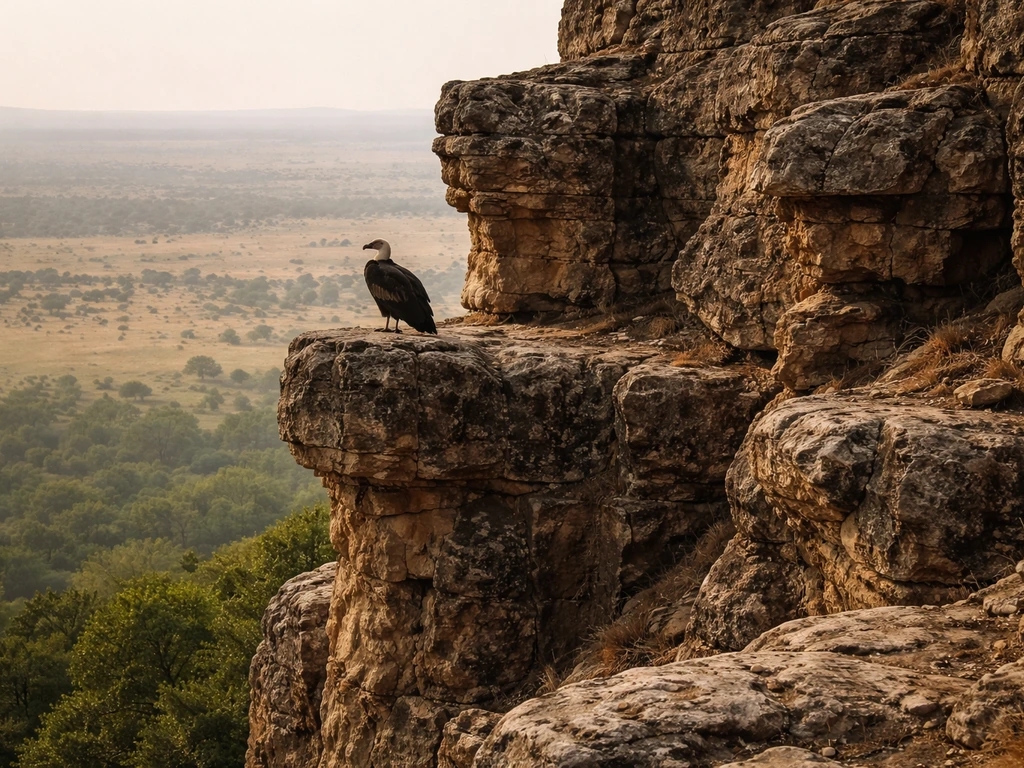
This is the classic vulture landscape. Sub-Saharan Africa's grasslands and savannas support the highest diversity and density of Old World vultures on Earth because large herbivore populations (and predators that leave carcasses) are concentrated there. The African white-backed vulture and lappet-faced vulture are quintessentially savanna birds. In the Americas, Turkey Vultures and Black Vultures are frequently seen circling over fields, meadows, and pastoral land.
Cliffs, rocky slopes, and mountain ranges
Many vultures nest on cliff faces and rocky outcrops because the height and inaccessibility protect eggs and chicks. Griffon Vultures nest on cliff ledges and forage over open shrubland and grassland. California Condors use cliff cavities and caves, nesting at elevations up to roughly 6,000 feet, and require wide expanses of undeveloped land for foraging. Andean Condors are one of the most dramatic examples: they ride thermal updrafts along the entire length of the Andes, from Venezuela south to Tierra del Fuego.
Deserts and arid landscapes
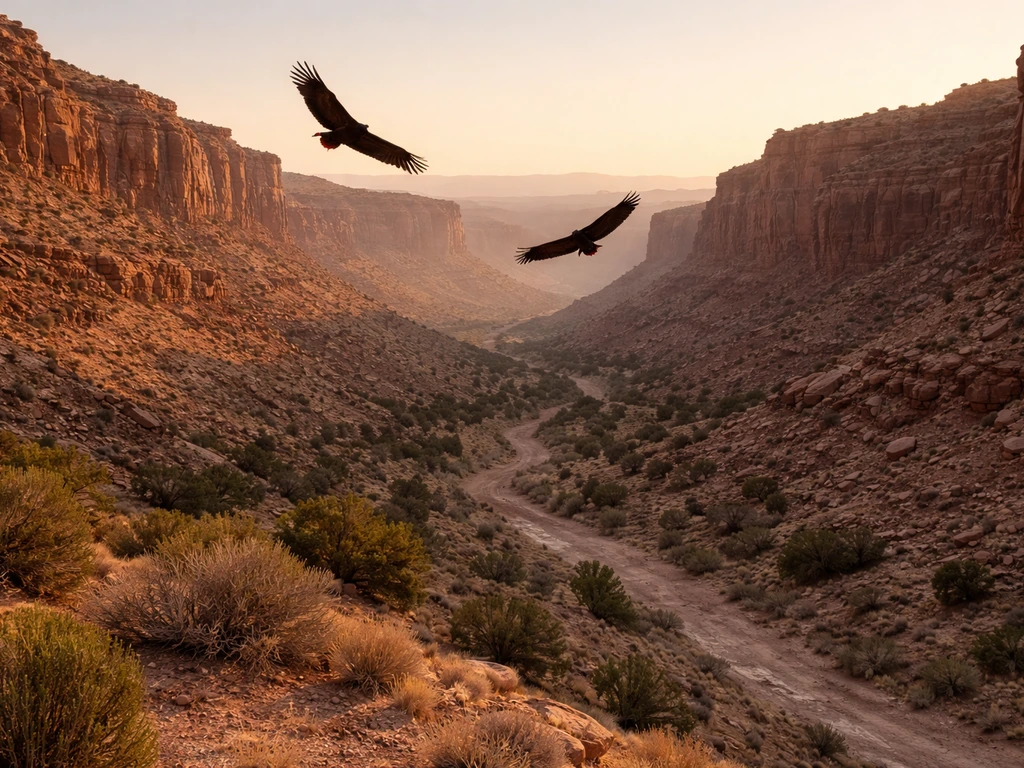
Turkey Vultures range through desert and arid canyon habitats across the American Southwest. California Condors forage from the Pacific coast across to southwestern deserts and mountain ranges. Egyptian Vultures move through arid zones in North Africa and the Middle East during migration. Open, dry landscapes suit vultures well because thermals form reliably over sun-baked ground, giving birds the lift they need to cover large distances with minimal energy.
Tropical forests and forest edges
Not all vultures prefer open country. The King Vulture and Greater Yellow-headed Vulture are closely tied to lowland tropical forests in Central and South America. Turkey Vultures also move through forested areas and have a notably broad habitat tolerance, using forests, woodlands, arroyos, and even urban edges depending on where carrion is available. Turkey Vultures feed strictly on carrion and use soaring to search for food in loose groups, locating carrion by smell as well as sound Turkey Vultures also move through forested areas. Forest-dwelling vultures often rely on smell as much as sight to locate food under a closed canopy.
Near human settlements, landfills, and roadsides
Several species have adapted to human-modified landscapes. Hooded Vultures in Africa and Black Vultures and Turkey Vultures in the Americas are regularly found near towns, waste sites, and roads. Turkey Vultures, for example, are listed as using landfills, dumps, and urban/suburban habitats in addition to natural settings. This flexibility is one reason generalist species remain relatively common while specialist species struggle.
How to pinpoint the right vulture species for your question
If you saw a vulture and want to know what species it was, or if you are researching a particular bird, the fastest approach is to narrow down by continent and then by key visual features. Use the following steps:
- Start with continent: Americas = New World Cathartidae; Europe/Africa/Asia = Old World Accipitridae.
- Note the size and any head color. Turkey Vultures have a red head; Black Vultures have a gray-black head and shorter tail; California Condors are enormous (roughly 9.5-foot wingspan) with a distinctive orange-yellow head in adults.
- In Africa, look at back color and facial markings. White-backed vultures have a pale back visible in flight; Lappet-faced vultures are massive with distinctive skin folds on the face.
- In Europe, Griffon Vultures are large and pale-bodied with a ruff of white feathers; Bearded Vultures (Lammergeiers) have a rusty-orange chest and dark wings.
- Once you have a likely species name, go to eBird, Cornell Lab's All About Birds, or the IUCN Red List to confirm the range.
If you're asking because you spotted a large soaring bird and want confirmation, location alone narrows things down fast. A large soaring scavenger in East Africa is almost certainly an Old World vulture. The same bird seen over the American Midwest is almost certainly a Turkey Vulture, since they are by far the most widespread vulture in North America, occurring throughout the Americas except northern Canada, with migratory populations moving seasonally at the northern and southern edges of the range.
Endangered vultures and why their range keeps shrinking
This is where the conservation side of the question becomes important, and it is something this site covers closely for other bird families too. Vultures are among the most threatened birds on Earth. BirdLife International has documented severe declines across Asia and Africa, meaning "where they live today" is already meaningfully different from their historic range, and in some cases populations have essentially disappeared from large areas.
South Asia: a near-collapse
Indian sub-continent vulture populations (White-rumped Vulture, Indian Vulture, Slender-billed Vulture) crashed by over 95% during the 1990s and 2000s, primarily due to the veterinary drug diclofenac, which is toxic to vultures when they consume treated livestock carcasses. This is one of the fastest population collapses ever recorded in wild birds. Their range contracted dramatically, and what was once a continent-wide distribution for some species is now a fraction of that.
Africa: poisoning is the dominant threat
The African white-backed vulture is listed as Endangered by the IUCN. Poisoning is identified as a key threat, including deliberate poisoning of carcasses (to eliminate predators or to harvest vulture parts for traditional use) and incidental poisoning from poaching. The Egyptian Vulture and lappet-faced vulture are also IUCN-listed as Endangered. Along migration flyways, Egyptian Vultures face poisoning, electrocution, collisions with energy infrastructure, and direct persecution.
North America: the California Condor story
The California Condor came within a whisker of extinction. By 1987, only 27 individuals remained and the entire wild population was brought into captivity. Lead poisoning from ingesting spent ammunition in carcasses and gut piles was (and remains) the most significant threat. Electrocution and ingestion of microtrash are additional hazards. Captive breeding and reintroduction programs have brought the number back to several hundred birds, but the species remains critically dependent on intensive management. Their current range (coastal California, the Grand Canyon area, parts of Utah and Baja California) is a managed footprint, not a natural recovery to historic levels.
Asia: the red-headed vulture in crisis
The red-headed vulture (Sarcogyps calvus) has experienced a dramatic decline in both population size and distribution across South and Southeast Asia. Once widespread across a large swath of the continent, it is now considered critically endangered in much of its former range. Its situation echoes patterns seen in other specialist species documented on this site, where range contraction often precedes or accompanies extinction-level pressure.
How to find current range info fast
If you want to check the current, accurate range for a specific vulture species, here are the most reliable resources available right now: IUCN Red List assessments include a distribution map as interactive and downloadable spatial data, which can be used to see range information in detail.
- IUCN Red List (iucnredlist.org): Search by species name to find an interactive distribution map, country list, and the species' conservation status. You can download spatial data (shapefiles or CSV point data) for detailed mapping. The assessments also distinguish native range from introduced or vagrant occurrences.
- eBird Status and Trends (ebird.org): Provides range maps built from real observer data. The range boundary is defined as areas where the species is estimated to occur in at least one week within each season. Click 'Large Map' from any species profile page for a detailed view. Turkey Vulture maps on All About Birds pull directly from eBird observations and cover a year-round 2021-2026 dataset.
- Cornell Lab's All About Birds (allaboutbirds.org): Quick, accessible range maps with habitat descriptions and seasonal filters. Good starting point before going deeper into IUCN data.
- Vulture Conservation Foundation (vulture-conservation.org): Focused specifically on Old World vultures, with population data for European species like the Griffon Vulture.
- U.S. Fish and Wildlife Service ECOS / USGS: For North American species, these provide downloadable range map datasets. The USGS hosts a Turkey Vulture range map for Cathartes aura as a usable data product. Note that FWS cautions against relying solely on current range maps for formal consultation purposes.
- BirdLife International (datazone.birdlife.org): Particularly strong for threatened species globally, with species factsheets that include range maps and threat summaries.
The single most practical tip: always search by the species' full name, not just "vulture." Typing "Griffon Vulture range map" or "Turkey Vulture IUCN" gets you directly to accurate, species-specific information rather than generic results that blend multiple species together.
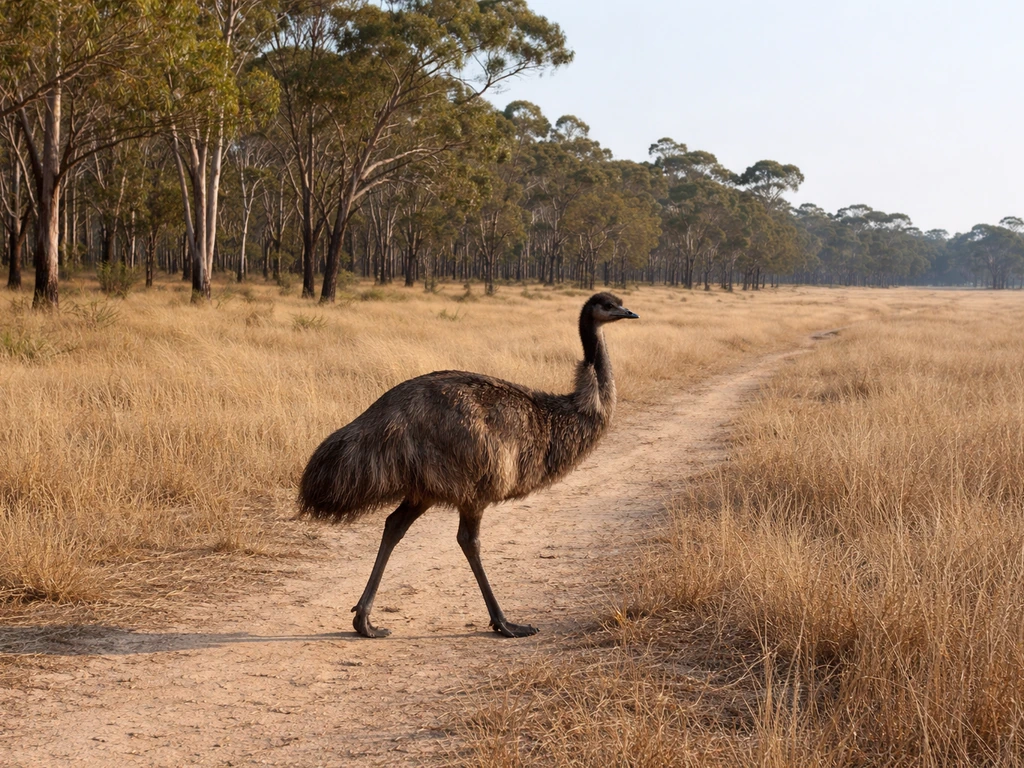
It is also worth noting that vultures share the landscape with other wide-ranging birds whose habitat stories are just as geographically complex. Many readers also look up where the emu bird lives, and it is another example of why species-level habitat matters rather than relying on a broad group name where does the emu bird live.
The osprey, for example, is another broad-ranging bird of prey with distribution questions that map similarly across continents, and understanding how range maps work for one raptor family helps when researching another. The core lesson with vultures, though, is this: the species name is the key that unlocks the real answer to where they live. You may also see claims online asking, is limu emu a real bird, but those kinds of questions require checking reliable species sources.
FAQ
If I only saw a vulture silhouette, how can I narrow down where it lives by region?
Use the continent, then the bird’s size and head coloring. For example, a mostly white-headed or pale head plus a compact body often points to Old World species in Europe, Africa, and Asia, while the Turkey Vulture is typically darker overall and very common across much of the Americas (with the caveat that juveniles can look less distinctive).
Do vultures stay in the same place year-round where they nest, or do they move?
Yes, but it depends on whether you mean breeding habitat or daily foraging habitat. Many vultures roost and nest on cliffs or in protected sites, then forage far from those sites, so the “where it lives” you look up online may reflect nesting range, foraging range, or both.
Why might I not see vultures in a place that seems like their habitat?
You can be in the right area and still miss them because carcass availability drives where they appear. If there has been livestock disposal or scavenger access changes (for instance, fewer legal carcasses or more baiting), vulture sightings can drop even though the landscape seems suitable.
How should I interpret a vulture range map if birds migrate?
Search the species name with the specific population if needed. For Turkey Vulture, some maps and databases show migratory seasonality at the northern and southern edges, so a “range” map may include wintering areas and breeding areas rather than where you will see them on a given date.
Can vulture range change sharply between neighboring countries or regions?
Don’t assume “country” boundaries match actual vulture range. Many species use transboundary mountain systems, savannas, or deserts, so a bird can be common in one side of a border and rare on the other depending on food access, poisoning pressure, or disturbance.
What habitat details matter most for where vultures breed, not just where they forage?
Look for the roosting and nesting substrate, not just open land. Cliff nesters (many Old World species and condors) need suitable ledges and safe inaccessibility, so converting quarry areas, removing cliffs, or increasing disturbance can reduce breeding even if carcasses remain.
Are vultures that use landfills and roadsides automatically thriving in human areas?
Yes, and human-made sites are not always safe. Species that use landfills, dumps, or urban edges can still face threats from poisoning campaigns, disease management practices, or changes in carcass disposal rules, so “present near towns” does not automatically mean stable local populations.
If I spot a vulture outside its expected region, does that always mean the range map is wrong?
Juveniles and non-breeding birds may appear outside core nesting areas. If you see a vulture away from the typical breeding range, it can be a young bird dispersing or a scavenger taking advantage of a temporary carrion source.
Why do some websites show different answers for where the same vulture lives?
Range accuracy matters because the article describes severe declines for multiple species. If a population has collapsed, “historic range” and “current range” can differ dramatically, so use sources that label the time period of the data and prefer current species-level range info over older generalizations.
What field clues help me connect what I saw to the correct vulture species habitat type?
If you are trying to confirm a species from a single sighting, take note of flight style and body posture. Soaring birds typically ride thermals in open terrain, while forest-linked species may show shorter, more maneuverable movements and different foraging behavior under canopy, even though they still scavenge carcasses.