
The dodo was almost certainly about as smart as a pigeon, and that's not the insult it sounds like. CT scanning of dodo skulls has allowed scientists to reconstruct a virtual endocast (a digital mold of the brain cavity), and the results show that its brain size relative to body size was right in line with other members of the pigeon family, Columbidae. It wasn't a cognitive outlier in either direction. The popular idea that dodos were uniquely stupid animals is not supported by the anatomy, and it was never a serious scientific claim to begin with.
Was the Dodo Bird Smart? What Evidence Shows About Its Intelligence

Maya Hennessy
14 May 2026
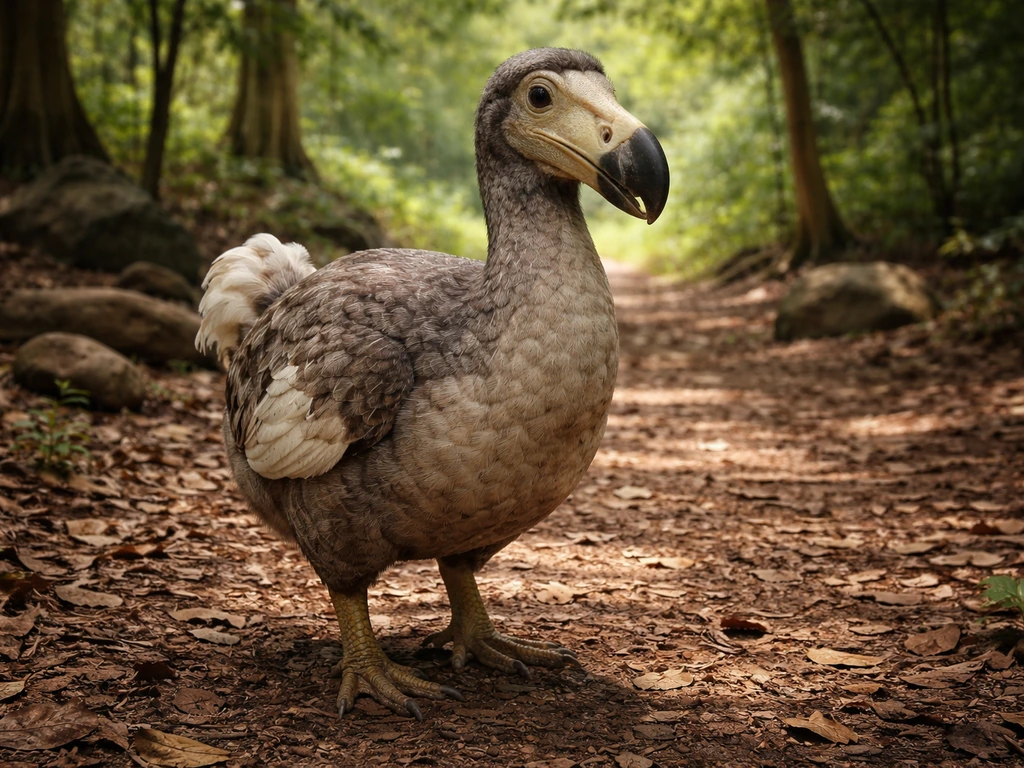
What "smart" actually means for a bird

Before comparing dodo intelligence to anything else, it helps to nail down what scientists even mean when they call a bird smart. In cognitive ornithology, intelligence isn't a single score. Researchers break it into measurable components: associative learning (can the animal learn that action A leads to outcome B?), problem-solving (can it figure out a novel task?), memory (can it store and retrieve information over time?), and social cognition (can it read cues from other animals and respond flexibly?). Lab studies with living birds use carefully designed tasks to probe these abilities, and the results form the basis for comparing species.
At the high end of the avian cognitive scale you find parrots and corvids (crows, jays, ravens), which show relatively large brains and strong performance across multiple task types, including some that involve planning and tool use. Pigeons sit in the middle ground: they perform well in associative learning experiments, navigate with impressive accuracy, and show better memory than they typically get credit for. Ostriches and other large, mostly ground-dwelling birds tend to score lower on relative brain size measures. The dodo, as a giant flightless pigeon, falls into the pigeon zone by every anatomical measure we have.
What we can learn about dodo intelligence without actual brains
Here's the honest methodological picture: no one has ever tested a dodo on a cognitive task, and no one ever will. It also helps to separate myths about dodo behavior and danger from what the evidence actually says about extinct animals. The species went extinct by the late 17th century, roughly 80 years after European sailors arrived on Mauritius. What scientists do have are subfossil bones, museum specimens, and a handful of contemporary written accounts. That's not nothing, but it means every inference about dodo cognition is indirect.
The main scientific tool for this kind of work is paleoneurology, specifically the study of endocasts. When an animal dies, the braincase can fill with sediment or be digitally reconstructed using CT scanning. The resulting shape is an endocast: a cast of the interior of the skull. In birds, the brain fits snugly against the braincase, so endocast shape and volume track brain shape and volume quite faithfully in adults. Researchers use this relationship to estimate not just overall brain size but the relative sizes of specific brain regions, including olfactory bulbs, the optic lobe, and structures associated with motor coordination. It's an imperfect proxy, and researchers are careful to flag that surface-area-based estimates of specific regions carry more uncertainty than overall volume measures. But for broad comparative work, it's the best tool available for extinct species.
Beyond endocasts, scientists can use bone histology (microscopic analysis of bone tissue growth patterns) and ecological reconstruction to build a picture of how a species lived. For the dodo, bone histology has revealed detailed information about growth rates, molting schedules, and likely breeding seasons, with females probably beginning ovulation around August. These life-history details feed into cautious behavioral inferences, even if they don't measure cognition directly.
Braincase and body clues: what the anatomy actually suggests
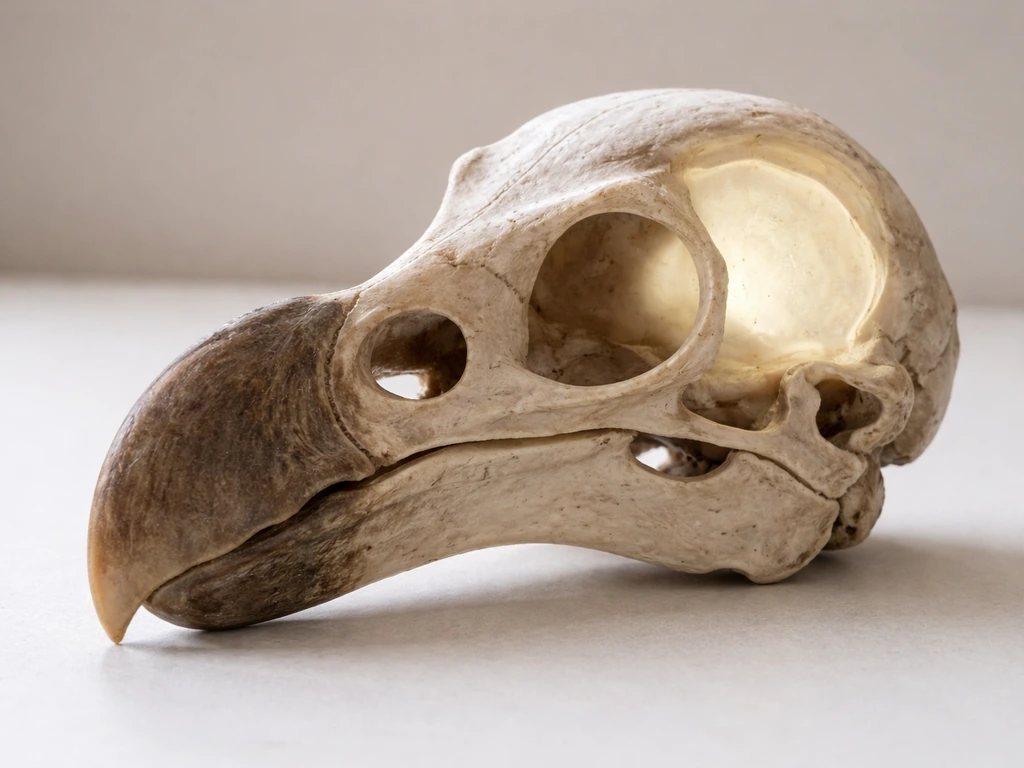
The first detailed virtual endocast of the dodo was produced using high-resolution CT scanning of skull material. The headline finding: when you plot log endocranial volume against log body size across Columbidae, the dodo falls right on the pigeon trend line. It's not unusually large-brained or small-brained for a bird of its size. That finding directly contradicts the folk claim that dodos were brainless or cognitively deficient.
Two anatomical features stood out as distinctive. First, the dodo had enlarged olfactory bulbs, a trait shared with its closest relatives in the subfamily Raphinae. Larger olfactory bulbs generally signal greater reliance on smell, which makes sense for a ground-foraging bird finding food by rooting through leaf litter and forest-floor debris. Second, the dodo had posteriorly angled semicircular canals in the inner ear, a feature that appears unique within its comparison group. The semicircular canals are linked to balance and head movement perception, and this orientation likely reflects something specific about how the dodo held and moved its head while foraging or walking, though the precise behavioral interpretation is still being worked out.
Neither of these features is a direct window into general intelligence. What they do confirm is that the dodo had a sensory profile shaped by its ecological lifestyle: a bird tuned for smell and ground-level locomotion on an island with no large native predators. That sensory emphasis doesn't mean it was cognitively limited. It means its brain was organized around the challenges it actually faced.
How dodo life on Mauritius shaped its cognitive needs
Evolution doesn't produce intelligence for its own sake. Cognitive abilities develop in a population because they solve real problems in that animal's environment. To judge the dodo's cognitive profile fairly, you have to think about what problems it actually had to solve in its native Mauritius habitat.
Mauritius before European contact had no large terrestrial predators. The dodo foraged on the ground, eating fallen fruit, seeds, and possibly roots and invertebrates, relying on its sense of smell to locate food under leaf litter. It didn't need to track predators, cache food across seasonal ranges, or navigate long migration routes. Its brain didn't need to run those programs because evolution had never written them. This is a pattern seen across island-endemic flightless birds: when predation pressure is low and food sources are relatively stable, there's no selection pressure for the high-cost neural machinery associated with fear responses, evasion strategies, or complex social hierarchies.
This is also the key to understanding the dodo's famous tameness around humans. Contemporary accounts describe dodos that walked toward sailors rather than fleeing. That wasn't stupidity. It was the perfectly rational behavior of an animal that had spent millions of years evolving in an environment where large bipedal animals simply weren't a threat. The behavior that looks like dimness to a modern observer was actually well-calibrated to the only world the dodo had ever known. Even if dodos were easy to approach, that does not mean they were dangerous to people. The tragedy is that the world changed catastrophically fast, and no species, regardless of its cognitive abilities, can evolve a fear response in a few decades. Because the dodo evolved without major predators on Mauritius, it likely did not rely on elaborate defenses when humans arrived.
What popular claims get wrong about dodos
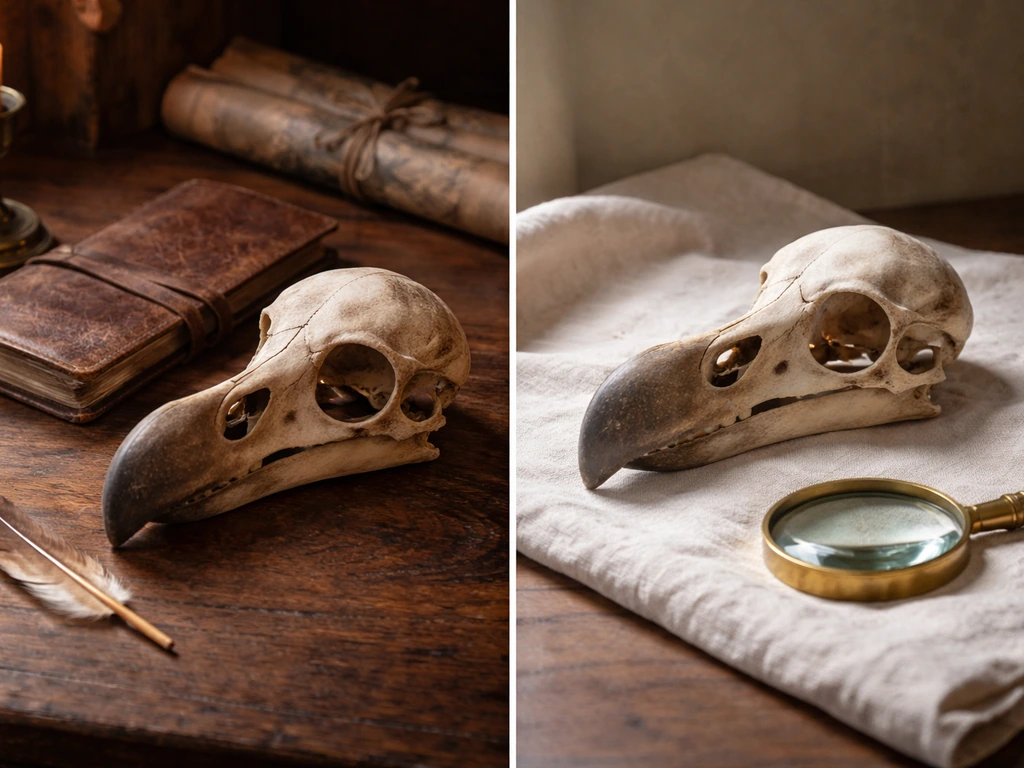
The reputation of the dodo as a byword for stupidity is one of the most persistent myths in natural history, and it doesn't come from science. It traces back to early European accounts that described the birds as slow and easy to catch, which was true, and then layered on a value judgment that equated tameness and flightlessness with cognitive deficiency. That framing stuck and then got amplified over centuries of cartoons, idioms, and casual references.
Authoritative sources like Britannica are explicit on this point: the dodo went extinct because of human hunting and the introduction of animals like pigs, rats, and other species that ate dodo eggs and disrupted the island ecology. Extinction was an ecological catastrophe inflicted from outside, not a cognitive failure. The dodo couldn't have reasoned its way out of that situation any more than the passenger pigeon, which went from billions of individuals to zero within a human lifetime despite being a cognitively capable, socially complex bird.
Another common error is assuming that flightlessness implies diminished intelligence. Flight loss in birds is an evolutionary trade-off, not a regression. The kiwi, which is closely watched by conservation scientists today, is flightless and shows sensory specializations that look superficially similar to the dodo (strong olfactory reliance, ground-level foraging) without anyone seriously arguing it's a cognitively impaired bird. Flightlessness and intelligence operate on different evolutionary axes.
How does the dodo stack up against other birds?
With the anatomical evidence in hand, here's a practical comparison of where the dodo likely sat in the avian cognitive landscape.
| Bird group | Relative brain size | Cognitive strengths | Likely comparison to dodo |
|---|---|---|---|
| Corvids (crows, ravens) | Large for body size | Problem-solving, tool use, planning, social cognition | Substantially more cognitively flexible |
| Parrots | Large for body size | Vocal learning, problem-solving, associative learning | Substantially more cognitively flexible |
| Pigeons (Columbidae) | Average for body size | Associative learning, navigation, memory | Essentially equivalent (dodo falls on pigeon trendline) |
| Dodo | Average for body size (pigeon range) | Likely olfactory-guided foraging, basic associative learning | Reference point |
| Ostriches / ratites | Small relative to body size | Basic learning, social behavior | Dodo likely comparable or slightly above |
The bottom line: the dodo was probably a cognitively average bird by avian standards, comparable to its pigeon relatives. It wasn't a genius and wasn't cognitively impaired. Given what we know from the endocast, it was probably capable of learning associations between stimuli and outcomes, using its sense of smell to locate food, and navigating a stable island environment effectively. A Nature news feature summarizes this broader comparative picture, noting that intelligent bird groups like parrots and songbirds often have relatively larger brains and/or neuron-related traits compared with less cognitively flexible groups blank" rel="noopener noreferrer">parrots and songbirds often show relatively larger brains and/or neuron-related traits. Some people also ask, is a dodo bird a dinosaur, but the dodo is a bird and not related to dinosaurs. That's a perfectly functional cognitive suite for the life it actually led. The question "was the dodo dumb? Was the dodo bird real? Yes. The dodo is a real, well-documented extinct bird from Mauritius. But is a dodo bird a mammal? It is not The dodo is a real, well-documented extinct bird from Mauritius.. " is, scientifically speaking, the wrong question. The right question is whether its cognition was well-suited to its environment, and the answer to that is yes.
Where to go for reliable information (and how to spot the bad stuff)
If you want to go deeper on this topic, the most reliable place to start is the peer-reviewed literature on avian paleoneurology and the specific dodo endocast study. Look for papers that discuss endocast methodology alongside their claims, because good science in this area always flags what the evidence can and can't tell you. A useful signal: any paper that claims to measure "intelligence" directly from an endocast without caveats is probably oversimplifying.
For broader context on avian cognition, the field of comparative cognition has strong review literature in journals like Animal Cognition and Animal Behaviour. Researchers in this space are careful to distinguish between associative learning, which almost all vertebrates do, and more complex cognitive operations, which require much stronger experimental designs to demonstrate. That distinction matters when you're reading popular articles that describe animals as "problem solvers" or "tool users." Check what the actual task was, and whether the behavior could be explained by simpler associative mechanisms before concluding that a species has human-like reasoning.
Red flags in popular claims about dodo intelligence
- Any claim that dodos were uniquely stupid among birds, with no anatomical evidence cited
- Articles that equate tameness toward humans with low intelligence (these are different traits with different evolutionary drivers)
- Sources that treat flightlessness as cognitive evidence
- Claims about dodo behavior based solely on early colonial accounts without acknowledging the bias in those observations
- Popular science pieces that use the word "dumb" as a synonym for extinct or unsuccessful
Reliable starting points for deeper reading
- The dodo endocast study published in the Zoological Journal of the Linnean Society, which produced the first virtual brain reconstruction and comparative analysis
- Bone histology research on the dodo in Scientific Reports, which reconstructs life history and provides ecological context for behavioral inference
- Avian palaeoneurology review articles that explain the methodology behind endocast interpretation and its limits
- Britannica's dodo species page for a reliable, non-sensationalized summary of extinction causes
- Comparative cognition reviews in peer-reviewed journals for grounding on what avian intelligence research actually measures
The dodo's story connects to broader questions this site covers across extinct and endangered birds: why species disappear, what we can recover from the fossil and subfossil record, and how misrepresentation of animals shapes public understanding of extinction. If you're curious about related questions, like whether the dodo could fly, whether it posed any danger, or how it actually defended itself in a world that eventually overwhelmed it, those threads each have their own evidence base worth exploring. The dodo is one of the most mischaracterized animals in history, and it deserves better than the cartoon it became.
FAQ
If we can reconstruct the brain cavity, why can’t we say exactly how smart the dodo was?
No. The endocast work can estimate braincase volume and some relative region sizes, but it cannot measure intelligence in the direct way a lab maze or tool-use test would. The best-supported conclusion is “not unusual for its group,” not a precise score on learning or reasoning.
Does the dodo’s enlarged sense-related brain features mean it had higher intelligence?
You can, but only in a limited, proxy sense. Larger olfactory bulbs suggest a stronger reliance on smell for foraging, which fits ground-rooting and leaf-litter feeding. It does not prove better memory, faster problem-solving, or social inference abilities beyond the sensory domain.
Can we tell whether dodos could plan or solve new problems?
Not from the current evidence. The article describes the dodo as “cognitively average” by anatomical comparison, but it also notes there were no cognitive experiments on dodos (and none will be). Claims about specific skills like planning, causal reasoning, or tool use are therefore speculation, not established findings.
Does a dodo’s tameness toward humans prove it was dumb?
The apparent tameness likely reflects an evolutionary mismatch, where humans arrived too quickly for fear to develop, rather than an ability to “not understand” danger. In other words, easy approach is compatible with normal learning and perception, but weak predator-avoidance behavior because selection pressure was missing.
Is flightlessness always a sign of reduced intelligence?
Flightlessness by itself does not indicate low cognition, but it can affect what kinds of challenges an animal faced. If an animal rarely needs aerial pursuit or complex flight maneuvering, evolution may not favor the neural machinery for that niche, even if intelligence in other domains is typical for its relatives.
Would the dodo’s intelligence have looked different in a changed environment?
Not really. The dodo was a ground forager in an ecosystem with few terrestrial predators, so its brain organization likely emphasized smell and balance for walking and head movement. That does not imply it would have performed the same way in a novel environment where predators, caches, or long-range navigation were suddenly required.
What does “pigeon-like intelligence” actually mean for the dodo?
Be cautious about reading modern “pigeon-like” comparisons as a claim about identical behavior. The comparison is anatomical and broad, based on relative brain size patterns within Columbidae. Different life histories can shape sensory emphasis and learning priorities without producing a wildly different overall cognitive profile.
How reliable are endocast-based claims about specific brain regions?
Yes, researchers focus on uncertainty, especially for region-specific estimates that depend on endocast surface area. A robust signal like overall volume can be more reliable than fine-grained claims about small subregions, so confidence is typically higher for broad comparisons than for detailed “brain part equals behavior” narratives.
Can inner-ear details let us infer exact behavior like how the dodo foraged?
They can, but only if the interpretation stays within what endocasts can support. For example, the semicircular canal orientation is linked to head movement and balance, but turning that into a specific “foraging strategy” or “maneuvering style” should be treated as a hypothesis until supported by additional lines of evidence.
How should I compare dodo cognition to parrots, corvids, and pigeons without lab tests?
Comparisons across species are most meaningful when the same cognitive domains are tested in living relatives and the evolutionary context is similar. Without dodo-specific tasks, the best approach is to ask what sensory ecology and likely learning problems were relevant, not to rank dodos against animals that were studied with completely different experimental paradigms.
Next Articles
Is a Dodo Bird a Mammal? Learn What Makes Birds Different
Learn if a dodo is a mammal: it is a bird with feathers and eggs. Mammal traits and why dodos went extinct.
Can a Dodo Bird Kill You? Myth, Reality, and Safety Tips
No living dodos exist, so they cannot kill you; learn the dodo myths, real traits, and safe steps around flightless bird
Is the Dodo Bird Dangerous? Real Risks and Myths Explained
Is the dodo dangerous? Learn real risks, behavior traits, and myths so you know it was not a human threat.