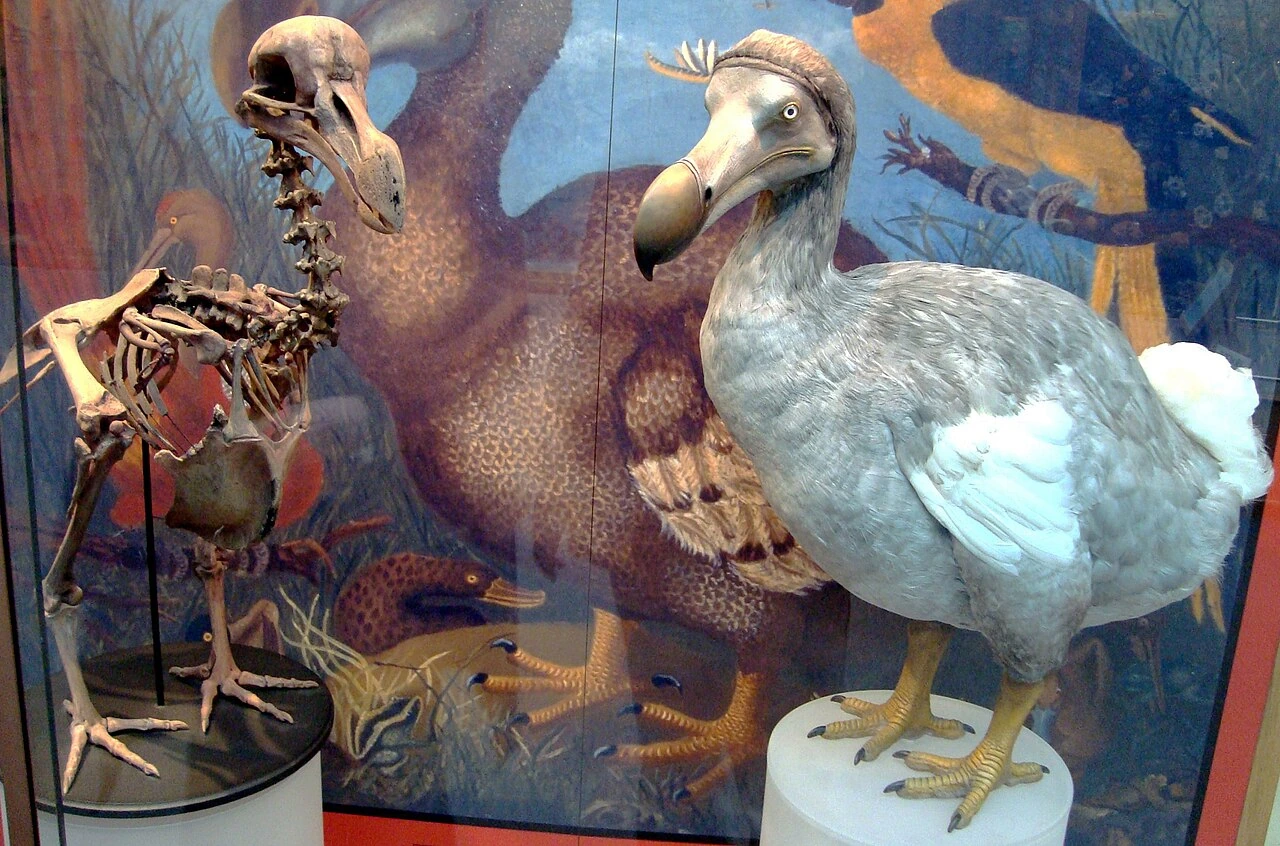
No, the elephant bird is not alive. It is definitively extinct. The last elephant birds died out roughly 1,000 to 1,300 years ago in Madagascar, and no living population has ever been found since. There are no credible sightings, no captive individuals, and no genetic evidence of a surviving lineage. This is settled science, backed by radiocarbon-dated fossils and eggshell fragments studied across multiple peer-reviewed papers.
Is the Elephant Bird Still Alive Today?

Maya Hennessy
14 May 2026
What the elephant bird actually was
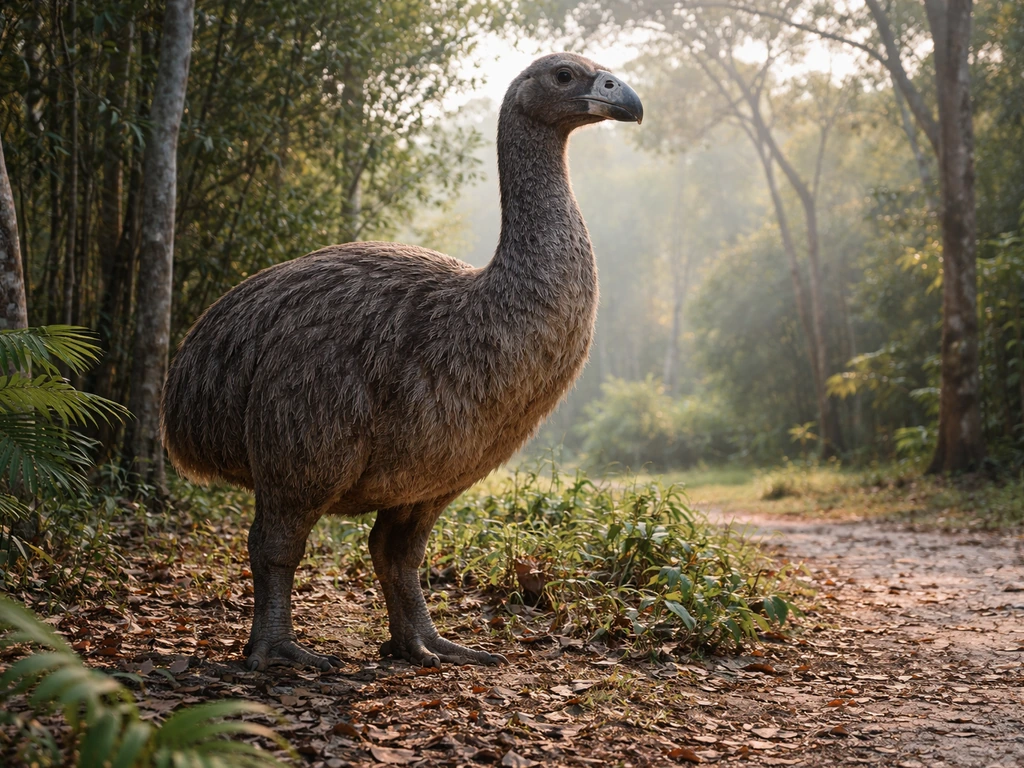
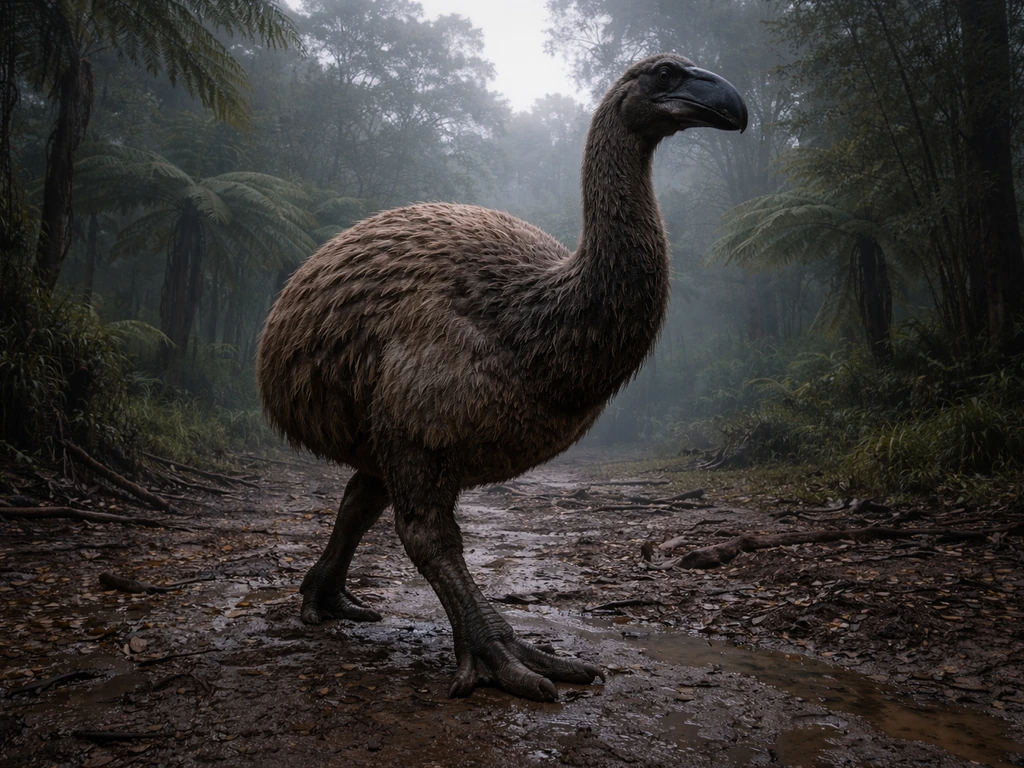
Elephant birds belonged to the family Aepyornithidae, a group of giant flightless birds that lived on the island of Madagascar. They were among the largest birds ever to walk the planet. The biggest species, Vorombe titan, stood around 3 meters tall and weighed up to 650 kg. Their eggs were similarly enormous: a single egg could hold the volume of roughly 160 chicken eggs, making them the largest eggs of any known vertebrate.
Researchers currently recognize several distinct species within the family, including Aepyornis maximus, Aepyornis hildebrandti, Vorombe titan, and Mullerornis modestus, among others. A major 2018 paper published in Royal Society Open Science by Hansford and Turvey significantly revised elephant bird taxonomy, identifying more species than previously accepted and highlighting unexpected diversity within the group. These birds lived through the Pleistocene and into the Holocene, meaning they coexisted with early human settlers on Madagascar before vanishing.
Where elephant birds lived
Elephant birds were endemic to Madagascar, meaning they evolved there and existed nowhere else on Earth. Fossil and eggshell evidence has turned up across a broad range of the island, from the arid south to wetter forested zones further north. A radiocarbon study published in Nature in 1975 identified eggshell fragments from a site roughly 50 km west-southwest of Fort Dauphin in southern Madagascar, which remains one of the well-documented southern localities for the species. Other remains have been recovered from sites distributed across the central highlands and coastal lowlands, suggesting elephant birds occupied a variety of habitats depending on the species.
Madagascar itself sits off the southeastern coast of Africa in the Indian Ocean, and its isolation meant its wildlife evolved along entirely unique lines for tens of millions of years. The elephant bird shared this island with other now-lost megafauna, including giant lemurs and giant tortoises, most of which also disappeared within the past 2,000 years.
Why elephant birds went extinct

The most strongly supported explanation is human impact. Humans arrived in Madagascar in significant numbers sometime within the last 2,000 years, and the timeline of megafaunal extinctions closely tracks their spread across the island. A 2021 study published in a peer-reviewed journal and co-authored by Turvey and colleagues used eggshell radiocarbon data and modelling to estimate species-specific extinction dates for Aepyornis hildebrandti, Mullerornis modestus, and Vorombe titan, and found the extinctions correlated with late Holocene human-caused landscape transformation.
The main drivers were almost certainly a combination of hunting, egg collection, and large-scale habitat clearance through burning and land conversion. Elephant bird eggs would have been an extraordinary food resource, and direct evidence of human egg exploitation has been found at archaeological sites. Habitat destruction removed the forested and scrubland environments these birds depended on, compressing their range until the population could not sustain itself. A broader synthesis published in PMC confirmed that Madagascar lost virtually all its endemic megafauna over 10 kg during the past millennium, with elephant birds counted among the casualties.
Climate change may have played a secondary role. Some researchers have explored whether late Holocene climate shifts stressed elephant bird populations before human arrival intensified pressure, but the consensus is that human activity was the decisive final driver, not climate alone.
What the evidence actually shows
The evidence for elephant bird extinction comes primarily from the fossil record, stratigraphy, and radiometric dating. There are no confirmed written accounts of living elephant birds. The oft-cited claim that they survived until the 17th century, repeated in sources like National Geographic, appears to stem from Marco Polo's 13th-century descriptions of a giant bird called the 'roc' and later colonial-era accounts, none of which constitute verified observations of a living elephant bird.
Radiocarbon dating of eggshell fragments and bone material provides the most reliable timeline. Results consistently place the last individuals somewhere between roughly 1,000 and 1,560 years ago, depending on the species. If you are looking for the most accepted answer to when the elephant bird went extinct, radiocarbon results place the last individuals roughly between 1,000 and 1,560 years ago when did the doo doo bird go extinct. Aepyornis hildebrandti appears to have been among the last survivors, with radiocarbon estimates suggesting persistence until approximately 1,300 to 1,560 years before present. Encyclopaedia Britannica summarizes that carbon dating suggests Aepyornis hildebrandti lasted until roughly 1,560, 1,300 years ago blank" rel="noopener noreferrer">Aepyornis hildebrandti appears to have been among the last survivors. No material younger than this has been reliably dated, and no verified remains from the 17th century or later have been confirmed by modern dating methods.
In short: the '17th century' figure floating around popular sources is not backed by datable physical evidence. The radiocarbon record puts extinction much earlier, well before European contact with Madagascar.
Could you confuse an elephant bird with something living today?
It is worth addressing a common source of confusion. People occasionally mix up elephant birds with other large flightless birds that are still alive, particularly ostriches, emus, cassowaries, and rheas. These birds belong to the same broader group (ratites) and share a superficial resemblance in body plan, but none of them are elephant birds, and none of them are from Madagascar.
The cassowary and emu, for example, are living birds native to Australia and New Guinea, and both have dangerous reputations. The ostrich, native to Africa, is the world's largest living bird but is far smaller than Vorombe titan ever was. None of these species are endangered in the same acute way, though cassowaries in particular face serious habitat pressure. The elephant bird's closest living relative is actually the kiwi, a small flightless bird from New Zealand, which is a genuinely surprising result from genetic studies published in the 2010s.
Other recently extinct giant birds sometimes get mixed into the same conversations. The moa of New Zealand and the terror bird of South America are also extinct, each with their own distinct timelines and causes. The moa disappeared around 600 years ago, likely also driven by human hunting after Polynesian settlement. The moa of New Zealand went extinct much more recently than elephant birds, with its timing linked to human arrival. These are related stories in the broader history of human impact on large flightless birds, but they are separate species from separate places.
A quick comparison of well-known extinct giant birds

| Bird | Location | Approximate extinction date | Primary cause |
|---|---|---|---|
| Elephant bird (Aepyornithidae) | Madagascar | ~1,000–1,300 years ago | Human hunting and habitat loss |
| Moa (Dinornithiformes) | New Zealand | ~600 years ago | Human hunting after Polynesian arrival |
| Terror bird (Phorusrhacidae) | South America | ~2.5 million years ago | Climate change and competition |
| Dodo (Raphus cucullatus) | Mauritius | ~1680s | Human hunting and introduced predators |
How to check for the latest information
If you want to verify what current science says or check whether any new discoveries have changed the picture, a handful of sources are worth bookmarking. The IUCN Red List (iucnredlist.org) is the global authority on species extinction status, and searching for Aepyornis or Aepyornithidae will bring up the official assessments. The Paleobiology Database (paleobiodb.org) tracks fossil occurrence data and is useful for cross-referencing what localities have produced remains and when. For peer-reviewed research, Google Scholar searches on 'Aepyornithidae radiocarbon' or 'Madagascar megafauna extinction' will surface the most current papers.
Encyclopaedia Britannica's entry on elephant birds provides a reliable, regularly updated summary for general readers. For deeper natural history context, the Natural History Museum in London and the American Museum of Natural History both hold significant elephant bird collections and publish accessible explainers tied to their research programs. Any claim that elephant birds might still exist, or that a living population has been found, would need to appear in a peer-reviewed journal to carry any scientific weight. As of today, no such claim exists.
The bottom line has not changed and is unlikely to: the elephant bird is gone. But understanding exactly when, where, and why it disappeared is genuinely useful, both as natural history and as a cautionary story about what happens when large, slow-reproducing animals meet a rapidly expanding human population.
FAQ
Are there any credible sightings that confirm elephant birds are still alive?
No. “Possible” reports online usually come from mistaken identifications, folklore, or reinterpreting old travel stories. In science, a living species claim requires physical evidence (a verified specimen, camera-trap sequence, or unambiguous track and genetic material) and a formal publication, and none of that exists for elephant birds.
Could a newly discovered fossil site prove elephant birds survived into the present?
No living population has been found, but that does not mean it is impossible for an unknown fossil-rich site to exist. What would change the conclusion is not one new egg or bone, it is material that indicates an age younger than the known radiocarbon window (about the last 1,000 to 1,560 years) with contamination controls and independent replication.
If only a few elephant birds survived, why would we still not be finding evidence today?
Because elephant birds were flightless, slow to reproduce, and endemic to a single isolated island, the most realistic would-be survivors would need habitat refuges on Madagascar and still be detectable. Modern surveys tend to sample many habitats, and if an extant breeding population existed, it would be expected to leave repeated traces (eggshell, nests, bones, or consistent genetic signals), not one-off claims.
What kind of evidence would be strongest to revise the extinction date?
Radiocarbon dating is the key method, and it has a consistent role here. The dates rely heavily on careful lab handling to prevent contamination, using short-lived organic remains like eggshell components when possible, and interpreting results with calibration. That is why claims of a 17th-century survival story are treated skeptically when no datable remains support them.
Where does the 17th-century claim about elephant birds surviving come from?
The “roc” and similar 17th-century rumors are not treated as biological evidence because they are not firsthand observations of a real, testable species. Without modern verification, they function as historical context for why the story spread, not as proof of living elephant birds.
How can I tell if a “giant bird” claim is actually about elephant birds or a different species?
You can avoid mix-ups by using the location and taxonomy filters. Elephant birds were Madagascar endemic (Aepyornithidae), while ostriches, emus, cassowaries, and rheas are other ratites from Africa, Australia, and nearby regions. Even if a creature “sounds giant,” the wrong geography is usually the first red flag.
Could a misdated egg or reworked fossil make it look like elephant birds lived longer than they did?
Even if an egg fragment were found, it would still need a secure context and reliable dating. “Earlier egg” does not equal survival, and “later egg” that is not directly dated can be misleading. Verification would require the material to be stratigraphically sealed and dated in a way that cannot be explained by reworking or intrusive burial.
Does the kiwi being the closest living relative mean elephant birds might have a surviving population?
The closest living relative often comes up as kiwi, but that should not be interpreted as a clue that elephant birds could be “hidden” like a small bird. Genetic relatedness explains evolutionary history, not detectability or survival chances, and kiwi ecology and range are completely different from elephant birds.
What should I look for in a claim that elephant birds still exist?
If you see a sensational claim, check for whether it provides testable details: precise coordinates, documented collection permits, lab procedures for dating or DNA, and peer-reviewed analysis. A credible scientific claim will also address alternative explanations like misidentification and age contamination, not just assert “we might have found one.”
Why is long-term survival on Madagascar especially unlikely for elephant birds?
Yes, the right “survival question” is about timing and island endemism. Elephant birds go extinct within the last few thousand years after humans arrived in significant numbers on Madagascar, so any surviving lineage would have to persist through intense habitat change and hunting pressure. That combination makes long-term persistence without detectable evidence extremely unlikely.
Next Article
When Did the Doo Doo Bird Go Extinct? Date and Proof
Find if the doo doo bird is extinct, the best extinction date, and how experts verify extinction evidence.