
The ortolan bunting (Emberiza hortulana) is not globally extinct. As of today, its IUCN Red List global status is Least Concern (LC), meaning it still exists across a wide range spanning Europe, western Asia, and parts of Africa during migration and winter. That said, "not extinct" does not mean "doing fine." European populations have collapsed by roughly 88 to 89% since 1980, some northern regional populations are functionally gone, and scientists warn that several northern European breeding groups could disappear entirely within the next 20 years. So the honest answer is: alive globally, but in serious trouble regionally.
Is the Ortolan Bird Extinct? Current Status Explained

Maya Hennessy
9 Jun 2026
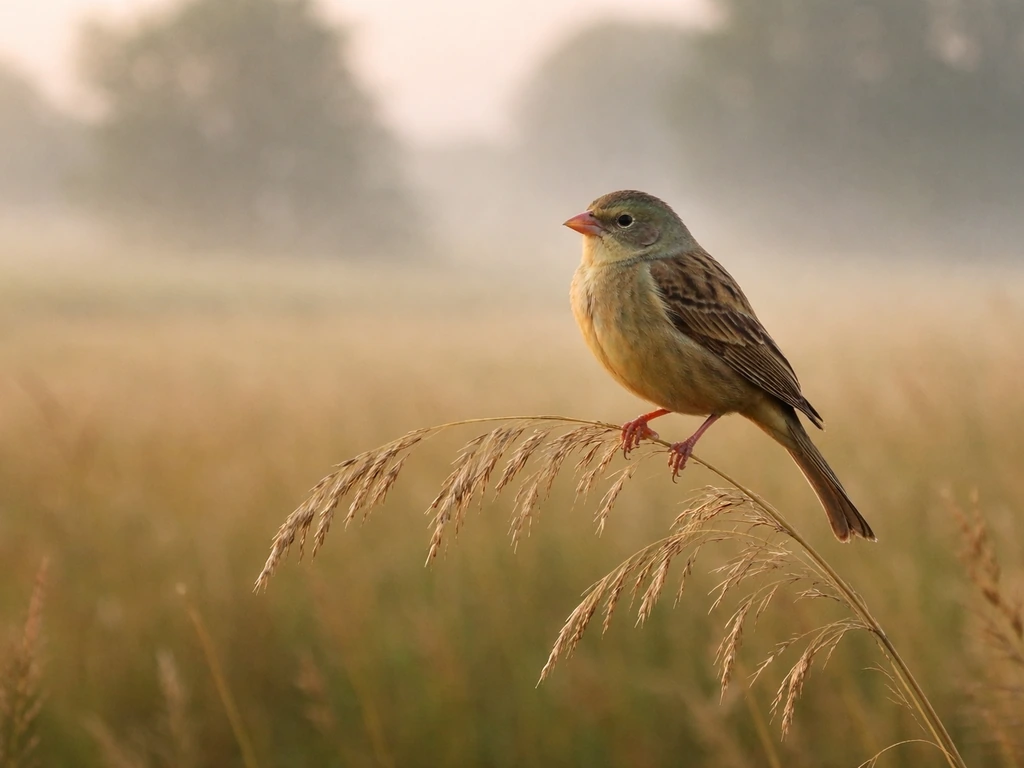
Which "ortolan" are we actually talking about?
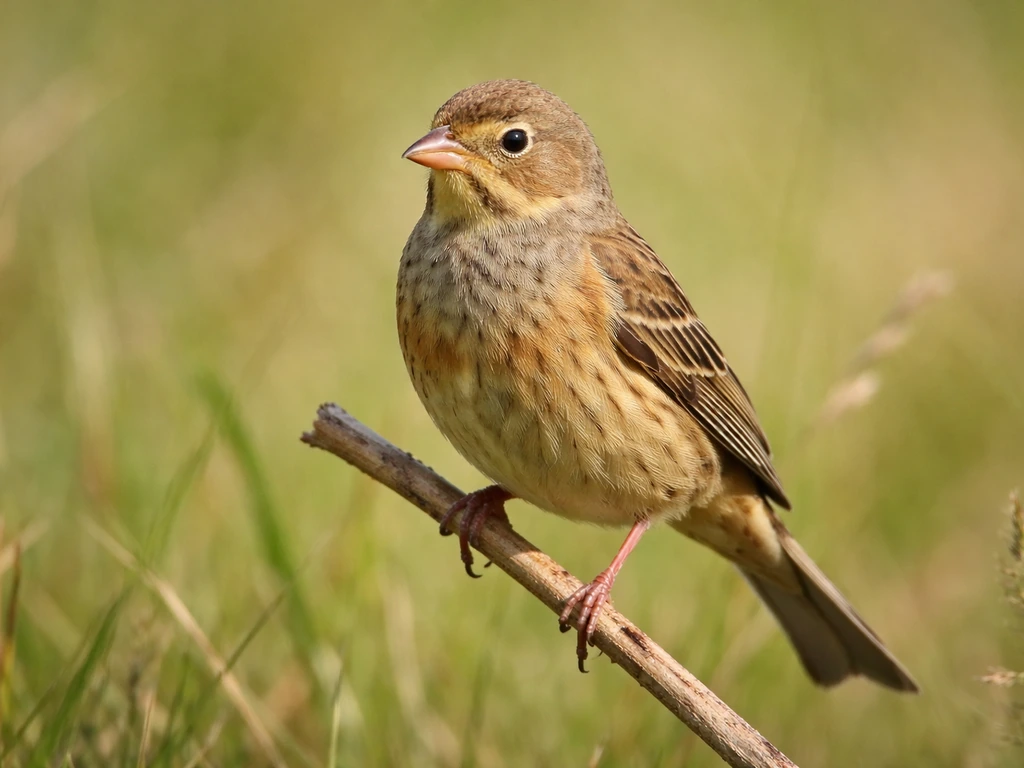
When people search for "the ortolan bird," they almost always mean the ortolan bunting, Emberiza hortulana. This is the small migratory songbird famous in French culinary history, the one traditionally eaten whole under a napkin, and the one that has landed at the center of illegal trapping controversies in France and elsewhere. It belongs to the bunting family, breeds across Europe and central Asia, and winters in sub-Saharan Africa. There is no other widely recognized bird called simply "the ortolan" in scientific or conservation literature. If you have encountered a different use of the name, it is almost certainly a colloquial or regional label referring to this same species, or occasionally to a loosely related bunting. For the purposes of any conservation status question, Emberiza hortulana is the bird you want to look up.
What "extinct" actually means in conservation science
The IUCN Red List uses the term Extinct (EX) with a very precise definition: there is no reasonable doubt that the last individual of a species has died. If you are actually asking when the huia bird went extinct, that is a different case than the ortolan bunting, which is not globally extinct when did the huia bird go extinct. That bar is high. Scientists must conduct thorough surveys across the entire historical range before applying this label, and the IUCN will show a "year last seen" on the species page once that category is assigned. Below Extinct sits Extinct in the Wild (EW), for species surviving only in captivity, and Critically Endangered Possibly Extinct (CR(PE)), for species so rare that extinction is plausible but not confirmed.
Regional or local extinction is an entirely different thing. A species can vanish from Finland or France while thriving in Turkey or Kazakhstan. Conservation scientists call this local extirpation, and it is common, serious, and worth worrying about, but it is not the same as global extinction. If you are asking about a specific extinction timeline, it helps to verify whether the claim is about global extinction or a regional disappearance, as discussed in when did the mamo bird go extinct. Much of the alarming language you will read about the ortolan refers to regional extirpation, not global extinction. Keeping that distinction clear is the key to reading any headline about this bird accurately.
Where the ortolan bunting stands right now
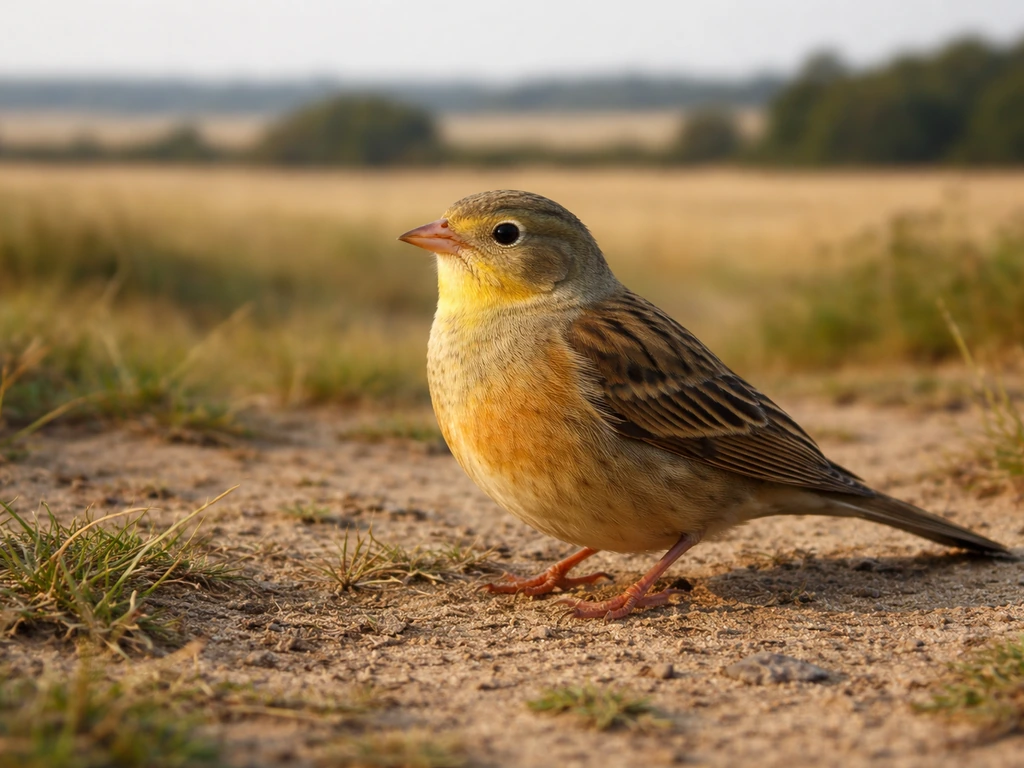
The IUCN global Red List category for Emberiza hortulana is Least Concern (LC). BirdLife International, which serves as the IUCN Red List authority for all bird species, assesses and coordinates that rating. The European Red List of Birds 2021, produced by BirdLife, separately categorizes the ortolan bunting as Least Concern at the European level as well, but critically flags its population trend as Decreasing. The OSME Region List (2024) similarly records the global assessment as Least Concern while acknowledging the species is in decline. So across the major authoritative lists, the bird is not extinct, not Critically Endangered, and not even Vulnerable at the global level, but every credible source agrees the trajectory is downward.
The ortolan bunting still breeds across a broad range: Scandinavia south through central and southern Europe, across Turkey and the Caucasus, into central Asia. In 2024, researchers published new data on nesting activity in Algeria's Aures Mountains, confirming active breeding presence in North Africa. Migration routes pass through France and the Iberian Peninsula, and wintering populations exist in sub-Saharan West Africa. The species is not restricted to a handful of fragile sites. That geographic breadth is a big part of why it holds a Least Concern rating despite dramatic regional collapses.
How scientists decide whether a species is extinct or surviving
Extinction assessments are not guesses. The IUCN Red List framework assigns categories based on measurable criteria: geographic range size, population size, rate of population decline, probability of extinction modeling, and field survey results. For a species to move from Least Concern to a threatened category, documented evidence of rapid decline (typically 30% or more over 10 years or three generations) is needed. For a species to be declared Extinct, exhaustive surveys across the full range must find nothing.
For the ortolan bunting specifically, monitoring data comes from the Pan-European Common Bird Monitoring Scheme (PECBMS), national bird atlases, breeding bird surveys across dozens of countries, and eBird's range modeling, which maps areas where the species is estimated to be present in at least one week of each season. A 2024 Journal of Avian Biology analysis flagged that northern European populations are declining so steeply they are anticipated to become locally extinct within the coming 20 years. A University of Helsinki study found that the steepest declines are concentrated in northern Europe. A peer-reviewed study published in a PMC-accessible journal quantified the European drop at 88% since 1980. These are the numbers driving concern, and they are serious, but none of them trigger a global extinction designation under IUCN rules.
Why the ortolan has declined so sharply

Three pressures converge on this bird, and together they explain the collapse in northern and western European populations.
Habitat loss
The ortolan bunting is a farmland bird that needs open, mosaic landscapes: sparse vegetation, bare ground for foraging, low-intensity agriculture. Industrial farming has eliminated much of that. A study examining northern Italy found that suitable habitat declined by 44 to 72% between the 1950s and the early 2000s, driven entirely by land-cover change. The same story has played out across France, Sweden, Finland, and the UK. Intensification of agriculture and abandonment of traditional low-intensity farming practices both work against this bird, which is a notable double bind.
Illegal trapping and hunting
The ortolan has been trapped and eaten as a culinary delicacy in France for centuries. After the EU banned the practice in 1999, trapping continued illegally, particularly in the Landes region of southwestern France. A peer-reviewed migration connectivity study published on PubMed Central linked illegal hunting in France directly to unsustainable additional mortality in European breeding populations. The paper's modeling demonstrated that even relatively low harvest numbers, stacked on top of existing habitat-driven decline, push population trajectories toward local extinction. This is a meaningful conservation driver, not just a cultural controversy. The illegality and ongoing debate around ortolan hunting is explored in more depth in related coverage on why the ortolan bunting is illegal.
Climate and migration pressures
Climate change is altering breeding conditions and food availability in northern European habitats, adding pressure on top of direct habitat loss. Long-distance migrants like the ortolan face threats at multiple points along a route that spans several thousand kilometers from sub-Saharan Africa to Scandinavia, making population recovery difficult even when breeding habitat improves locally.
How to verify the ortolan's status yourself today

If you want to check the current status rather than rely on any single article (including this one), here are the authoritative sources to consult and what to look for on each.
| Source | What to look for | URL path |
|---|---|---|
| IUCN Red List | Search Emberiza hortulana. Check the Red List category, the date assessed, and the population trend field. | iucnredlist.org |
| BirdLife DataZone | BirdLife's species factsheet for E. hortulana. Shows population trend, threats, and the IUCN-linked global category. | datazone.birdlife.org |
| BirdLife European Red List of Birds 2021 | PDF lists European IUCN category (LC) and population trend (Decreasing) for the ortolan bunting. | Available via BirdLife International site |
| eBird Status and Trends | Range maps show estimated seasonal presence. Useful for understanding current geographic distribution vs historical range. | ebird.org/science/status-and-trends |
| PECBMS (Common Bird Monitoring Scheme) | Long-run population index for European farmland birds including ortolan bunting. | pecbms.info |
When you land on the IUCN Red List page, look for two things: the category label (currently LC) and the population trend (Decreasing). Also note the date the assessment was completed, since IUCN assessments are updated on a multi-year schedule rather than annually. If you see a date several years old, it reflects the best available data at that assessment cycle, not a gap in monitoring. If the category has been updated since this article was written, the IUCN page will show the new category prominently.
Online claims that the ortolan is extinct often conflate regional extirpation with global extinction, or they cite older news stories about population collapse without checking the current IUCN listing. These kinds of statements can be misleading, because the ortolan bunting is still listed as not extinct globally. If a source says the ortolan is extinct without linking to the IUCN Red List or BirdLife DataZone, treat it skeptically. If it says the ortolan is declining sharply in northern Europe and may vanish from those regions, that is accurate and supported by peer-reviewed data.
The bottom line on the ortolan bunting today
The ortolan bunting is not extinct. Globally, it holds a Least Concern rating from the IUCN and BirdLife International, still breeds across a wide range from Europe to central Asia, and was confirmed nesting in Algeria as recently as 2024. A blank" rel="noopener noreferrer">BirdLife DataZone sub-global factsheet PDF for Emberiza hortulana is available, showing structured population and threat fields along with population trend information. But it has lost roughly 88 to 89% of its European population since 1980, northern populations are heading toward local extinction within a generation, and the pressures driving that decline (industrial agriculture, illegal trapping, climate change) have not been resolved. It is a species that is genuinely alive but genuinely in trouble. For anyone tracking extinction risk in birds, the ortolan bunting belongs in the same conversation as other sharply declining species, even if it has not crossed the threshold into a threatened global category. what killed the elephant bird. Check the IUCN Red List and BirdLife DataZone for the latest numbers, and watch for any reassessment that moves it into the Vulnerable category as northern populations continue to shrink.
FAQ
How can the ortolan bunting be “not extinct” if its numbers have collapsed so much?
No, not in the sense used by conservation bodies. The IUCN “Extinct” label requires no reasonable doubt after exhaustive surveys across the entire historical range. For the ortolan bunting, the species is still recorded as present across its broader breeding and migration range, so the evidence does not meet the “no reasonable doubt” threshold.
Does “gone from my region” mean the ortolan is extinct?
It depends on the country and season. The ortolan bunting can be locally absent where habitat has been lost or surveys have not detected it, even while it remains present elsewhere. This is why headlines about disappearances in places like parts of northern Europe should be read as local extirpation claims unless they explicitly describe global extinction criteria.
What if I see “ortolan” used for a different bird in an article or report?
The most direct check is to confirm you are looking at Emberiza hortulana, not a vague nickname. “Ortolan” in reports is usually the ortolan bunting, but misidentification can happen in regional writing. If a claim does not name the scientific name or match the bunting described in conservation databases, treat it as unreliable.
How can I tell whether a viral post claiming the ortolan is extinct is trustworthy?
If you see “extinct” in a claim, look for whether it cites the IUCN Red List category and assessment year for the species. Many incorrect posts reuse old population-collapse stories, or they describe local disappearance without clarifying the difference between local extinction and global extinction. A quick sign is whether the claim links to the IUCN listing and mentions the correct category.
Why is the ortolan listed as Least Concern globally when northern populations are crashing?
Extinction risk can be high even when the global category is Least Concern. The key nuance is that IUCN categories summarize the species’ status at a global scale, and a species can show steep declines in a subset of its range. That is consistent with the ortolan bunting’s pattern of regional collapse while still persisting across a wider geographic footprint.
Could the biggest threats to the ortolan be happening in only one part of its life cycle?
Yes, because the ortolan’s breeding and wintering locations differ. Declines can occur at breeding grounds (for example, northern Europe) even if wintering or migration survival is relatively stable, and the reverse can also happen. That also means the “reason” might differ by life stage, habitat type, or geography.
If the status changes, when would that show up for the ortolan bunting?
When monitoring data are updated, the reported category and trend can change at the next assessment cycle. So an older statement may be wrong if it predates the most recent IUCN assessment date. Always check the assessment completion year on the IUCN page, not only the category label.
What kind of habitat change is most harmful to the ortolan bunting?
Industrial farming and habitat simplification reduce the open, mosaic farmland conditions the species relies on, while abandonment of traditional low-intensity practices can have the same effect. In practice, “habitat loss” is often really a shift in land cover and vegetation density, not just fewer acres of farmland, so conservation actions usually target how landscapes are managed.
If illegal trapping ended everywhere, would the ortolan’s decline likely stop?
Yes. Because the species is threatened by illegal hunting in some areas, enforcement and reporting matter for survival. Even if habitat issues are improving, ongoing additional mortality from trapping can keep populations from recovering. If you see discussions of “recovery” without mentioning hunting pressure, it may be incomplete.
What exact wording should I use to avoid mixing up global extinction and local extinction for the ortolan?
If you are planning to cite “not extinct” or “going extinct” claims, use the global framing carefully. The safer wording is that the ortolan bunting is not globally extinct, but it is experiencing strong regional declines, with heightened risk of local extinction in parts of northern Europe.
Next Articles
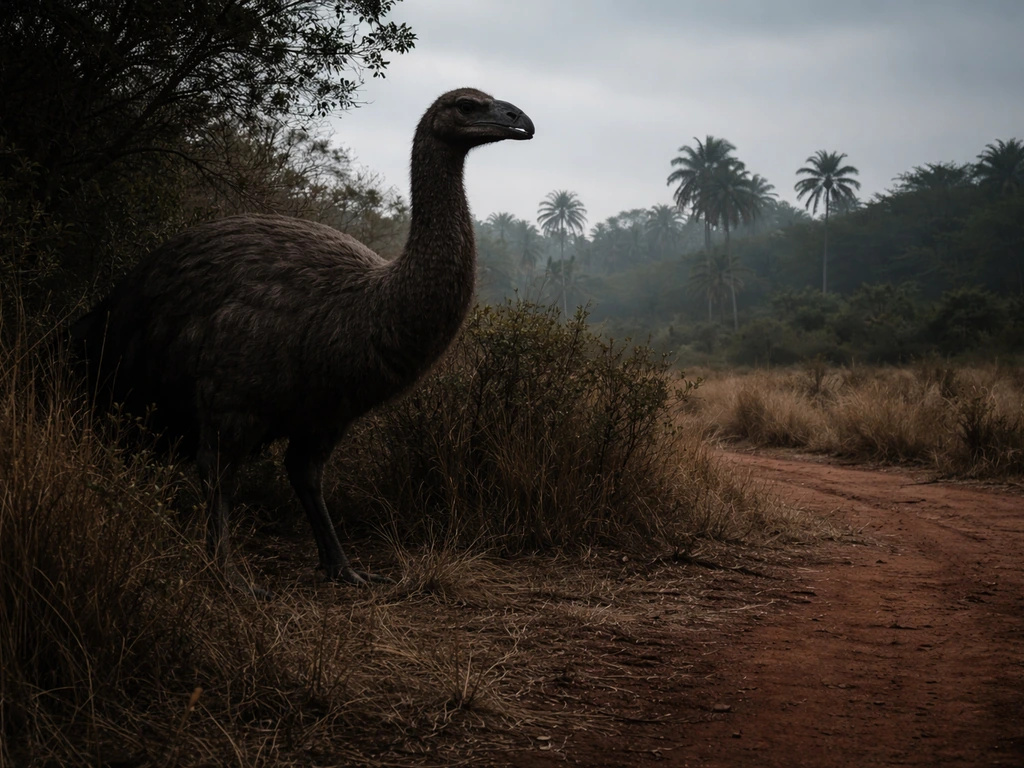
What Killed the Elephant Bird? Best Evidence Explained
Evidence-backed answer to what killed Madagascar’s elephant bird, weighing hunting, habitat loss, and climate shifts.
Is the Auwo Bird Extinct Today? Evidence and How to Check
Check if the auwo bird is extinct using evidence standards, verify records, and learn next steps for uncertain sightings

Is the O-O Bird Extinct? What the Evidence Says Now
Clear verdict on the O-O bird’s extinction, plus the evidence and steps to verify today using authoritative records.