Humans killed the elephant bird. These same questions about legal and illegal hunting are why people also ask why the ortolan bird is illegal elephant bird. That is the short version, and the evidence is strong enough that most researchers treat it as the leading cause rather than a hypothesis. Hunting, habitat destruction through burning and land clearance, and the introduction of livestock all converged on Madagascar's megafauna during the past two millennia, and the elephant birds could not survive that combination. Climate change and environmental shifts almost certainly played some role, but the timing and the physical evidence point squarely at people as the primary driver.
What Killed the Elephant Bird? Best Evidence Explained

Maya Hennessy
7 Jun 2026
Which elephant bird people usually mean
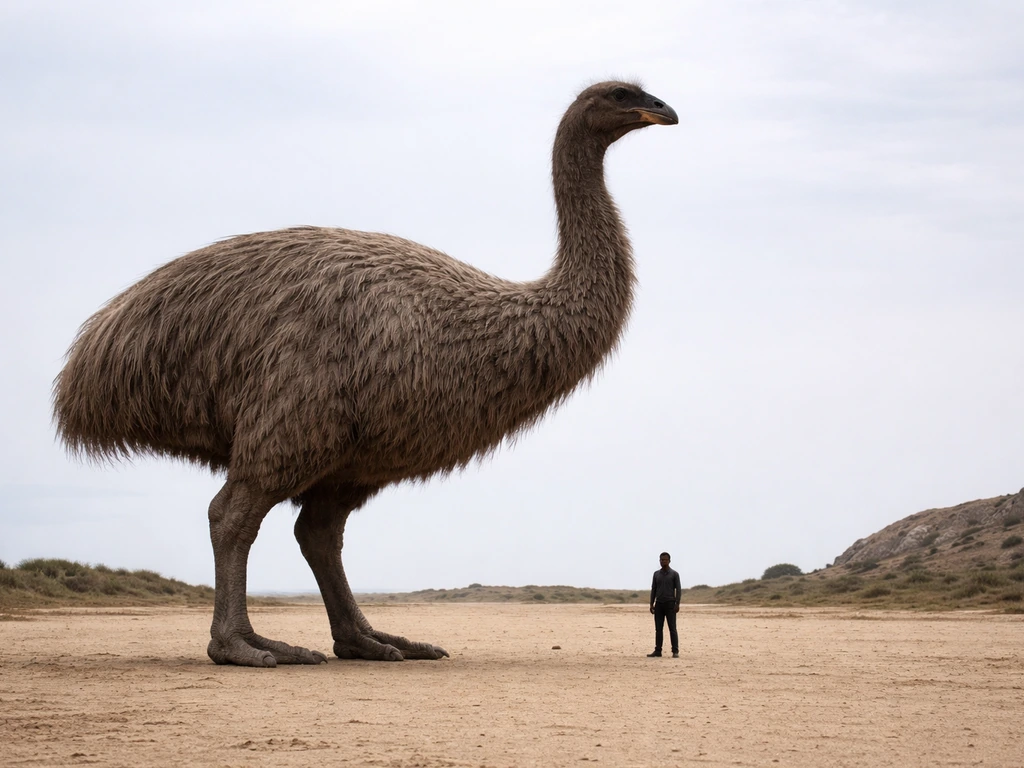
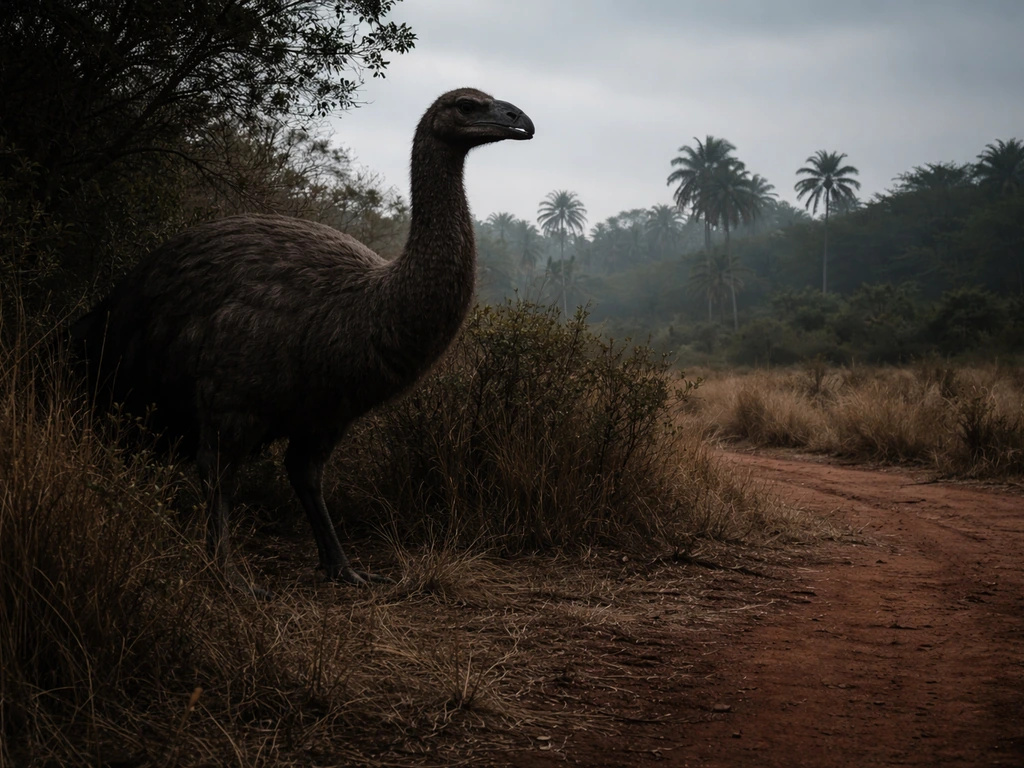
When most people say 'elephant bird,' they picture a single enormous flightless giant from Madagascar. That image is mostly accurate, but the science has gotten more precise. A landmark 2018 systematic review by Hansford and Turvey recognized four valid elephant bird species: Aepyornis maximus, Aepyornis hildebrandti, Mullerornis modestus, and Vorombe titan. That last one, Vorombe titan, was newly named in the same study to accommodate the very largest skeletal remains, and it now holds the title of the world's largest bird ever recorded, edging out what had long been attributed to Aepyornis maximus.
Aepyornis maximus is still the species most people have heard of, and it is the one most commonly referenced in older popular writing. If you are reading an article, a museum placard, or a documentary that just says 'elephant bird,' it almost certainly means this species or the genus Aepyornithidae as a whole. For the purposes of understanding what killed them, the distinction between species matters mainly when pinning down which lineage disappeared first and where.
How elephant birds lived and where they called home
All elephant birds were endemic to Madagascar, the island nation off the southeastern coast of Africa. They were ratites, the same broad group that includes ostriches, emus, kiwis, and the extinct moa of New Zealand. Elephant birds were flightless, heavily built, and slow-reproducing, which already puts them in a vulnerable category when new predators arrive on the scene.
Stable isotope studies of their bones and eggshells reveal that different species occupied different ecological niches across the island. Aepyornis maximus ranged across dry deciduous forest and arid spiny bush in the south and west. Aepyornis hildebrandti appears to have been more restricted to the central highlands. Mullerornis modestus occupied both the central highlands and arid southern zones. This ecological spread means the group as a whole depended on a wide range of Madagascar's habitats remaining intact, which makes land-use change especially damaging.
Their eggs were extraordinary: up to 160 times the volume of a chicken egg, making them the largest eggs of any known animal. That reproductive rate, combined with their large body size, meant populations grew slowly and could not absorb heavy hunting or rapid habitat loss without crashing.
When did they actually disappear

Nailing down the exact extinction date has been one of the trickier parts of elephant bird research. No, the auwo bird is not extinct extinction date. If you are wondering, the evidence strongly supports that the elephant bird is extinct, with the last populations disappearing long after humans reached Madagascar extinction date. Historical accounts, including a famous 1658 description by French colonial governor Étienne de Flacourt, suggest something resembling an elephant bird may have still been encountered in the 17th century, though these accounts are difficult to verify. Radiocarbon dating gives us harder numbers.
Eggshell and bone material has been directly dated using accelerator mass spectrometry (AMS) radiocarbon methods. One major eggshell molecular study places the youngest dated sample at roughly 1,290 years before present, suggesting the last lineages were gone within a few centuries of that point. A commonly cited estimate puts full extinction at around 750 years BP. Some Aepyornis maximus material has been dated to as old as 9,428 to 9,535 years BP, showing the genus had a very long run on the island before disappearing.
Critically, most or all elephant bird species were still present when humans arrived on Madagascar. The extinctions came after human settlement, not before it, which is one of the most telling pieces of evidence in the whole debate.
The main theories for what killed them
Researchers have debated three broad categories of cause: direct human hunting and exploitation, habitat destruction driven by human land use, and climate or environmental shifts independent of people. Here is where the evidence sits on each.
Direct hunting and human exploitation
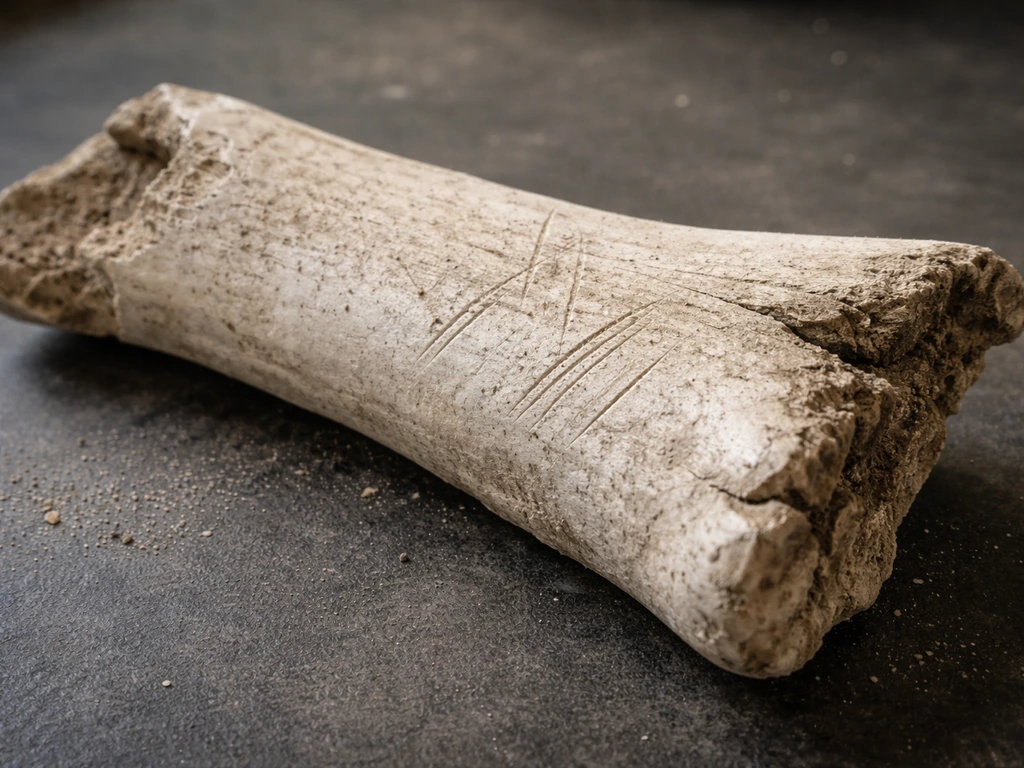
The strongest direct evidence comes from cutmarked bones. A study of sites in southwestern Madagascar found elephant bird bones bearing cut marks consistent with butchering, co-occurring with charcoal and remains of introduced animals like zebu cattle and bushpigs. This is not circumstantial: cut marks in specific anatomical locations indicate deliberate processing of carcasses for meat. A separate study pushed evidence of human exploitation of Madagascar's avian megafauna back to roughly 10,500 years BP using AMS bone-collagen dating, which is much earlier than previously thought and suggests humans were interacting with these birds for a very long time before finally driving them to extinction.
Habitat loss and burning
Charcoal records and pollen data from lake sediments across Madagascar show a clear pattern: fire frequency increased and forests gave way to grasslands during the same broad period that megafauna disappeared. Researchers use Sporormiella, a fungal spore found in the dung of large herbivores, as a proxy for megafaunal abundance. When Sporormiella declines in sediment cores, it signals that large animals were disappearing from the local landscape. These spore records, combined with charcoal and pollen data, consistently show megafaunal decline tracking closely with human-driven environmental change, not with independent climate shifts.
Introduced livestock, particularly zebu cattle, compounded this by competing with elephant birds for food and by further driving land conversion. The SW Madagascar study found that increasing fire frequency over the past millennium coincided directly with local megafaunal disappearance and the arrival of introduced herbivores.
Climate change and environmental shifts
Madagascar did experience climatic variability during the Holocene, including drought episodes. Fossil pollen and charcoal from southeastern Madagascar document forest declines and vegetation shifts over the past 6,000 years.
An Oxford Neuroscience publication record describes reconstructing vegetation and fire dynamics over roughly the past 6,000 years in southeastern Madagascar using fossil pollen and charcoal, explicitly testing drought and forest-decline hypotheses during the megafaunal extinctions [fossil pollen and charcoal from southeastern Madagascar document forest declines and vegetation shifts over the past 6,000 years](https://www. neuroscience. ox. ac.
uk/publications/210581). Some researchers have asked whether drought stress on vegetation could have weakened elephant bird populations independently of human activity. The honest answer is: climate change probably contributed some additional stress, but the timing and geographic pattern of extinctions do not fit a climate-only explanation. Megafaunal declines track human presence and land-use signals far more consistently than they track climate proxies.
The evidence scientists use to work this out
Understanding what killed the elephant bird requires triangulating multiple independent lines of evidence, because any single proxy has weaknesses. Here are the main tools researchers rely on.
- AMS radiocarbon dating of bone collagen and eggshell fragments to pin down when specific lineages were alive and when they disappeared from particular locations.
- Stable isotope analysis of bones and eggshell to reconstruct diet, habitat use, and ecological niche, telling researchers which environments each species depended on.
- Sporormiella spore counts in lake and bog sediment cores as a proxy for large-herbivore abundance over time, with declines flagging megafaunal collapse.
- Charcoal and pollen records from sediment cores to track fire frequency and vegetation change, distinguishing human burning from natural fire regimes.
- Cutmarked bone taphonomy, meaning the physical analysis of butchering marks on subfossil bones, which directly links human activity to specific carcasses.
- Ancient DNA extracted from eggshell and bone to identify which species a given specimen belongs to, allowing accurate attribution of dates to lineages.
- Archaeological site stratigraphy, correlating layers containing human artifacts, introduced animal remains, and charcoal with layers containing megafaunal bones.
One important caveat: the 'last occurrence' of a species in the fossil record is almost always earlier than the true extinction date, because preservation and sampling are incomplete. This means radiocarbon-based extinction estimates are conservative minimums, and the actual last individuals likely survived somewhat longer than the youngest dated specimens.
Human impact vs climate change vs habitat loss: where the weight of evidence falls

| Cause | Evidence strength | Key indicators | Consensus view |
|---|---|---|---|
| Direct human hunting | Strong | Cutmarked bones, butchering context, early exploitation dates | Primary driver |
| Habitat loss via burning and land clearance | Strong | Charcoal records, Sporormiella declines, pollen shifts, introduced livestock | Major contributing driver |
| Introduced species competition | Moderate | Zebu and bushpig remains co-occurring with megafaunal decline | Amplifying factor |
| Climate change and drought | Weak to moderate | Pollen and vegetation reconstructions showing forest decline | Secondary or background stress |
The honest synthesis is that human activity drove the extinction, but through multiple mechanisms acting together rather than hunting alone. People arrived, began hunting these slow-reproducing giants, burned forests to create pasture, and brought livestock that competed for resources and spread disease. Climate variability added stress on top of that, but it was not the initiating cause. The fact that elephant birds had survived Madagascar's natural climate fluctuations for millions of years before humans arrived makes it very hard to argue that climate finished them off independently.
The prolonged survival window is also telling. Some lineages appear to have coexisted with human populations for thousands of years before finally disappearing. This is consistent with a slow-burn extinction driven by incremental habitat loss and periodic hunting pressure rather than a rapid blitzkrieg hunt, though both processes were ultimately lethal at the population level.
What research today can still confirm
Despite how much we already know, several questions remain open and are actively being worked on. If you want to follow the frontier research or investigate further yourself, here is where the science is heading.
- More direct AMS radiocarbon dates on newly excavated or previously undated subfossil specimens, especially from undersampled regions of Madagascar like the north and east, would tighten the extinction timeline for each species separately.
- Ancient DNA work on eggshells and bones is expanding rapidly. Matching dated specimens to specific species using ancient DNA removes the ambiguity of assigning fragmentary remains to a lineage based on morphology alone.
- High-resolution Sporormiella and charcoal records from more lake and bog sites across Madagascar would help distinguish regional extinction pulses from island-wide collapse, and test whether some areas lost megafauna earlier than others due to earlier human settlement.
- Isotopic and taphonomic analysis of more cutmarked bone assemblages would clarify whether hunting pressure was sustained or episodic, and whether certain species were targeted more heavily than others.
- Paleogenomic population-size modeling, using ancient DNA to reconstruct population bottlenecks over time, could reveal whether elephant bird numbers began declining before the radiocarbon record suggests, pointing to earlier and more cryptic human impact.
If you want to dig into the primary literature, the most productive search terms are: Aepyornis extinction drivers, Madagascar megafaunal extinction, Sporormiella Madagascar, Vorombe titan, Madagascar Holocene land use, and AMS radiocarbon elephant bird eggshell. The journals Quaternary Science Reviews, the Proceedings of the Royal Society B, and PLOS ONE publish regularly in this area. Google Scholar filtered to the last five years will surface the most current work.
For casual reading, the Hansford and Turvey 2018 paper on elephant bird diversity is genuinely accessible and reframes much of what older sources said about these species. The Grealy et al. 2023 eggshell molecular study is worth reading for anyone interested in how ancient DNA is changing what we know about extinction timing. Both are available through open-access routes or via ResearchGate.
The elephant bird's story shares a lot with other extinct island giants covered on this site, from the moa of New Zealand to the huia and the mamo of Hawaii. The precise timing for the mamo bird's extinction is also something researchers have tried to pin down using historical records and dating evidence mamo of Hawaii.
For context on that other New Zealand bird, you might also want to know when the huia went extinct the huia and the mamo of Hawaii. In almost every case, the pattern is the same: island species evolved without mammalian predators, then humans arrived and the combination of hunting and habitat change proved insurmountable. Understanding what killed the elephant bird is not just historical curiosity.
That same vulnerability is why the ortolan bird is illegal to hunt in many places: heavy pressure and habitat needs make it hard to protect why slow-reproducing, habitat-specialist species. Some people also ask whether the ortolan bird is extinct is the ortolan bird extinct. It is a template for understanding why slow-reproducing, habitat-specialist species are still so vulnerable today.
FAQ
Did climate change alone kill the elephant bird?
No. What the article calls out is that the group’s extinctions happened after humans reached Madagascar, not before. Any claim that elephant birds died out “naturally” before people must explain why most evidence (radiocarbon horizons, charcoal and pollen changes, and cutmarked bones) lines up with human settlement and land-use signals.
Why do radiocarbon extinction dates sometimes seem too early or too late?
The most common mistake is treating radiocarbon dates as exact “last day” markers. The article notes that the fossil record’s last occurrence usually predates the true extinction because of gaps in preservation and sampling, so “youngest dated bone” should be read as a conservative minimum for when the last individuals disappeared.
How do scientists know cut marks were from humans and not natural processes?
Cut marks are strongest when they match anatomy-based butchering patterns and occur in the same archaeological context as human activity indicators. Without that anatomical and contextual match, cut marks can be ambiguous (for example, carnivore damage), so researchers emphasize the combined signal rather than any single mark.
What role did introduced livestock play, was it only competition for food?
Livestock are implicated not just because they ate elephant bird food, but because they intensified habitat conversion (pasture creation) and interacted with the changing fire regime. This means the effect is partly indirect, land-use driven, rather than solely a one-off competition event.
Why do eggshell and bone dating estimates for extinction timing don’t always match?
The “last extinction” dates vary by method and sample type. Eggs and bones can give different youngest ages due to where material survives, how deposits were formed, and whether samples represent the true final populations or earlier individuals.
Was the elephant bird extinction fast, or did it happen over a long period?
Yes, there is room for gradual decline driven by incremental habitat loss and intermittent hunting over centuries. The article’s synthesis argues against a single sudden “event,” because the survival window and environmental proxies fit a slow-burn collapse rather than a rapid wipeout.
Could the 17th-century reports mean elephant birds survived longer than the dating suggests?
Some historical accounts could plausibly describe very large, ratite-like birds, but they are hard to verify because they are not direct specimens and can’t be reliably tied to specific island species. That is why radiocarbon dating provides firmer constraints than 17th-century descriptions.
How can you tell if a climate-based extinction explanation is credible?
If you see claims that “elephant birds died out because of drought,” check whether the argument also matches the spatial pattern across Madagascar and the timing of charcoal, pollen, and megafaunal proxies. The article emphasizes that human-linked environmental change tracks declines more consistently than climate proxies.
Why couldn’t elephant birds bounce back after hunting pressure started?
The article highlights a key reason: elephant birds reproduced slowly and were flightless, which makes recovery from population crashes difficult. When hunting and habitat loss reduce breeding success or adult survival, populations can fail to rebound even if conditions improve later.
If I read one study, what combination of evidence should I look for to be confident about the cause?
Look for multiple independent proxy lines that converge on the same timeframe and region, such as cutmarked bones for direct exploitation, Sporormiella trends for herbivore declines, and charcoal and pollen for fire and vegetation shifts. A single proxy is usually not enough because each one has preservation or interpretation limits.