
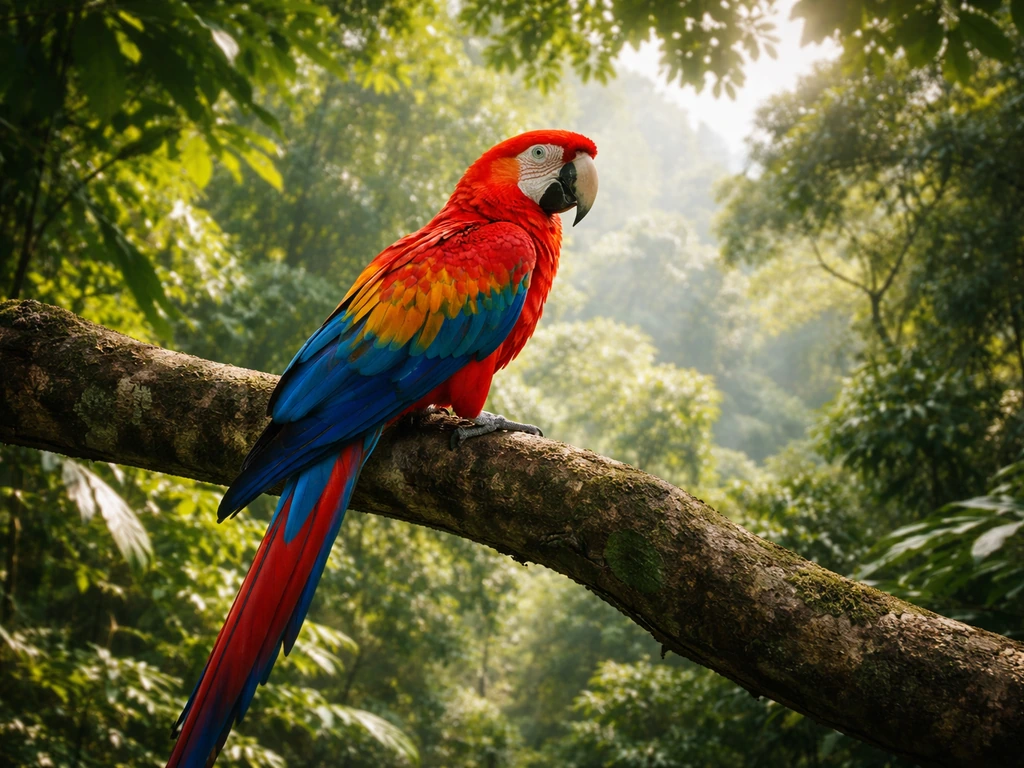
Macaws live in the wild exclusively in the Americas, ranging from southern Mexico through Central America and into the vast tropical and subtropical regions of South America. The heart of their range is the Neotropics: the Amazon basin, the Pantanal wetlands, the Cerrado savanna, the Atlantic Forest fragments, and the dry scrublands of northeast Brazil. A handful of species push into Mexico and parts of Central America, but no macaw is native to any other continent. If you're trying to picture where macaws live, think forested river edges, open palm savannas, and cliff-faced canyons, depending on the species.
Macaw Bird Where Do They Live: Range, Habitats, Species

Maya Hennessy
1 Jun 2026
Macaw basics and how to identify their range
One of the most common mistakes people make when searching for macaw range information is treating "macaw" as if it were a single species. It isn't. The word "macaw" is applied to birds across multiple parrot genera, including Ara, Anodorhynchus, Cyanopsitta, Primolius, Orthopsittaca, and Diopsittaca. Each genus has its own ecological story, and within each genus, individual species can have quite different ranges and habitat preferences. The iconic scarlet macaw (Ara macao) and the hyacinth macaw (Anodorhynchus hyacinthinus) are both called macaws, but one lives in humid evergreen forest and the other thrives in open palm savannas. Some species are tied to evergreen habitats, like magnolia yellow bird evergreens, which helps explain why range varies so much by local conditions is magnolia yellow bird evergreen. So before you lock in on "where macaws live," it's worth knowing which macaw you're actually asking about.
That said, there's a meaningful shared thread: all wild macaws are native to the New World (the Americas), and the great majority live in the Neotropics. None are native to Africa, Asia, or Australia. Their ranges are largely defined by three things: the forest or biome type they're adapted to, the availability of nesting sites (which varies a lot by species), and food resources like seeds, nuts, and fruits. Once you know those three factors for a specific species, you can predict where it lives with reasonable accuracy.
Natural habitat types macaws live in
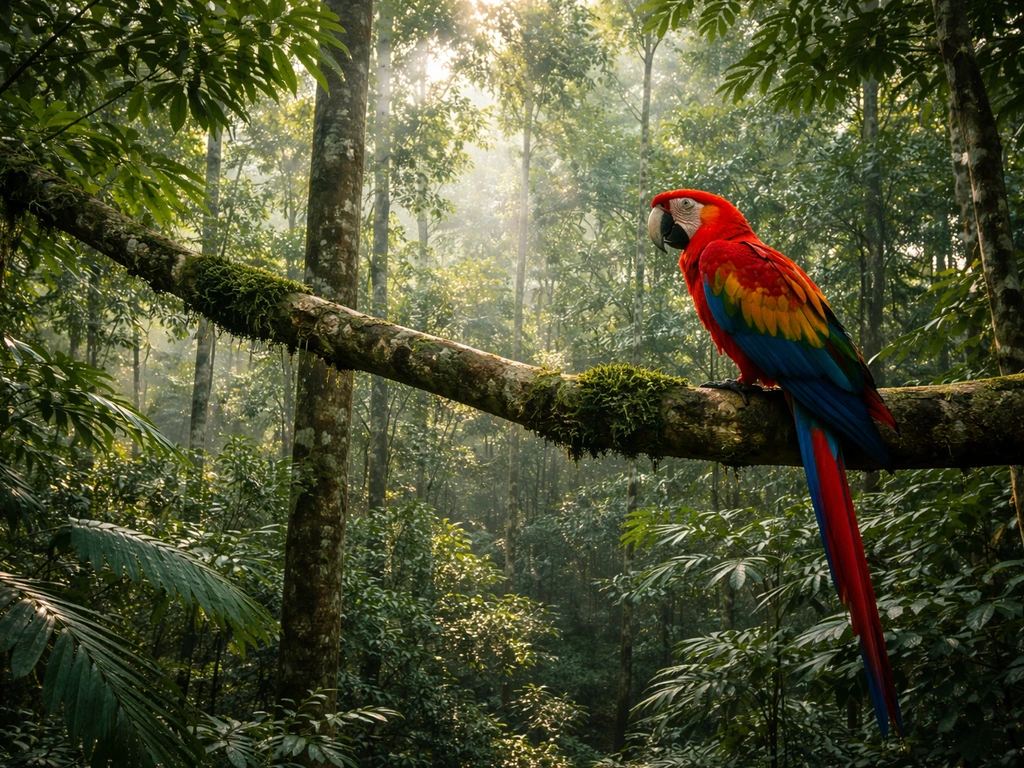
Macaws don't live in just one kind of habitat, and that's part of what makes the group so ecologically interesting. Different species have carved out very different niches across the Americas.
- Humid lowland evergreen forest: The scarlet macaw's core habitat. It favors large trees near rivers, exposed riverbanks, and gallery woodland edges where it can forage and nest.
- Flooded forest and varzea: The blue-and-yellow macaw (Ara ararauna) is closely associated with seasonally flooded varzea forest as well as terra firme (non-flooded) forest, and it ranges into open woodland and savanna too.
- Open palm savanna and floodplain: The hyacinth macaw is the classic example here. It lives in floodplains and savanna areas adjacent to tropical forests, especially where stands of native palms are present.
- Palm grove and forest islands: The blue-throated macaw (Ara glaucogularis) occupies a fragmented landscape of palm groves and small "forest islands" embedded in Bolivian savanna.
- Caatinga dry scrubland: Lear's macaw (Anodorhynchus leari) is uniquely adapted to the caatinga, a tropical dry scrub biome in northeast Brazil, where it nests in sandstone cliff faces.
- Dry forest, open woodland, and gallery forest: The military macaw (Ara militaris) uses a broader range of drier habitat types, nesting in tree cavities or, where those are scarce, in cavities on karst and rocky cliffs.
- Seasonally flooded swamp forest: The red-bellied macaw (Orthopsittaca manilata) is tied to lowland swamp and seasonally flooded northern forest, a wet-habitat specialist.
The pattern here is that most macaws require large, structurally complex environments with specific nesting features (more on that shortly). They're not generalist birds that will nest anywhere convenient. That ecological pickiness is precisely what makes deforestation so damaging to them.
Geographic distribution: where macaws live by region
South America holds by far the greatest diversity of macaw species. The Amazon basin alone supports multiple species because it offers the combination of forest, rivers, and food resources that macaws need. The Pantanal, the world's largest tropical wetland straddling Brazil, Bolivia, and Paraguay, is especially important for the hyacinth macaw, the largest flying parrot in the world. The Cerrado (Brazil's vast interior savanna) and the Atlantic Forest further add to South America's macaw diversity, though the Atlantic Forest is now severely fragmented.
Central America and Mexico hold a smaller but meaningful slice of macaw range. The scarlet macaw extends from southern Mexico through Guatemala, Belize, Honduras, Nicaragua, Costa Rica, and Panama. Some populations in Mexico and Central America are isolated and have been locally extirpated from large portions of their historical range due to deforestation and trapping. blank" rel="noopener noreferrer">The military macaw also has a disjunct range, meaning its populations are scattered across discontinuous areas including parts of Mexico and isolated zones in South America.
No macaw species naturally occurs in North America north of Mexico, in the Caribbean (as a wild breeding population), or anywhere outside the Americas. The Spix's macaw (Cyanopsitta spixii) was declared extinct in the wild in 2000, having been native to a very small region of northeast Brazil. The shoebill bird is also critically threatened, but it is not extinct. Reintroduction efforts have been ongoing in Brazil since then, making it one of the most closely watched conservation stories in the bird world.
Country-by-country examples of macaw habitats
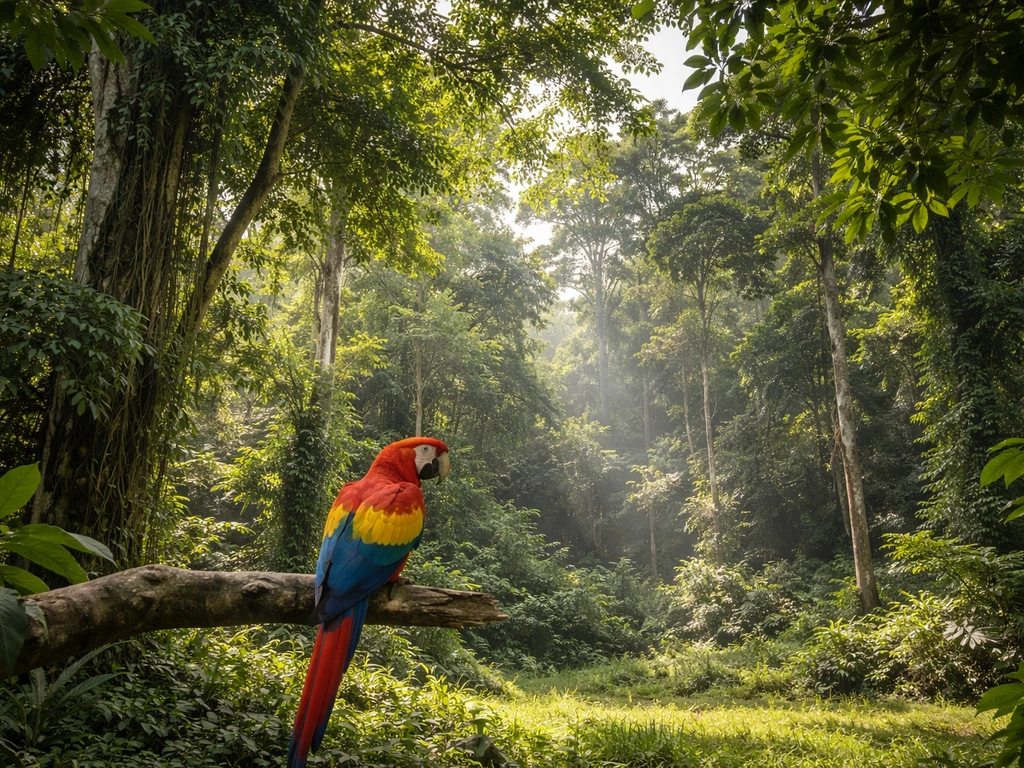
Because the sibling topic of which specific countries macaws live in gets a lot of search attention, it's worth being concrete here. If your real question is which country, start with Brazil, then compare the rest of the species by country using the country-by-country examples. The table below gives a quick sense of where key macaw species are found by country and what kind of habitat they use there.
| Species | Key Countries | Habitat Type |
|---|---|---|
| Scarlet macaw (Ara macao) | Mexico, Belize, Guatemala, Honduras, Costa Rica, Panama, Colombia, Peru, Brazil, Bolivia | Humid lowland evergreen forest, gallery woodland, river edges |
| Hyacinth macaw (Anodorhynchus hyacinthinus) | Brazil (Pantanal, Amazon, Cerrado), Bolivia, Paraguay | Palm savanna, floodplains, open areas near tropical forest |
| Blue-and-yellow macaw (Ara ararauna) | Venezuela, Colombia, Peru, Brazil, Bolivia, Ecuador, Trinidad | Varzea and terra firme forest, open woodland, savanna |
| Blue-throated macaw (Ara glaucogularis) | Bolivia (Beni Department) | Palm grove savanna with fragmented forest islands |
| Lear's macaw (Anodorhynchus leari) | Brazil (northeast, Bahia state) | Caatinga dry scrubland, sandstone cliff canyons |
| Military macaw (Ara militaris) | Mexico, Colombia, Venezuela, Ecuador, Peru, Bolivia, Argentina | Dry forest, open woodland, gallery forest, karst cliffs |
| Red-fronted macaw (Ara rubrogenys) | Bolivia (Andean valleys) | Dry intermontane valleys, rocky cliffs for nesting |
| Red-bellied macaw (Orthopsittaca manilata) | Venezuela, Colombia, Trinidad, Peru, Brazil | Seasonally flooded swamp and lowland forest |
Brazil stands out as the single most important country for macaw diversity, hosting more macaw species than any other nation. It's also home to the most threatened species, including the hyacinth macaw (Vulnerable), Lear's macaw (Endangered), and the Spix's macaw (Extinct in the Wild). Bolivia is particularly critical for the blue-throated macaw, whose last remaining wild population survives in the Beni Department's savanna. The connection between individual countries and macaw survival is tight enough that border-level conservation policy genuinely matters for these birds.
Altitude, climate, and nesting/roosting preferences
Most macaws are lowland birds, thriving below about 1,000 meters elevation where tropical forest is richest. The hyacinth macaw, for instance, is very much a lowland specialist tied to the Pantanal's seasonal flooding cycles. Researchers monitoring hyacinth macaw roosts in the Pantanal have documented how roost sites shift with seasonal water fluctuations, with birds using refuge habitats during flood peaks. Climate (and its seasonal rhythms) directly shapes where and when these birds are present in a given area.
There are exceptions at altitude, though. The red-fronted macaw (Ara rubrogenys) in Bolivia lives in dry Andean valleys, tolerating conditions quite different from the lowland jungle most people picture when they think "macaw." The military macaw also pushes into montane zones, sometimes nesting in cliff cavities at higher elevations when tree cavities aren't available.
Nesting requirements are where the story gets really specific, and really important for conservation. Here's a summary of the key differences:
- Hyacinth macaw: Strongly dependent on the Manduvi tree (Sterculia apetala) for nest cavities. When Manduvi trees are cleared for pasture, nest-site availability drops sharply, limiting breeding even if food is present nearby.
- Blue-throated macaw: Prefers dead palm trees that have been partially hollowed out by insect larvae. This is a narrow nesting resource that isn't easily replaced.
- Lear's macaw: Nests and roosts in cavities on sandstone cliff faces in canyon country. Nest inspections have confirmed breeding in these cliff cavities, making the specific geology of northeast Brazil irreplaceable for this species.
- Military macaw: Uses tree cavities where available; when those are scarce (as in drier parts of its range), it shifts to karst cliff cavities.
- Red-fronted macaw: Also cliff-nests in Andean valleys due to a scarcity of large tree cavities in its semi-arid habitat.
- Scarlet macaw: Nests in cavities in large trees, often near rivers, with a preference for exposed river banks and clearings where large, old trees are still standing.
This level of nesting specificity means that even partial habitat degradation can break a macaw's ability to breed, even if there's still food nearby. It's one of the reasons macaw populations can collapse faster than the overall forest cover decline would suggest.
How habitat loss and conservation affect where macaws are found today
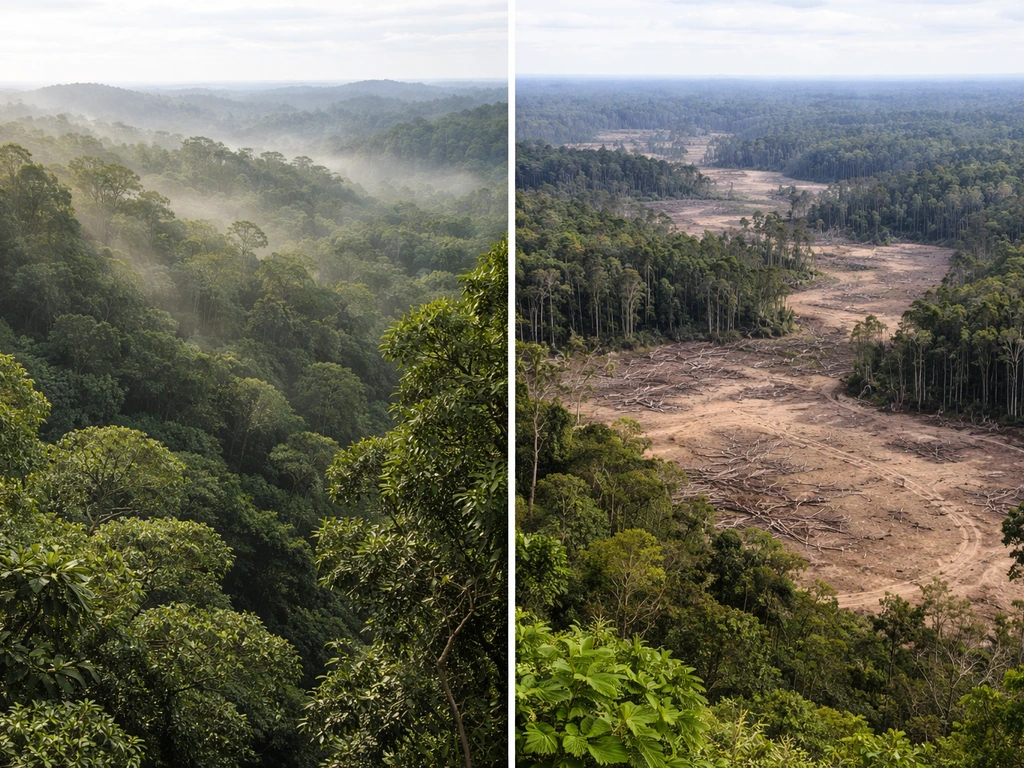
The honest answer to "where do macaws live today" is: in a smaller, more fragmented version of where they used to live. Deforestation across the Amazon, the Cerrado, and the Atlantic Forest has shrunk and broken apart macaw habitats significantly over the past several decades. Agricultural expansion, cattle ranching, and infrastructure development are the primary drivers. For a bird like the hyacinth macaw, which needs both the right palm-savanna habitat and specific Manduvi trees for nesting, land-use conversion is a double hit: it removes both food sources and nest sites simultaneously.
The illegal pet trade compounds the problem. Macaws are heavily targeted because of their appeal as companion animals. The scarlet macaw and hyacinth macaw have both suffered significant wild population losses from trapping, and both are listed on CITES Appendix I, meaning international commercial trade in wild-caught birds is banned. But poaching continues, especially in areas where enforcement is difficult. For already-small populations like the blue-throated macaw (surviving in highly fragmented Bolivian savanna), even a modest level of trapping can be catastrophic.
Conservation efforts have produced some real wins. Lear's macaw, once on the brink, has seen population recovery through a combination of protected area management, community engagement, and anti-poaching enforcement in northeast Brazil. Hyacinth macaw numbers have stabilized in the Pantanal partly due to nest-box programs that compensate for lost Manduvi trees. The red-fronted macaw has been the focus of American Bird Conservancy-supported programs in Bolivia targeting both habitat protection and reducing persecution by farmers who see the birds as crop pests.
The broader pattern across endangered macaw species mirrors what the site covers extensively in other contexts: once a bird's range shrinks below a critical threshold and its nesting resources become sparse, recovery is slow and often contingent on very targeted human intervention. The blue-throated macaw, with its surviving population confined to fragmented forest islands in Bolivia's Beni, is a live example of exactly that challenge. The Spix's macaw going extinct in the wild is the cautionary endpoint of what happens when intervention comes too late.
Common confusion: different macaw species and overlapping ranges
A lot of range confusion comes from the fact that multiple macaw species can occur in the same country or even the same general area, but in very different microhabitats. In Brazil's Amazon region, for example, you might find scarlet macaws near river edges, blue-and-yellow macaws in adjacent varzea forest, and red-bellied macaws deep in swampy areas, all within the same landscape. They're not competing directly because their habitat preferences and food sources are distinct enough to partition the environment.
Another source of confusion is the Anodorhynchus genus, the large blue macaws. The hyacinth macaw (Anodorhynchus hyacinthinus), Lear's macaw (Anodorhynchus leari), and the Spix's macaw (Cyanopsitta spixii, a related blue macaw placed in its own genus) are sometimes lumped together in casual descriptions as "the blue macaws of Brazil." But their ranges barely overlap: the hyacinth macaw is a Pantanal and Amazon bird, Lear's macaw is a caatinga specialist in northeast Brazil, and the Spix's macaw (historically) came from a tiny stretch of riparian forest in Bahia state. Treating their ranges as interchangeable would be a significant error.
If you're trying to locate or identify a specific macaw species, the most useful starting point is to identify which genus it belongs to and then narrow to the species. The Ara genus (scarlet, military, blue-and-yellow, blue-throated, red-fronted, and others) is by far the most species-rich and geographically widespread. Anodorhynchus (hyacinth and Lear's macaws) is smaller and tied to very specific South American biomes. Primolius, with three smaller South American species, is native to South America and tends to be associated with more restricted, less-publicized ranges. Orthopsittaca contains the red-bellied macaw, a wet-habitat specialist. Knowing the genus immediately narrows down the continent, the biome, and the nesting style you're dealing with.
For readers following the thread of where specific bird families have their ranges (as covered elsewhere on this site in topics like where the shoebill lives or what defines a bird's geographic niche), macaws are a particularly instructive case: a group name that sounds like a single species but actually represents millions of years of ecological divergence across an entire continent. The shoebill, by contrast, is tied to specific wetland habitats in a much narrower part of Africa where the shoebill lives. Getting specific about the species is what turns a vague answer into a genuinely useful one. The hooded pitohui, for example, is known for its potent toxicity and is a key case study when people ask whether any bird other than parrots can be poisonous. If you are wondering what is a morepork bird, it is a completely different type of bird than macaws. If you are dealing with a koel bird in Singapore, the most effective approach is to remove food and nesting attractants and use humane deterrents near where the birds roost koel bird how to get rid of singapore.
FAQ
Do macaws live in captivity outside the Americas, and does that change their natural range?
Yes, but only if you mean a wild breeding population. Macaws do not naturally live in places outside the Americas, and they are not established as breeding wild birds in places like Europe, Asia, or the Caribbean islands.
Why does the habitat information for “macaws” often sound contradictory online?
If you see “macaw” in a guide or post without a species name, assume the habitat may be totally different. For example, a hyacinth macaw and a scarlet macaw can share a general country but still live in very different ecosystems (flooded palm savannas versus more humid forest types).
Do macaws always live in lowland forests, or can they be found at higher elevations?
Not exactly. Many macaws are most common below about 1,000 meters, but some species regularly use higher elevations when nesting sites fit, such as cliff cavities or valley habitats. So “macaw” does not always mean lowland only.
Can macaws still appear in a place even if it is not good nesting habitat?
A big clue is nesting substrate. If an area lacks the specific nesting features a species requires (often tree cavities or particular cliff sites), macaws may forage there but fail to breed successfully.
Do macaws stay in the same area year-round, or do they move with seasons?
During the dry season, some species use different roost and foraging areas than during wetter months. In the Pantanal, hyacinth macaws are known to shift roost sites as water levels change, so “where they live” depends on season.
What is the best method to figure out where a specific macaw species lives if I only know its general look?
The fastest way to avoid mistakes is to work from genus to species, because each genus maps to a different biome and nesting style. Knowing whether the bird is Ara, Anodorhynchus, or another genus can narrow the likely range much more reliably than relying on color alone.
If a country is listed as having macaws, does that mean they are spread evenly across the whole country?
It depends on the species and local history. Some populations were fragmented and reduced, so you may find macaws only in pockets that remain suitable, even if the wider region used to be continuous habitat.
Why can macaw numbers drop even when there are still forests or seeds around?
If the habitat looks intact but nests are scarce, breeding can still fail. Loss of specific nesting trees, cavities, or palms can be enough to cause rapid declines, even when food resources seem available.
How does the illegal pet trade affect macaws differently in fragmented habitats?
It can, especially for smaller or highly localized populations. Trapping pressure is more dangerous where the remaining birds are already confined to fragmented habitat islands, because the effective breeding population is too small to absorb extra losses.
Can a macaw appear to “live in the wild” in a place if it is part of a reintroduction program?
Yes, reintroductions can create temporary confusion. For example, the Spix’s macaw is extinct in the wild but has been subject to reintroduction efforts, so you might encounter mixed reports about “where it lives” depending on whether someone means wild versus managed release areas.