The morepork is a small native owl (Ninox novaeseelandiae) found throughout New Zealand and on offshore islands. It gets its English name from its distinctive two-note call, which sounds almost exactly like someone saying "more-pork" in the dark. Māori know it as the ruru, a name deeply embedded in New Zealand culture and folklore. It is the country's only surviving native owl, and once you know what it looks like and sounds like, you will never mistake it for anything else.
What Is a Morepork Bird? Identification, Habitat, Calls

Maya Hennessy
30 May 2026
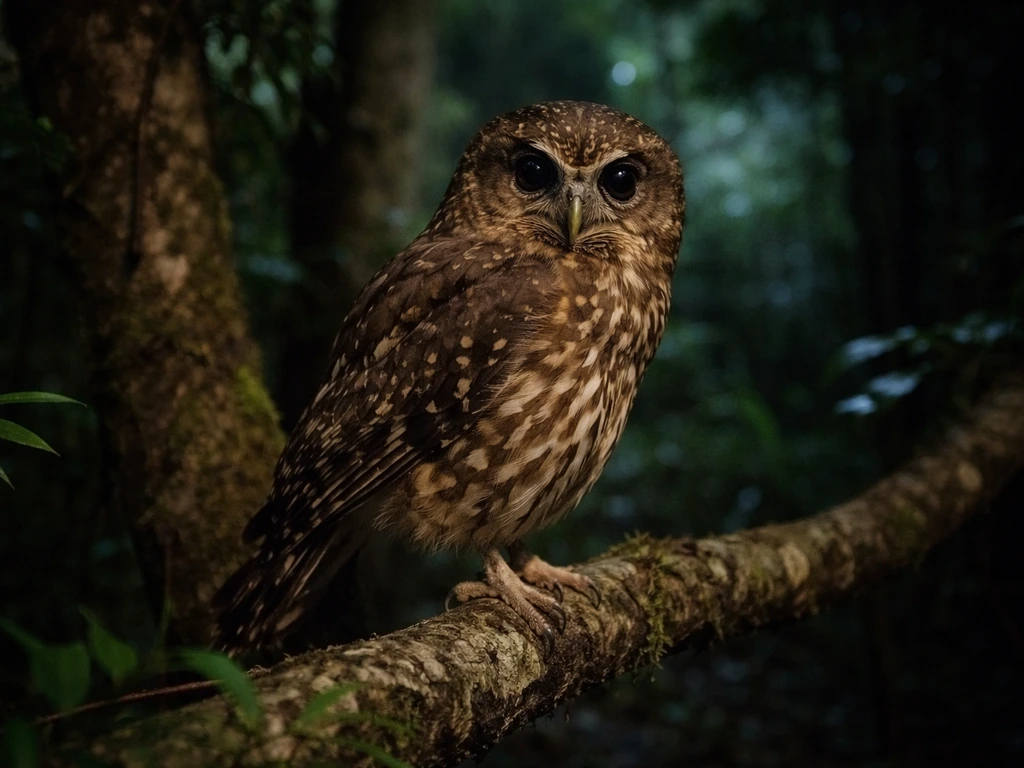
What the morepork actually looks like
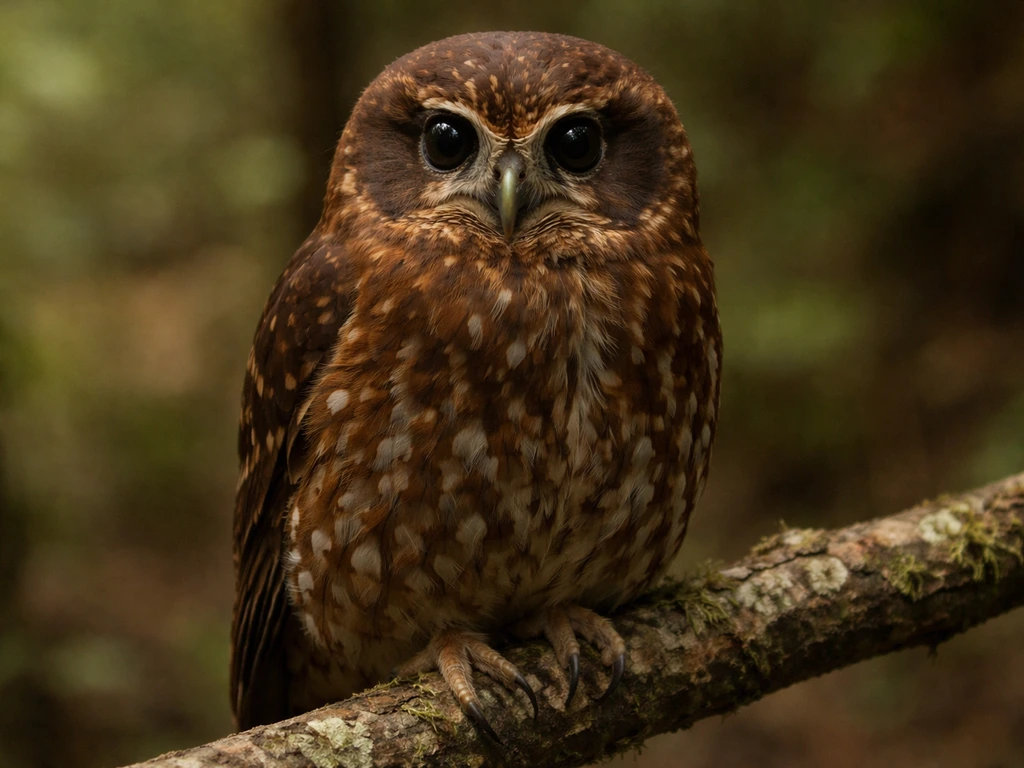
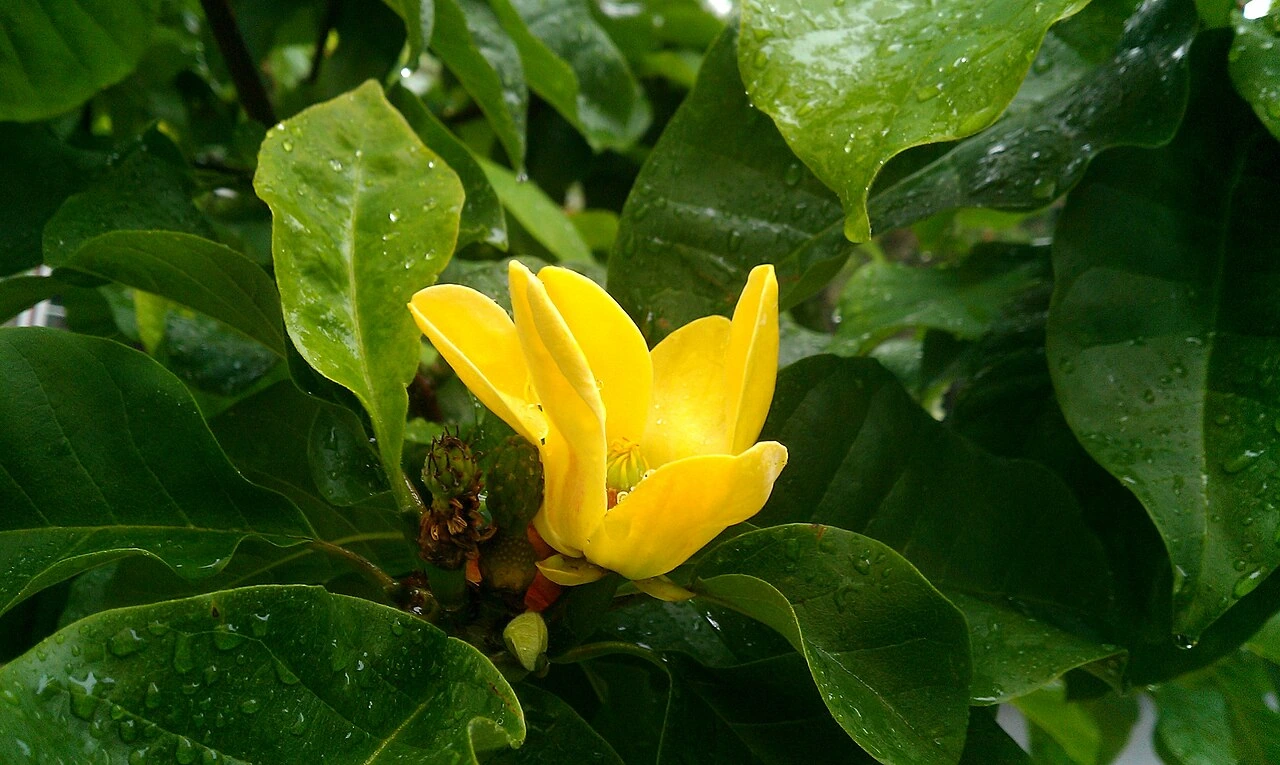
Adult moreporks are compact owls, measuring around 26 to 29 centimetres from bill to tail, with females running slightly larger than males. The plumage is a rich brown to reddish-brown, covered with pale barring, spotting, and streaking that varies a little from bird to bird. The face is brown with a weakly developed facial disk, meaning the "disc" shape you see on a barn owl is present but subtle here. The feature that jumps out when you get a look at one is the eyes: large, striking yellow to yellowish-green irises that seem to glow when caught in torchlight. Some magnolia species also produce yellow evergreen blooms, which can look strikingly similar to the warm yellow tones seen in nature-loving birds yellow bird. The bill is small and sharply hooked. Collectively, this combination of spotted brown body, round head, glowing golden eyes, and compact frame makes the morepork very distinctive once you have seen it.
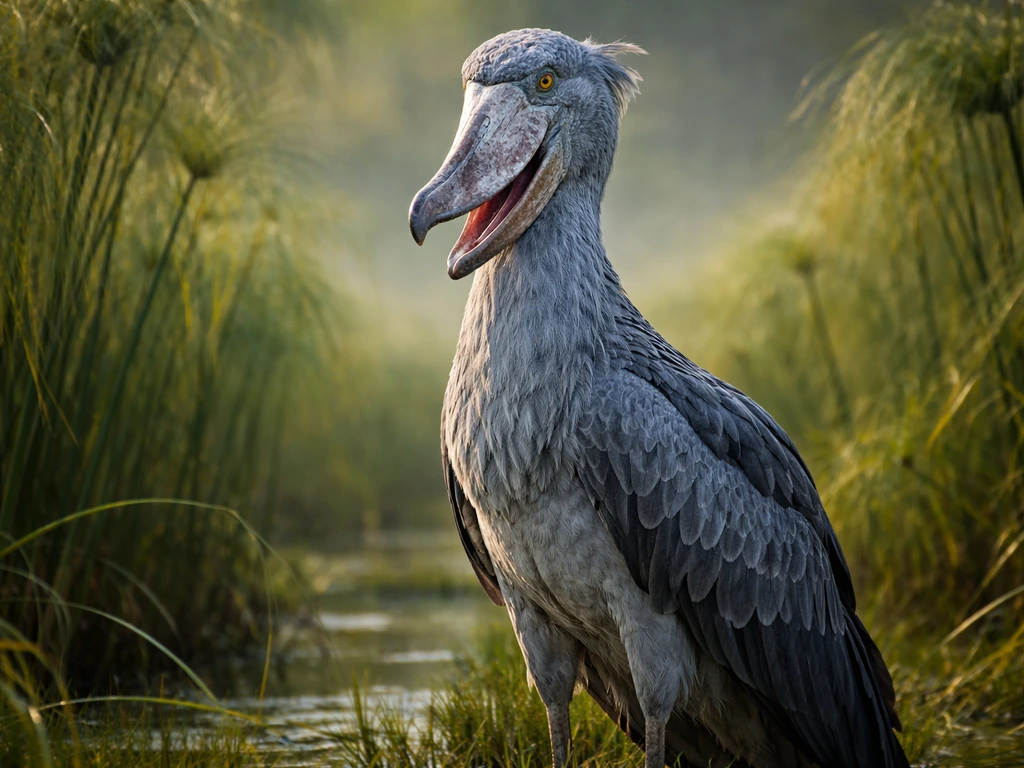
The species belongs to the Ninox genus, a group sometimes called boobooks across the broader Pacific and Australian region. The New Zealand morepork is the nominate race (N. n. novaeseelandiae). A separate race, N. n. undulata, once lived on Norfolk Island but is now considered extinct, with hybrid populations persisting there today. The shoebill bird, a large African stork-like bird often sought for its prehistoric appearance, is frequently discussed in terms of whether it is extinct or not shoebill bird extinct.
Where moreporks live and where to find them
Moreporks are found across New Zealand from the far north down to Stewart Island, and on most forested offshore islands from the Three Kings Islands in the north to the muttonbird islands off the south-western tip of Stewart Island. If you want to learn more about where shoebills live, they are found in specific freshwater wetlands of central and eastern Africa. They are genuinely adaptable when it comes to habitat, occupying everything from coastal forest and native bush to exotic plantation forests and well-treed suburban areas. Birds Online’s species treatment also notes that moreporks range from coasts (including offshore islands) into tree habitats, from arid-zone woodland and shrubland to tropical rainforest, and they avoid treeless deserts blank" rel="noopener noreferrer">range from coasts into habitats with trees. Macaws live in tropical and subtropical forests, including rainforests and woodlands, mainly across Central and South America macaw bird where do they live. You can find macaw bird information by country to see where different macaw species naturally occur macaw bird which country. The one requirement that holds firm across their range is trees: moreporks will not persist in open, treeless country. Whether the forest is dense native podocarp, scrubby regenerating bush, or even a mature exotic pine plantation, if there are trees large enough to perch in and nest in, moreporks will use them.
This flexibility is part of why the species has held on where many other native birds have not. You are genuinely as likely to hear a morepork calling from the edge of a Wellington suburb as from deep in Fiordland. If you are actively trying to spot one, your best strategy is to be in or near mature forest after dark and simply listen. Coastal reserves and forest fragments near farmland are reliable hunting grounds for the birds.
How moreporks hunt and what they eat
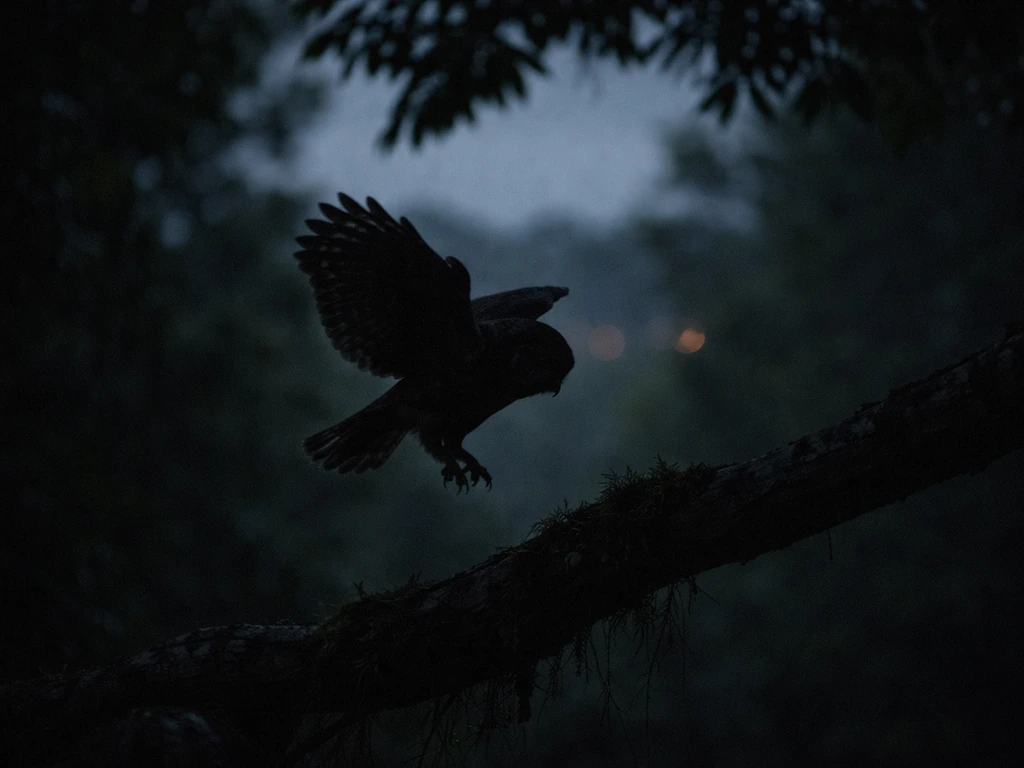
Moreporks are nocturnal hunters, most active around dusk and again just before daylight. During the day they roost quietly in dense foliage or tree cavities, and if spotted by smaller birds they risk being mobbed, which is one of the ways birdwatchers sometimes locate them. When darkness falls, their hunting style is straightforward and effective: they perch on a branch, scan and listen for prey below, then pounce from the perch. Wikipedia likewise describes the morepork hunting by pouncing on prey from tree perches pounce from the perch. The combination of silent flight feathers, excellent low-light vision, and acute hearing makes them efficient predators even in near-total darkness.
Diet studies based on stomach contents and regurgitated pellets show that insects make up a large proportion of what moreporks eat. Moths, weta, and beetles are consistently common in the data. Beyond invertebrates, moreporks also take small lizards, mice, and occasionally small birds. The pellets they cough up after digesting a meal, made of indigestible fur, feathers, and insect exoskeleton, are one of the best ways researchers track exactly what a local population is eating.
The morepork's calls: what you will actually hear
The call is the easiest way to confirm a morepork is nearby. Research using acoustic recorders has identified three distinct call types. The most familiar is the classic double-syllable territorial and contact hoot that gives the bird its English name: a clear, repeated "more-pork" or "ruu-ru" that carries a long distance through forest at night. The second type is called the "wheel" call, and the third is the "wok" call, which can continue non-stop for extended periods and is often heard during breeding season. If you are walking through New Zealand bush at night and hear a clear, rhythmic two-note hoot repeating steadily, that is almost certainly your morepork.
Breeding season, nests, and raising chicks
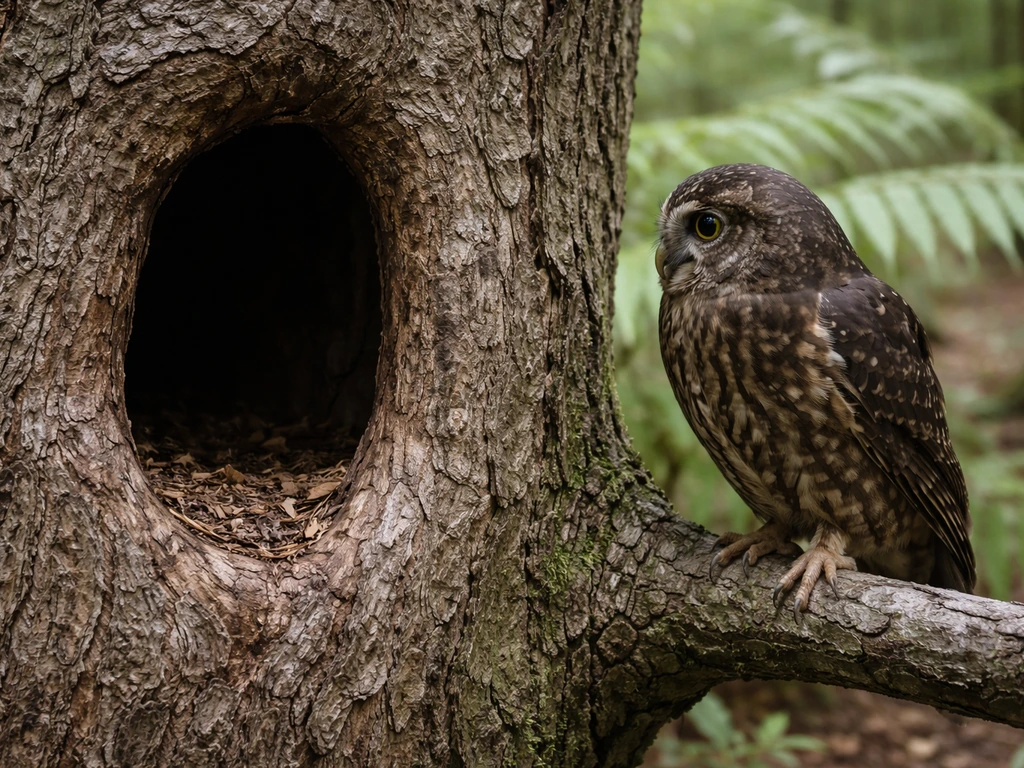
Moreporks breed in spring and early summer in New Zealand. They nest in cavities rather than building open nests: holes in large trees, hollows in logs, and sites among dense epiphytes (plants growing on trees) are typical nest locations. The female does most of the incubation work. In most cases two eggs are laid, though clutch sizes of one to three have been recorded. Incubation takes around a month, and once the chicks hatch they remain in or near the nest for approximately five weeks before fledging.
A study on Mokoia Island in Lake Rotorua recorded incubation periods of at least 24 days, consistent with the roughly month-long figure documented elsewhere. Once fledged, young birds stay in their parents' territory for some time while learning to hunt independently. The need for large trees with suitable cavities is one reason morepork populations can struggle in heavily modified landscapes where old-growth timber has been removed.
Conservation status: not endangered, but worth watching
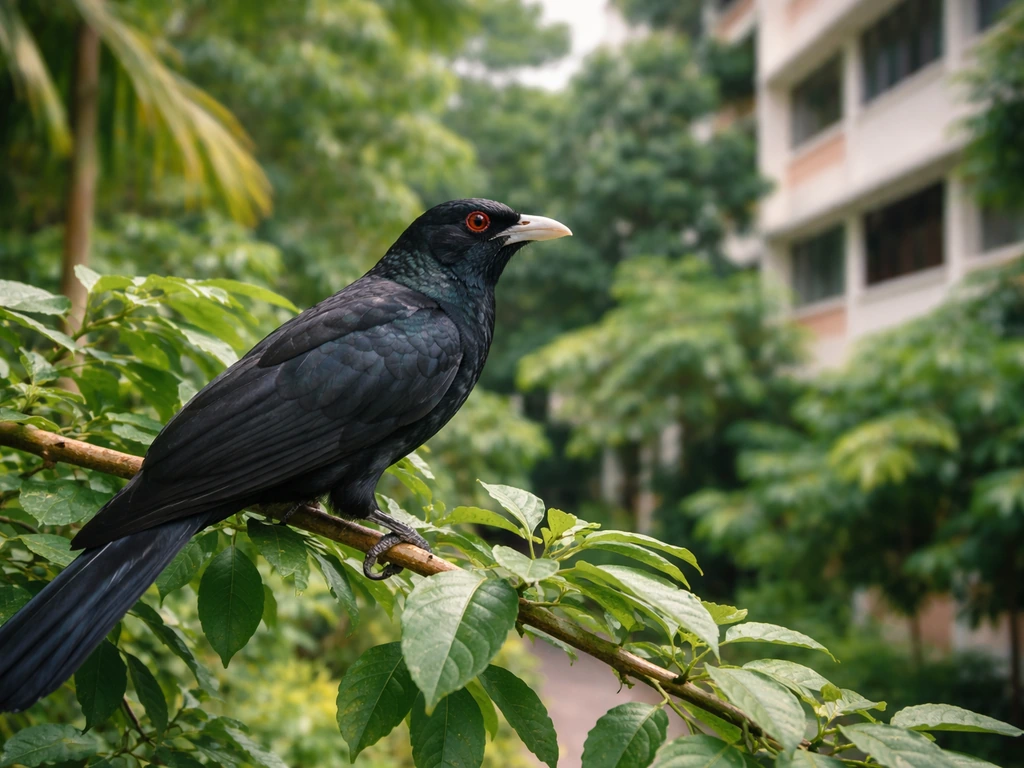
The New Zealand Department of Conservation currently lists the morepork as "Native: Not Threatened", which is genuinely good news for a native land bird in a country with one of the world's worst records for bird extinction. However, DOC also notes that the species may be in gradual decline in some areas, and that local threats are real enough to take seriously. If you are dealing with a koel bird in Singapore, the most effective approach is to remove attractants and use humane deterrents while preventing roosting and nesting around your property koel bird how to get rid of singapore.
The biggest problems moreporks face are predation at the nest and habitat loss. When nesting in tree cavities, the birds and their eggs are vulnerable to introduced predators including cats, possums, rats, and mustelids such as stoats. These are the same animals driving declines across much of New Zealand's native wildlife. There is also a secondary poisoning risk: moreporks feeding on rodents killed or affected by brodifacoum (a common rodenticide used in pest control operations) can accumulate lethal doses of the toxin. Dead moreporks have also been found containing residues of 1080, another pest control compound, used widely in aerial operations across the country. None of this is enough to push the species to threatened status currently, but it does mean populations in heavily predator-affected areas can be locally depressed. If you are also curious about whether any other New Zealand birds have toxins, the hooded pitohui is sometimes discussed in comparison to this question of poisonous birds poisonous birds? ie the hooded pitohui.
Compared to species like the kiwi, which faces severe pressure from exactly the same suite of introduced predators, the morepork's ability to use a wider range of habitats and its somewhat higher reproductive flexibility gives it more resilience. That said, it is worth remembering that New Zealand has already lost several bird species that were once considered reasonably secure, so the "not threatened" label should not be read as "no concern at all".
How to observe moreporks responsibly
The best way to experience a morepork is to sit quietly in or near native bush after dark and listen. You do not need to go crashing through the undergrowth. The birds are vocal and carry well across the forest. Learning the three call types beforehand so you can recognise what you are hearing makes the experience much more rewarding, and it means you can confirm the bird without needing to see it or disturb it at all.
- Stay still and quiet rather than moving toward the call. Moreporks that are actively disturbed will go silent and relocate.
- Never use a bright, sustained torch beam pointed directly at the bird. A brief look to confirm ID is fine; prolonged lighting stresses the animal and disrupts its ability to hunt.
- Avoid playback calls during breeding season. Repeated call playback in the same area can cause unnecessary territorial stress and interfere with natural behaviour.
- Keep distance from any nest cavity you find. Moreporks are especially vulnerable to disturbance and nest predation during incubation, and a flushed bird can abandon a nest.
- If you are in a DOC-managed area with active predator control, check whether bait stations are present. Do not handle dead rodents or other wildlife, and keep dogs on leads near any pest control operations.
For identifying calls confidently, the Birds New Zealand Notornis journal and New Zealand Birds Online both have documented recordings and descriptions of the morepork, wheel, and wok call types. Familiarising yourself with those before going out at night is the single most useful thing you can do to get a rewarding encounter. Once that unmistakable two-note hoot drifts out of the dark bush toward you, you will understand exactly why this bird has been part of the New Zealand night for as long as people have been listening. If you are wondering whether the shoebill is the dumbest bird, the key is to remember that bird intelligence varies by species and context, not by a single stereotype two-note hoot.
FAQ
Is a morepork the same as a ruru, or are those different birds?
They are the same bird. “Morepork” is the English name based on its call, while “ruru” is the Māori name widely used in New Zealand.
What does a morepork sound like if I cannot hear the call clearly enough to match “more-pork”?
Listen for a steady, two-note hoot pattern that carries through the forest at night. The article notes three call types, including a non-stop “wok” that is common during breeding, so a long, rhythmic call can still indicate a morepork even if the two-note phrase is faint.
When is the best time to look or listen for moreporks?
They are most active around dusk and again just before daylight. If you go too late in the night or arrive mid-day, your chances drop because they mostly roost quietly during daylight hours.
Can I spot a morepork during the day if I’m in the right habitat?
Day sightings are possible but less reliable because they roost in dense foliage or tree cavities and can be hard to see. If you spot small birds mobbing an area during the day, that can be a clue a morepork is nearby.
How can I avoid confusing a morepork with another owl or a different bird at night?
Focus on the combination of compact brown body, subtle facial disk, and bright yellow to yellowish-green eyes. If you cannot confirm visually, rely on call type identification rather than wing sound or general “owl-like” behavior.
Do moreporks live anywhere without forests, like open farmland or parks?
They generally will not persist in treeless open country because they need trees both to perch and to nest in cavities. However, they can use tree-lined suburban areas and exotic plantation forests as long as suitable large trees are present.
Do moreporks nest in the open or do they use existing holes?
They nest in cavities rather than building an open nest. Typical sites include holes in large trees, hollows in logs, and dense epiphyte-covered areas on trees.
How long are morepork chicks in or near the nest after hatching?
After the eggs hatch, the chicks stay in or near the nest for about five weeks before fledging, and young birds then remain in the parents’ territory while learning to hunt.
What’s the main reason moreporks decline locally even if they are “not threatened” overall?
Two big drivers are introduced predators at nests and habitat limitations, specifically the loss of large, cavity-bearing trees. Local populations can be “depressed” in predator-heavy areas even if the species is not broadly threatened.
Are moreporks affected by rodenticide or pest-control chemicals?
Yes, there is a secondary poisoning risk. Moreporks can be exposed if they eat rodents killed or affected by common rodenticides such as brodifacoum, and residues of 1080 have also been found in dead birds.
If I want to attract or deter moreporks around my property, what should I be careful about?
Avoid practices that increase risk to wildlife. Since the article highlights nest vulnerability to introduced predators and pesticide exposure through prey, the safest approach is to reduce attractants for invasive predators and prevent roosting and nesting around buildings, rather than trying to “manage” the owl directly.
How do I confirm I heard a morepork without disturbing the bird?
Use acoustic confirmation. The article advises learning the three call types (classic two-note “more-pork/ruu-ru,” “wheel,” and extended “wok”) so you can confirm presence by listening rather than approaching closely or shining lights into roost areas.
Why do morepork populations struggle more in some places than others even within New Zealand?
Even though they are adaptable, they depend on large trees with suitable cavities for nesting. Heavily modified landscapes that remove old-growth or large timber are a key reason some areas support fewer birds.