Macaws are native to Central America, South America, and parts of Mexico. If you are comparing evergreen trees too, magnolia varieties like the yellow bird are commonly used in landscaping is magnolia yellow bird evergreen. But which country a macaw comes from depends entirely on the species you mean. The Scarlet macaw ranges from southern Mexico all the way to Bolivia and Brazil.
Macaw Bird Which Country: Identify Species and Native Range

Maya Hennessy
2 Jun 2026
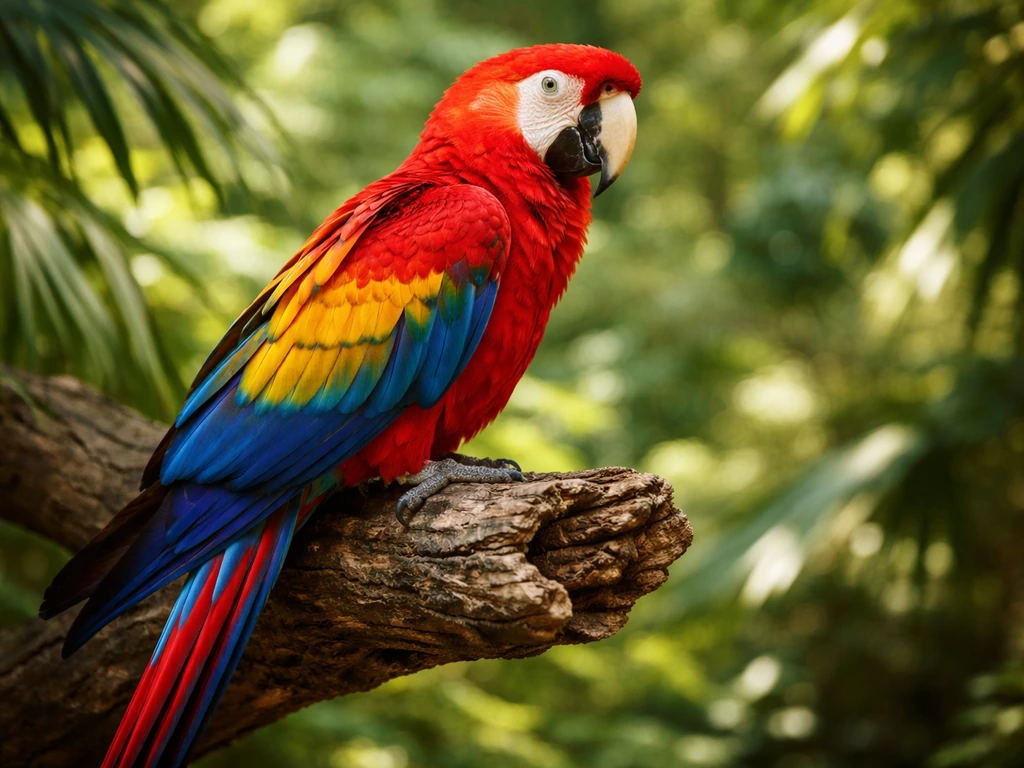
The Hyacinth macaw is almost entirely a Brazilian bird. Lear's macaw exists only in one corner of northeastern Brazil. [The Blue-and-yellow macaw spans Venezuela, Colombia, Brazil, Bolivia, and Paraguay. ](https://en.
wikipedia. org/wiki/Blue-and-yellowmacaw) So the honest answer is: there is no single "macaw country. If you're instead asking where does the shoebill bird live, treat it like a separate species question and look up its native range rather than assuming it follows macaw patterns macaw country. " Narrow down the species first, and the country (or countries) falls right into place.
How to identify which macaw you're actually asking about
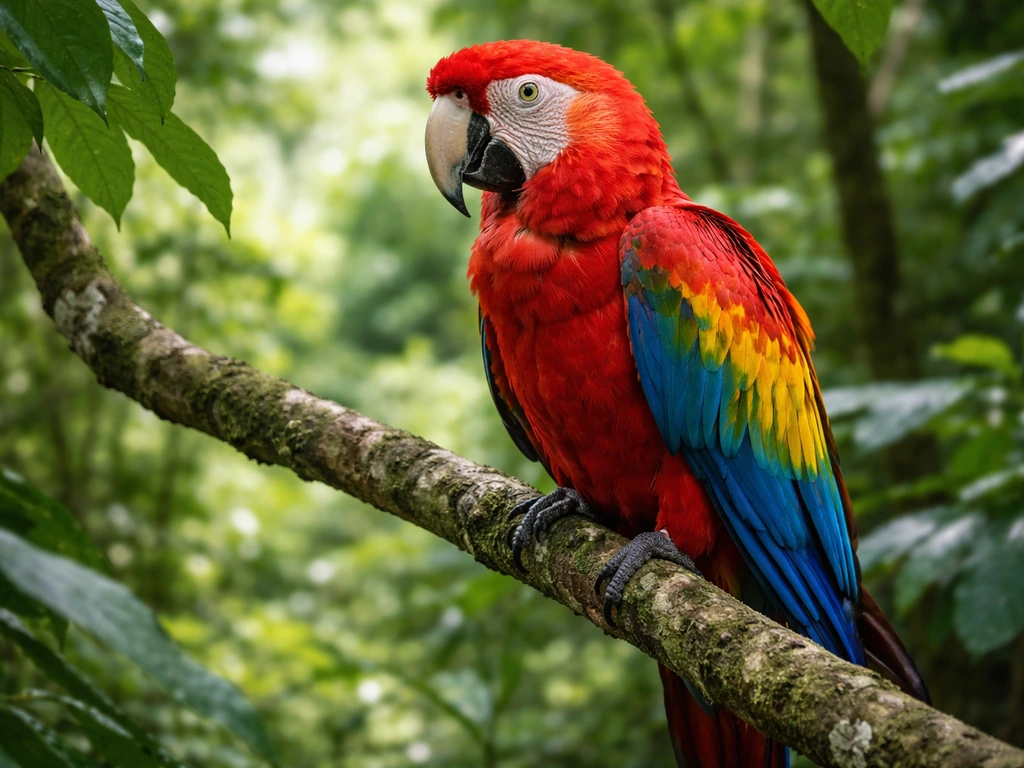
"Macaw" is a common name shared by dozens of species across several genera, mainly Ara, Anodorhynchus, and Primolius. Without knowing which one you mean, any country answer is guesswork. The good news is that macaws are visually distinctive, and most people can narrow it down quickly with just a few cues. A morepork bird is a type of owl, so it is completely different from the macaws discussed in this article what is a morepork bird.
Here are the species most people are actually asking about, with the key features that set each apart:
| Species | Common Names | Most Distinctive Feature |
|---|---|---|
| Ara macao | Scarlet macaw, Red-and-yellow macaw, Red-and-blue macaw | Vivid red body, yellow and blue wing patches |
| Ara ararauna | Blue-and-yellow macaw, Blue-and-gold macaw, Yellow-breasted macaw | Bright blue upperparts, golden-yellow underparts |
| Anodorhynchus hyacinthinus | Hyacinth macaw, Hyacinthine macaw | Entirely cobalt blue, largest macaw species |
| Anodorhynchus leari | Lear's macaw, Indigo macaw | Smaller all-blue bird, greenish tint near head |
| Ara militaris | Military macaw | Mostly green with red forehead patch |
| Ara rubrogenys | Red-fronted macaw | Green body, red forehead and shoulder patches |
If the bird you're thinking of is large and entirely blue, you're likely looking at either the Hyacinth or Lear's macaw. If it's red and yellow, it's almost certainly the Scarlet macaw. Green with a red forehead points to the Military or Red-fronted macaw. Locking in the species name (ideally the Latin binomial) before searching by country saves a lot of confusion, especially because common names can shift between regions and reference sources.
Macaws by country: where each major species naturally lives
Most macaw species are native to multiple countries, not just one. Their ranges follow river systems, forest types, and altitude gradients that don't respect national borders. Here's where the main species actually live in the wild.
Scarlet macaw (Ara macao)
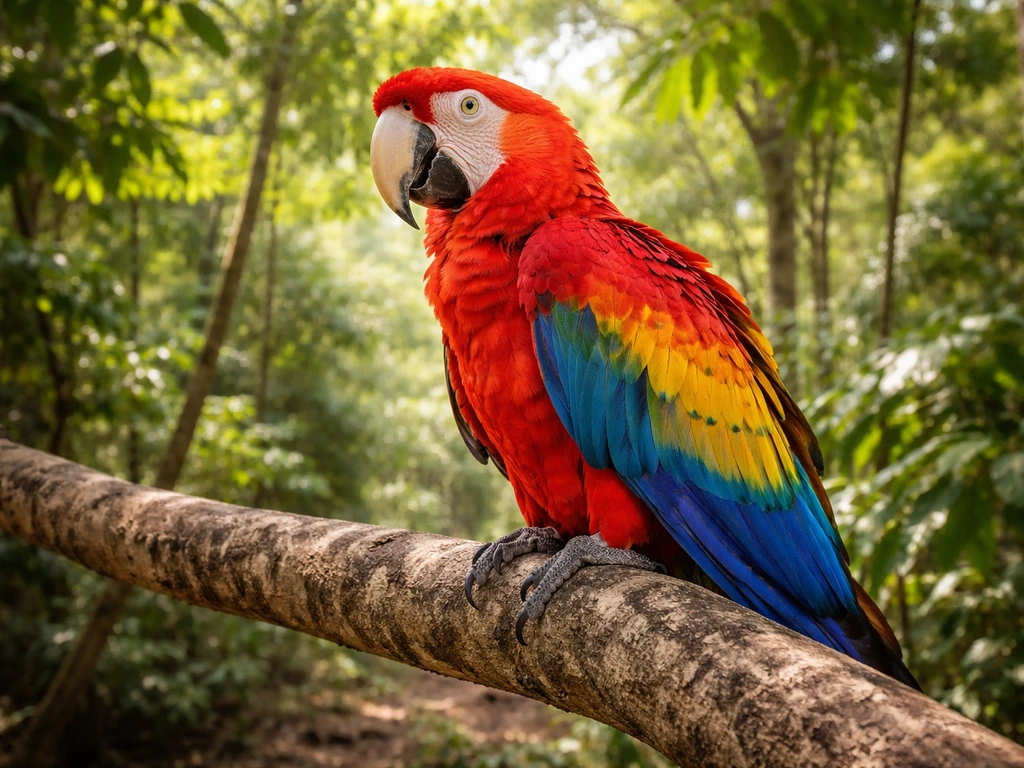
The Scarlet macaw has one of the broadest ranges of any macaw, spanning from southern Mexico through Central America (Guatemala, Belize, Honduras, Nicaragua, Costa Rica, Panama) and into South America, including Colombia, Venezuela, Ecuador, Peru, Bolivia, eastern Brazil, and even the island of Trinidad. It's one of the few macaw species where you genuinely can find it across a wide swath of the hemisphere. Its IUCN status is Least Concern globally, though local populations in parts of its range have declined significantly.
Blue-and-yellow macaw (Ara ararauna)
According to IUCN data, the Blue-and-yellow macaw is found from Venezuela to Brazil, Bolivia, Colombia, and Paraguay, with additional presence in Mexico and Panama. It favors forest edges, woodland near rivers, and savanna habitats with scattered trees. This is probably the macaw you've seen in zoos or on wildlife documentaries, and it remains relatively widespread compared to its more threatened relatives.
Hyacinth macaw (Anodorhynchus hyacinthinus)
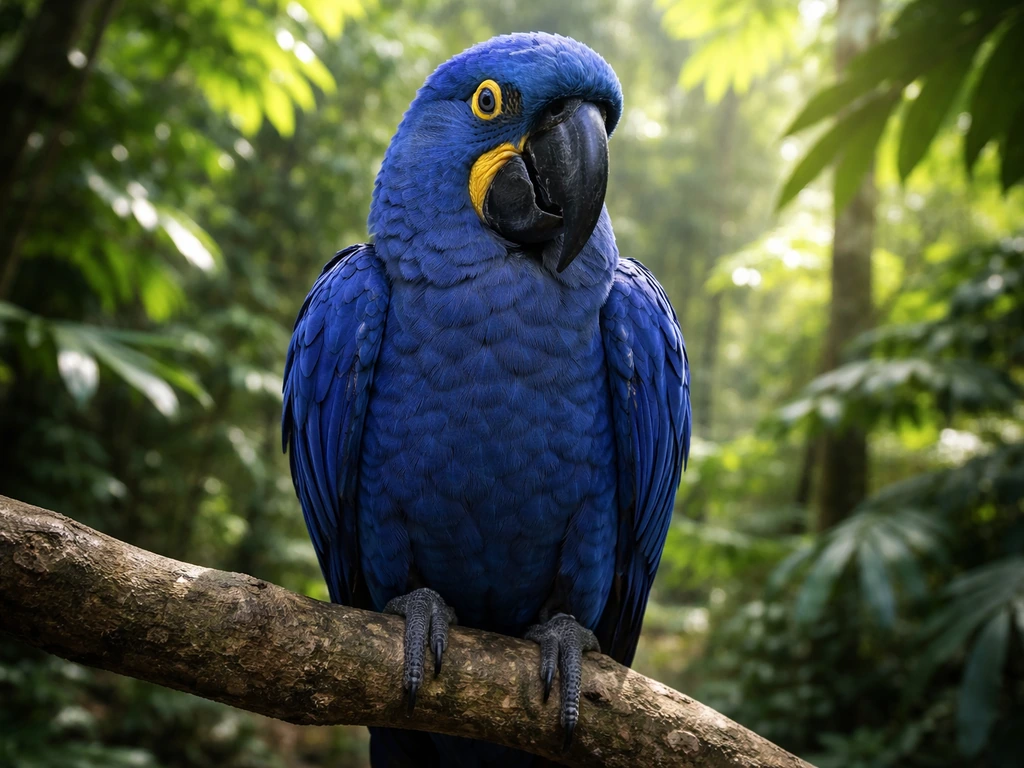
The Hyacinth macaw is primarily a Brazilian species. The U.S. Fish and Wildlife Service describes its range as centered in Brazil, with small occurrences in eastern Bolivia and Paraguay. The vast majority of the remaining wild population lives in the Pantanal wetlands of Brazil. It's the world's largest flying parrot and is classified as Vulnerable by IUCN, a status driven by habitat loss and decades of illegal trapping for the cage bird trade.
Lear's macaw (Anodorhynchus leari)
Lear's macaw is one of the most geographically restricted birds on the planet. Its wild range is confined to the Caatinga region in the state of Bahia, in northeastern Brazil, specifically along the middle course of the Rio São Francisco drainage. Brazil is the only country where this species exists in the wild. If someone tells you Lear's macaw is from anywhere else, that information is incorrect.
Military macaw (Ara militaris)
The Military macaw has a fragmented range running from Mexico through Central America and into South America, including Colombia, Venezuela, Ecuador, Peru, Bolivia, and Argentina. The key word there is fragmented: these populations are not continuous. Deforestation, mining, road construction, and illegal pet trade pressure have broken what was once a more connected distribution into isolated pockets. IUCN lists it as Vulnerable.
Red-fronted macaw (Ara rubrogenys)
The Red-fronted macaw is Bolivia's endemic macaw. Its entire wild range sits within the inter-Andean valleys of central Bolivia, making it one of the most range-restricted macaws in South America. IUCN lists it as Endangered, and its threats are severe: destruction of dry forests, poaching for the illegal pet trade, and direct persecution because the birds raid crops. Bolivia is the only country this species calls home.
Why some macaws are critically endangered and others are widespread
The variation in macaw conservation status by country isn't random. It maps almost exactly onto land use history, enforcement of wildlife laws, and how narrow or broad a species' original habitat requirements were. The Scarlet macaw survives across a dozen countries partly because it tolerates a wide range of forest types and elevations. The Red-fronted macaw, by contrast, depends on a specific type of dry inter-Andean valley woodland that only exists in a small part of Bolivia. When that habitat gets converted for agriculture or the birds get trapped for sale, the entire species feels it.
Illegal trade has been a recurring crisis across species. The Hyacinth macaw's Vulnerable status traces partly to decades of trapping for the international cage bird market before CITES protections tightened. The Red-fronted macaw still faces active poaching pressure as of 2026, with IUCN SOS documentation noting both habitat loss and illegal capture for the pet trade as primary threats. The Military macaw faces all of these pressures simultaneously, compounded by the fact that its populations across different countries are increasingly isolated from each other, which reduces genetic diversity and resilience.
CITES appendix listings matter here too. Most macaw species are listed on CITES Appendix I or II, which regulates or restricts international commercial trade. Ara macao (Scarlet macaw), Ara ararauna (Blue-and-yellow macaw), and Ara rubrogenys (Red-fronted macaw) all carry CITES listings. This is directly relevant to country-based questions because a macaw's CITES status tells you whether it can legally cross international borders at all and under what conditions.
Native range vs where macaws are found now
This is where a lot of confusion creeps in, and it's worth being precise. When IUCN lists the countries where a species occurs, they encode each record with an origin category: native, reintroduced, introduced, or vagrant. These are not interchangeable. A macaw sighted in Florida, for example, may be a feral or escaped captive bird. That doesn't make Florida part of the Scarlet macaw's native range.
Feral and escaped populations of Blue-and-yellow macaws exist in parts of Europe, particularly Spain and Portugal, where captive birds have established small breeding colonies. These populations are real and observable but are classified as introduced, not native. If you looked only at sighting databases without checking origin metadata, you'd get a misleading picture of where the species actually belongs historically and ecologically.
Reintroduction efforts add another layer. Lear's macaw recovery programs in Brazil have involved managed releases in the Caatinga. These count as reintroduced within the native range, which is different from an introduced population in a foreign country. Conservation organizations and IUCN assessments try to keep this distinction clear, but secondary sources often collapse it. Always check whether a country record is native, reintroduced, introduced, or vagrant before treating it as a definitive origin answer.
How to verify a macaw's country quickly
The fastest and most reliable way to confirm which country a macaw species comes from is to go directly to IUCN Red List assessments. Here's a practical workflow:
- Go to iucnredlist.org and search the species by Latin name (e.g., Ara macao, Anodorhynchus hyacinthinus). Common names can pull up ambiguous results.
- Open the species assessment and scroll to the Geographic Range section. This lists every country where the species has been recorded, with origin and seasonality metadata for each entry.
- Check the interactive range map on the same page. IUCN publishes digital distribution maps for most macaw species. These give you a visual polygon of where the species lives, not just a country list, which is useful when a range straddles a border.
- Cross-check with the CITES species database at cites.org to confirm the appendix listing and any trade annotations. This tells you the species' legal status for international movement.
- If you want distribution at a finer resolution, BirdLife International's DataZone (datazone.birdlife.org) carries species distribution data with Red List status and country-level records, often with additional subspecies breakdowns.
- For visual range confirmation, range maps from sources like eBird and the World Parrot Trust encyclopedia are useful supplements, though IUCN and BirdLife should be your primary references for country-level facts.
One important note: IUCN updates the Red List several times per year. If you're looking at a secondary source (a wildlife blog, a zoo profile, a travel site), always check when it was written and confirm the current status against the IUCN page directly. Range contractions can happen faster than secondary sources are updated, especially for Endangered or Critically Endangered species. Lear's macaw, for instance, has had its population estimates revised multiple times as monitoring improved.
What to do if you're trying to find a macaw in a specific country
If your goal is to actually see a macaw in a specific country, whether in the wild or in a conservation setting, the approach differs depending on what you're looking for. If you meant the nuisance koel bird in Singapore, focus on humane deterrents like proofing windows, removing food sources, and reducing roosting spots koel bird how to get rid of singapore.
Wild sightings
For wild sightings, eBird (ebird.org) is the most practical tool. Search the species name and filter by country or region. eBird aggregates birder-reported observations with dates and GPS coordinates, so you can see where the species was actually reported recently, not just where its theoretical range sits on a map. This is especially useful for species like the Scarlet macaw, where populations are dense in some areas and effectively absent in others within the same country. For example, Scarlet macaws are reliably seen in Costa Rica's Carara National Park and the Osa Peninsula, even though they occur across much of the country's range.
Conservation and reintroduction sites
For species like Lear's macaw or the Red-fronted macaw, your best chance of seeing them in the wild is through organized conservation programs. The Instituto Arara Azul in Brazil, Armonía in Bolivia, and similar organizations run field sites where researchers and, in some cases, responsible ecotourists can observe birds. These programs often monitor specific nesting cliffs or feeding areas and can tell you the current status of local populations. Contacting them directly is far more reliable than relying on general travel guides.
Captive birds in zoos and sanctuaries
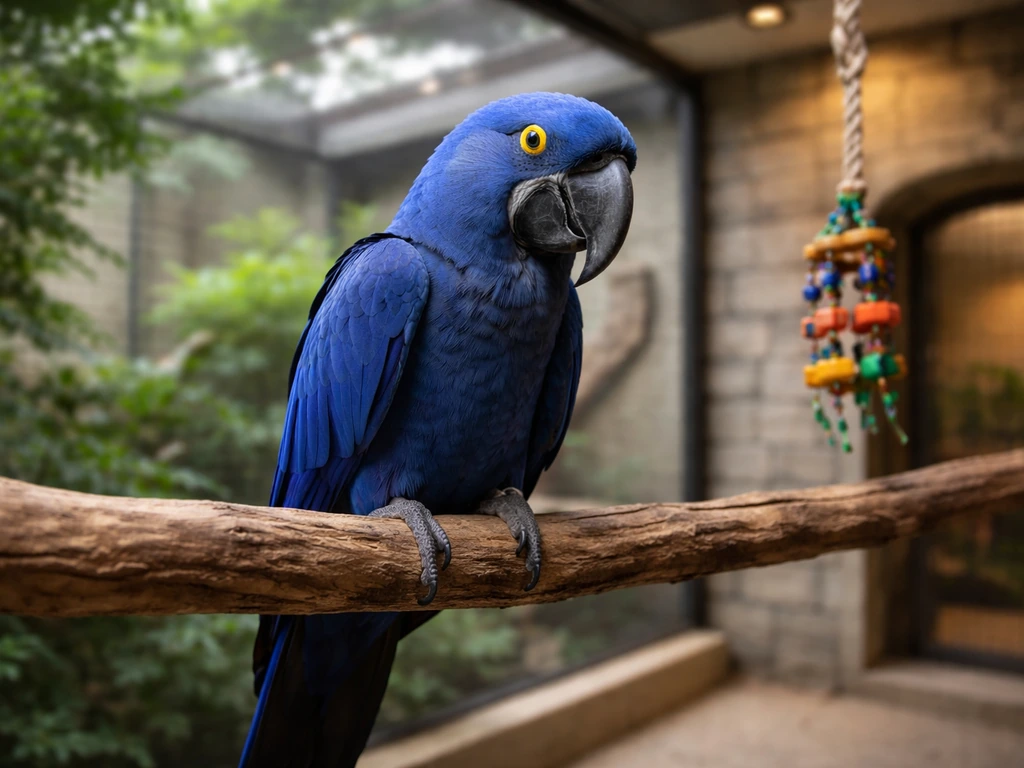
If you're asking about a macaw in a zoo, aviary, or as a pet, remember that the bird's country of residence tells you nothing about its native range. A Hyacinth macaw in a European zoo is still a Brazilian species ecologically and legally. People sometimes ask whether the hooded pitohui is the only poisonous bird, but the answer depends on which species and what kind of toxicity you mean is the hooded pitohui the only poisonous bird.
CITES documentation should accompany any legally held specimen and will reference the species' native country information. If you're verifying a pet macaw's background, the CITES appendix listing for that species (easily checked at cites. org) tells you what documentation should have accompanied it through any international transaction.
It's also worth noting that macaw habitat questions connect to broader patterns you see across threatened bird species worldwide. The same forces driving macaw range loss in South America, habitat fragmentation, illegal trade, and agricultural conversion, show up in the stories of other endangered birds tracked on this site. This same kind of habitat loss and illegal capture is also what has raised concerns about whether the shoebill bird is extinct is shoebill bird extinct.
Understanding where a macaw is from and why its range has changed is really a window into understanding how and why birds lose ground globally. Debating "is shoebill the dumbest bird" is a common example of how people generalize about animal intelligence without looking at evidence.
FAQ
If someone tells me “a macaw is from country X,” how can I verify it’s actually the bird they mean?
Use the species name, not the common “macaw” label. Many countries have local common names for the same species, and some people use “macaw” for other parrots in casual speech. If you can’t confirm the Latin binomial, you should treat any “which country” answer as uncertain.
How do I know whether a macaw record for a country is native or just an escape/introduced population?
Check the origin category for the record, native versus reintroduced versus introduced versus vagrant. A macaw sighting in Florida, for example, may reflect an escaped or feral captive bird, which does not mean the species is historically native there.
Why might a macaw not occur in a country even if it’s nearby to its listed range countries?
If you’re trying to predict whether a macaw can live there naturally, look at habitat type, not just latitude. Species like the Red-fronted macaw depend on dry inter-Andean valley woodland, so it can be absent from nearby countries that lack that exact habitat.
Does CITES listing tell me which country a macaw is native to?
CITES affects legal cross-border trade, but it does not tell you where the species originally evolved. So, even if a species is CITES-listed, you still need the IUCN native range plus the record’s origin category to answer which country the macaw comes from.
Can Lear’s macaw be “from” any country other than Brazil?
Yes, but only within the context of the correct species. Lear’s macaw is confined to Brazil in the wild, so any claim that it is “from” another country should be treated as misinformation unless it’s describing reintroduction, captivity, or a non-native introduced population.
Why do bird reports in the same country sometimes conflict for the same macaw species?
When a species is fragmented, you can see large gaps inside the same country. For instance, you may get patchy reports in one region and near-absence in another, even though the bird is still considered present for the country overall.
What’s the most common mistake people make when they use sightings maps to answer “which country” a macaw is from?
Different websites sometimes blend wild range with captive or breeding-colony observations. If you’re verifying where the macaw “comes from,” use sources that show origin metadata (native, introduced, reintroduced, vagrant) and not only a sightings map.
How can I plan a realistic trip to see range-restricted macaw species in their native area?
If you’re planning to see macaws in the wild, prioritize organized conservation sites for very range-restricted species like Lear’s macaw and the Red-fronted macaw. General wildlife travel guides are less reliable for birds that occur only in small regions.
If a macaw is kept in a country, does that country count as where it’s from?
If the bird is in a zoo or someone’s pet, “country of residence” is irrelevant to native range. Native range comes from species biology and verified distribution records, while captivity location only indicates where it was housed or traded.
How do I avoid outdated information when looking up where a macaw lives now?
When you’re confirming range information, pay attention to update timing. IUCN assessments can change after better monitoring, especially for Endangered species, so relying on an older secondary source can misstate current country occurrence.