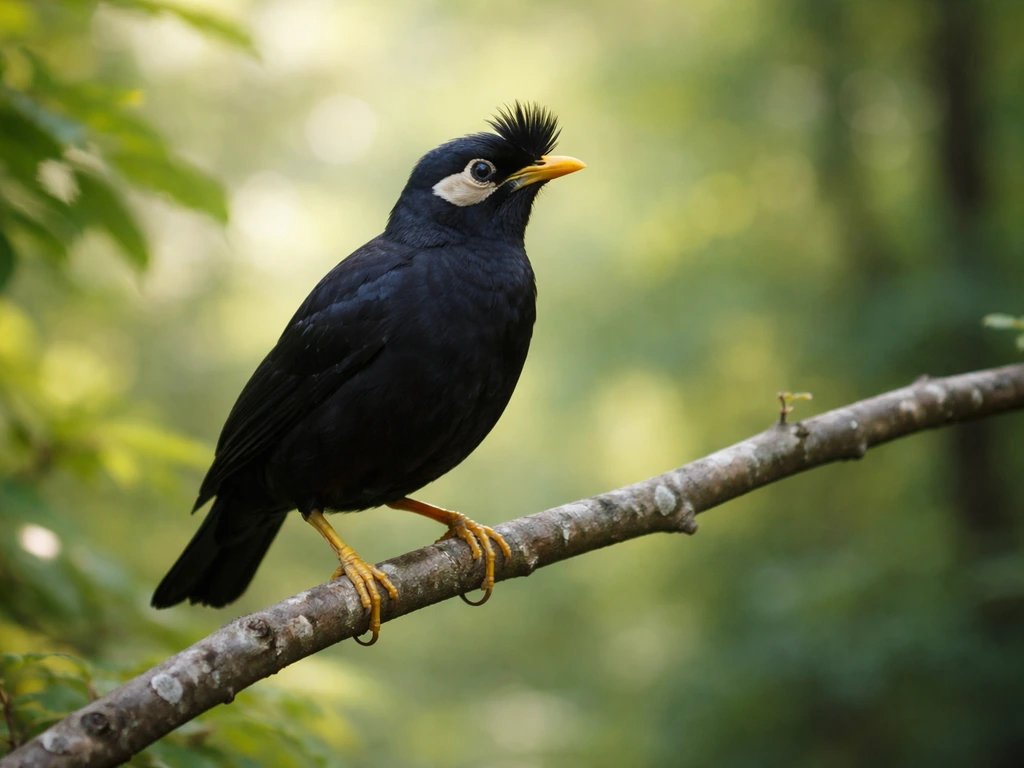
The Maya bird is not endangered. In fact, both species most commonly called 'maya' in the Philippines, the chestnut munia (Lonchura atricapilla) and the Eurasian tree sparrow (Passer montanus), are listed as Least Concern on the IUCN Red List, which is the gold standard for conservation status globally. That's as far from endangered as a bird can get on the official scale. If you still want the endangered answer, focus on species that are actually listed as threatened on the IUCN Red List. So if you searched this question worrying about a beloved backyard bird, you can breathe a little easier, though the full picture is worth understanding. So if you're wondering whether is martinez bird endangered, check the local conservation context and the specific species being referred to by that name.
Is Maya Bird Endangered? Status, Threats, and Updates

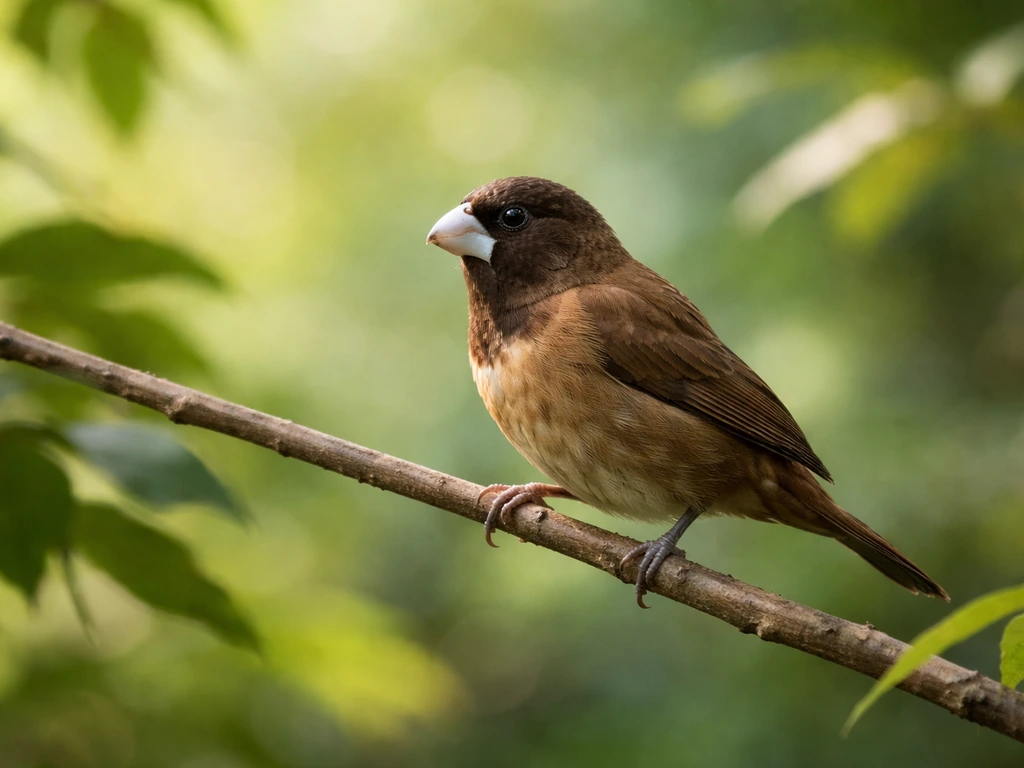
Which bird is actually called the Maya bird?
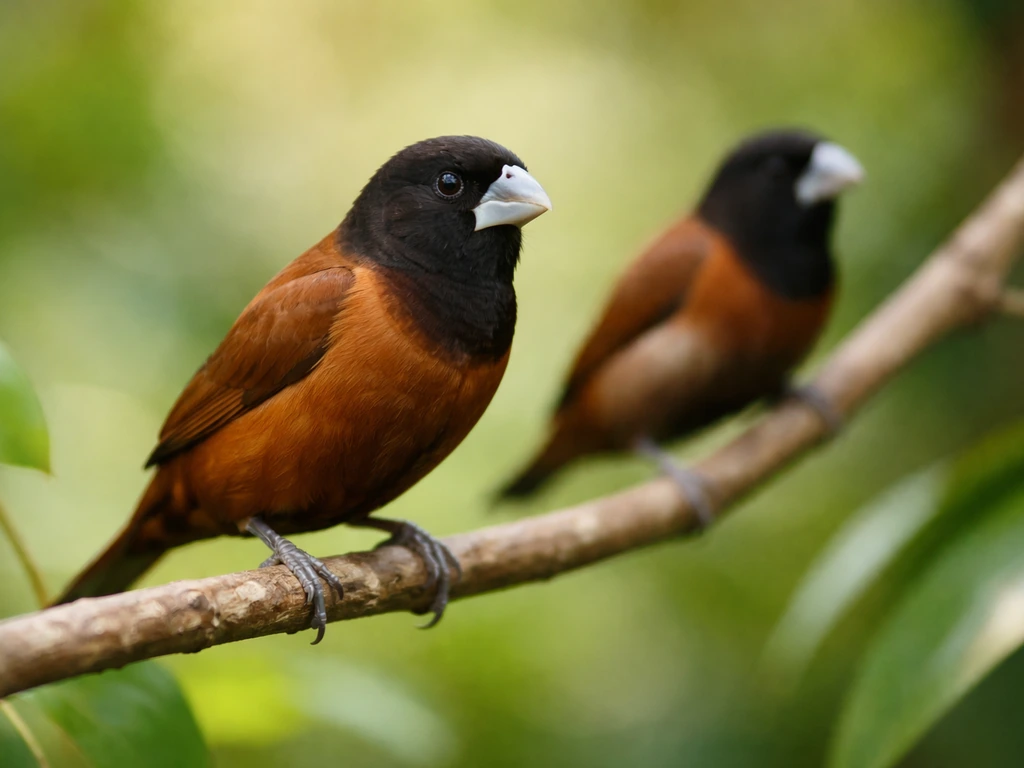
Here's where it gets interesting. 'Maya' is a folk or vernacular name used in the Philippines, and it doesn't point cleanly to one single species. Depending on where you are and who you ask, it can mean at least two different small birds.
- Lonchura atricapilla (chestnut munia) — locally called 'mayang pula' or 'red maya,' this is the bird most strongly associated with the name 'maya' in Philippine conservation and environmental documents. A 2022 Environmental Impact Statement for the Davao City Expressway Project, for example, explicitly identifies the chestnut munia as 'the Maya.'
- Passer montanus (Eurasian tree sparrow) — locally called 'mayang simbahan' or 'church maya,' this introduced species became so familiar around Filipino churches and urban areas that many people consider it the default 'maya.' Its widespread visibility has caused real confusion about which bird the name actually belongs to.
- Other munia species in the Philippines are sometimes lumped under the 'maya' label in casual use, adding to the ambiguity.
For conservation purposes, the chestnut munia (Lonchura atricapilla) is generally treated as the true 'Maya' in Philippine scientific and environmental contexts. In the Revised EIS Report for the Davao City Expressway Project, the EMB identifies the chestnut munia and notes that it corresponds to the 'Maya' (blank" rel="noopener noreferrer">Lonchura atricapilla) with an IUCN Least Concern listing. That's the species this article focuses on, though the tree sparrow's status is covered too since so many people encounter it first. If you were wondering, "is sparrow endangered bird," the answer is that the tree sparrow is also assessed as Least Concern globally, though local conditions can still matter.
The official conservation status, explained
Both candidate species sit at the same level on the IUCN Red List: Least Concern (LC). To understand what that means, it helps to see where it falls on the full scale:
| IUCN Category | What it means |
|---|---|
| Extinct (EX) | No individuals known to survive anywhere |
| Critically Endangered (CR) | Extremely high risk of extinction in the wild |
| Endangered (EN) | Very high risk of extinction in the wild |
| Vulnerable (VU) | High risk of extinction in the wild |
| Near Threatened (NT) | Close to qualifying for a threatened category |
| Least Concern (LC) | Population is stable or widespread enough to face no immediate extinction risk |
| Data Deficient (DD) | Not enough information to assess |
Least Concern is the lowest-risk category. It doesn't mean a species is thriving perfectly everywhere, but it does mean the global population isn't facing the kind of rapid decline that would push it toward threatened status. Both Lonchura atricapilla and Passer montanus meet that bar comfortably as of the most recent assessments.
The evidence behind the status
The IUCN Red List is the most authoritative source for this kind of assessment. It evaluates species against five quantitative criteria, including population size, rate of decline, geographic range, and probability of extinction modeling. BirdLife International acts as the official Red List Authority for birds, meaning every bird species assessment you see on the IUCN site has been vetted by BirdLife's ornithological experts.
For the chestnut munia, BirdLife's DataZone factsheet confirms the Least Concern listing. The species has a very wide distribution across South and Southeast Asia, including substantial populations well beyond the Philippines, which gives it a large enough global range to buffer against localized declines. The Eurasian tree sparrow is one of the most numerous birds on Earth, with a global range stretching from Western Europe to East Asia, its Philippine population is a small introduced subset of a truly massive worldwide presence.
Population trends and real threats worth knowing about
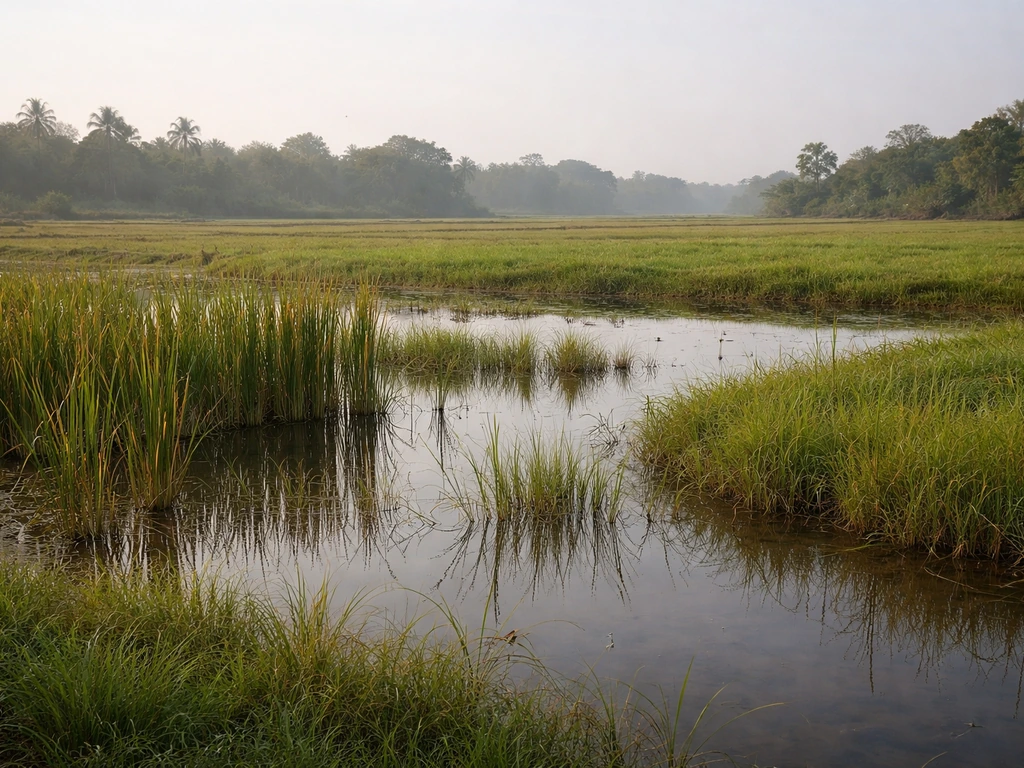
Least Concern doesn't mean worry-free. The chestnut munia has faced measurable pressure in the Philippines specifically, even if the global species total remains stable. The key threats include:
- Habitat loss: lowland grasslands, open agricultural fields, and reed beds — the chestnut munia's preferred habitats — are being steadily converted for urban development, infrastructure projects, and intensive farming.
- Trapping and the pet trade: small finch-like birds are popular as cage birds in the Philippines, and illegal trapping has reduced local populations in some areas.
- Agricultural pesticide use: as a rice-field bird, the chestnut munia is exposed to pesticide spraying, which can reduce food supply and cause direct mortality.
- Invasive species and competition: the introduced Eurasian tree sparrow has become dominant in urban and suburban areas, potentially outcompeting native munias in modified landscapes.
- Climate variability: shifts in rainfall patterns affect grassland and paddy field conditions that the species depends on for nesting and foraging.
For the Eurasian tree sparrow in the Philippines, threats are minimal at the population level, it's an introduced species that has adapted extremely well to human-modified environments. In its native European range, however, Passer montanus has actually experienced notable declines linked to agricultural intensification and loss of insect food sources, which is a reminder that 'Least Concern' globally can mask regional stories of real decline.
Where the Maya bird lives and what shapes its world
The chestnut munia is a bird of open country. It gravitates toward grasslands, ricefields, scrub edges, and reedy wetlands, anywhere seeds are abundant and low vegetation provides cover for nesting. In the Philippines, it's found across most of the main island groups, from Luzon down through the Visayas and Mindanao, typically at lower elevations. It's a common sight near rice paddies, which has historically made it both beloved and persecuted (farmers sometimes view seed-eating birds as pests).
Its broader range covers much of South Asia and Southeast Asia, from Bangladesh and India through to Indonesia and parts of the Pacific. This wide distribution is exactly why the global IUCN assessment comes out as Least Concern, local Philippine pressures don't drag the whole species into a threatened category when large populations persist elsewhere. But that's also why local conservationists sometimes push back against a simple 'it's fine' reading of the LC status: the bird they see every day may be declining in their own backyard even when the global number looks stable.
What's being done and how you can help
Because neither species is formally listed as threatened, large-scale international conservation programs aren't mobilized around the maya bird the way they are for critically endangered species. Conservation action tends to happen at the national and local level in the Philippines, and it's meaningful even if it's less visible globally.
- The Philippines' Wildlife Resources Conservation and Protection Act (Republic Act 9147) provides legal protection for native wildlife including birds, making unauthorized trapping and trading of the chestnut munia illegal.
- Environmental Impact Assessments for major infrastructure projects in the Philippines now routinely document maya bird presence and propose mitigation measures — the Davao City Expressway EIS is one concrete example.
- Local birdwatching and naturalist groups, such as the Wild Bird Club of the Philippines, run citizen science efforts that help track population changes at a finer scale than global assessments can capture.
- Habitat conservation through protected grasslands and wetlands indirectly benefits the chestnut munia, even when the bird isn't the primary target species.
- If you want to support the species directly, reducing pesticide use in gardens, supporting organizations that advocate against illegal bird trapping, and participating in local bird counts are practical starting points.
It's also worth noting that interest in endangered birds more broadly, including species like the maleo bird, the secretary bird, and various sparrow relatives, has been growing alongside citizen science participation. If you are also wondering whether the maleo bird is endangered, the best approach is to check its most recent IUCN assessment and local research updates. You might also wonder whether is the secretary bird endangered, and that question has a different answer depending on the latest assessments. That broader awareness matters because it builds the monitoring infrastructure that can catch a species sliding toward threatened status before it's too late.
How to verify the status yourself today

Conservation assessments are updated on a rolling basis, and a Least Concern listing today doesn't guarantee the same result in the next assessment cycle. BirdLife International’s BirdLife DataZone species factsheets include an “IUCN Red List assessment” section with the category, criteria, population trend, threats, and assessment history, which can serve as an authoritative secondary gateway when the IUCN page is hard to scrape. Here's how to check the current status quickly and confidently:
- Go to the IUCN Red List at iucnredlist.org and search for 'Lonchura atricapilla' (chestnut munia) or 'Passer montanus' (Eurasian tree sparrow). Always use the scientific name to avoid confusion with common/vernacular labels.
- Check BirdLife International's DataZone at datazone.birdlife.org — search the species name for a full factsheet including population trend, threats, range maps, and the most recent Red List assessment date.
- Look at the 'Population trend' field in either database. A species can be Least Concern but still show a 'decreasing' trend, which is an early warning worth taking seriously.
- For Philippines-specific status, check the DENR (Department of Environment and Natural Resources) wildlife list, which can add national-level protections beyond what the global IUCN assessment captures.
- Cross-reference with eBird (ebird.org) for recent sighting data — a drop in reported observations in a region can be a soft signal of local population change before formal reassessments happen.
One practical tip: whenever you encounter a common name like 'maya bird,' always pin down the scientific name before drawing any conclusions about conservation status. Vernacular names vary by region, shift over time, and sometimes refer to entirely different species depending on the speaker. Scientific names are the only reliable anchor. In this case, that anchor is Lonchura atricapilla for the bird most properly called the Maya in the Philippines, and right now, as of June 2026, it's Least Concern.
FAQ
If the maya bird is listed as Least Concern, can it still be declining where I live?
No. The IUCN category looks at the species level globally, so a Least Concern listing can still coincide with local declines in the Philippines. For the chestnut munia, the global assessment is stable, but some regional pressure has been documented, especially where rice-field practices or habitat changes reduce seed and nesting cover.
How do I know which “maya” species someone is talking about?
Yes, but you have to be careful about the name. In the Philippines, “maya” is used for more than one species, so the conservation answer depends on whether you mean the chestnut munia (Lonchura atricapilla) or the Eurasian tree sparrow (Passer montanus). If you are trying to assess a backyard bird, start by identifying the scientific name.
What kinds of local changes could make maya birds harder to find even if they are not endangered?
Birds can still become locally scarce without being globally threatened. Common causes include nest-site loss, changes in agricultural seed availability, pesticide use affecting insect populations nearby, or loss of reedy wetland edges, even if the overall species range remains large. This is one reason local surveys matter.
If I want to help, what practical steps make sense for Least Concern maya birds?
Treat “Least Concern” as “not threatened right now,” not “no conservation needs.” Practically, the best focus is habitat and food resources in open country, grasslands, ricefields, and scrub or reedy wetland edges. If your area is heavily modified, supporting seed-rich field margins and maintaining some low cover for nesting can help.
Does being “introduced and doing well” mean the tree sparrow never causes problems?
Yes. Introduced does not mean harmless or unmanaged everywhere. For the tree sparrow, it has adapted strongly to human-modified environments in the Philippines, but its impact can vary locally, for example through competition with native small birds for nest sites or food. Those effects are not captured by the IUCN threat category for the species as a whole.
Can the maya bird’s conservation status change in the future?
Species assessments are periodically updated, so the status can change over time even for common birds. A Least Concern listing today does not guarantee the next assessment will be the same if declines become widespread or faster than currently modeled. Checking the most recent IUCN entry is the safest habit.
What is the most common reason people get the “is it endangered” answer wrong?
Yes, and the most common mistake is relying on the vernacular name alone. “Maya” in particular is region-dependent, and misidentification can lead to the wrong conservation conclusion. Always confirm the species using recognizable traits (and ideally the scientific name) before interpreting IUCN categories.
How can I confirm I’m using the latest assessment, not an older one?
The article’s “as of June 2026” statement reflects the then-current IUCN assessment, but you should verify the date on the latest listing when you check. If the assessment year has changed, use the newest entry rather than trusting older summaries you may have read previously.
Is Martinez Bird Endangered? Status, Threats, and Next Steps
Clear answer on whether Martinez bird is endangered, with threats, habitat, population trends, conservation actions, and