
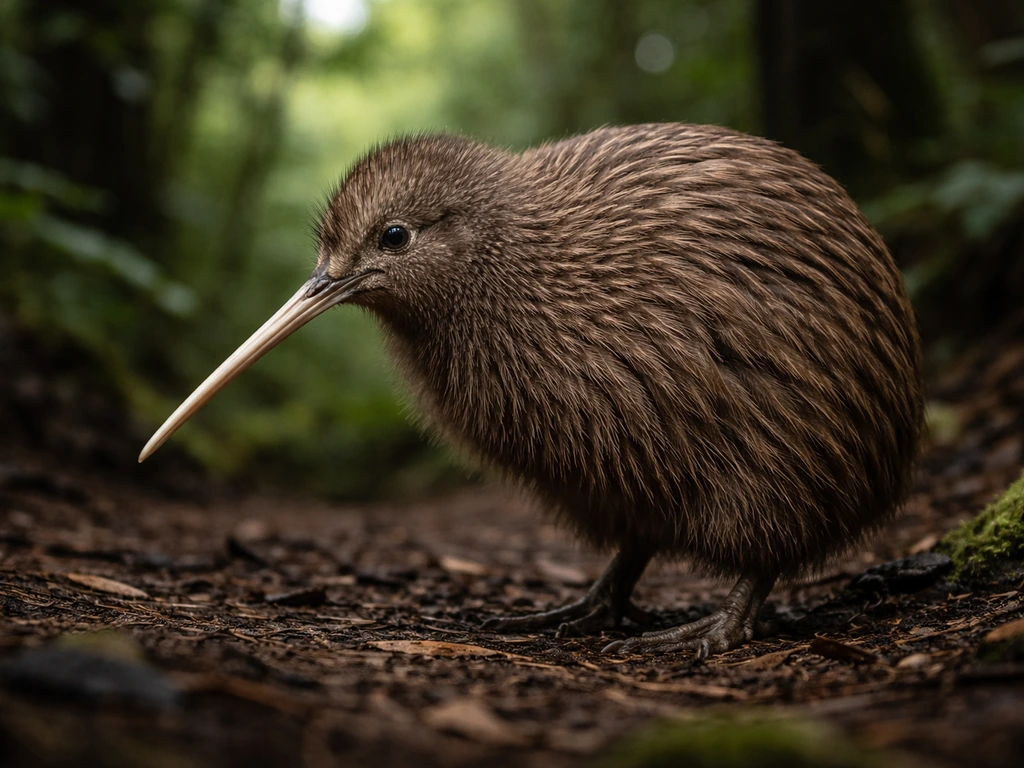
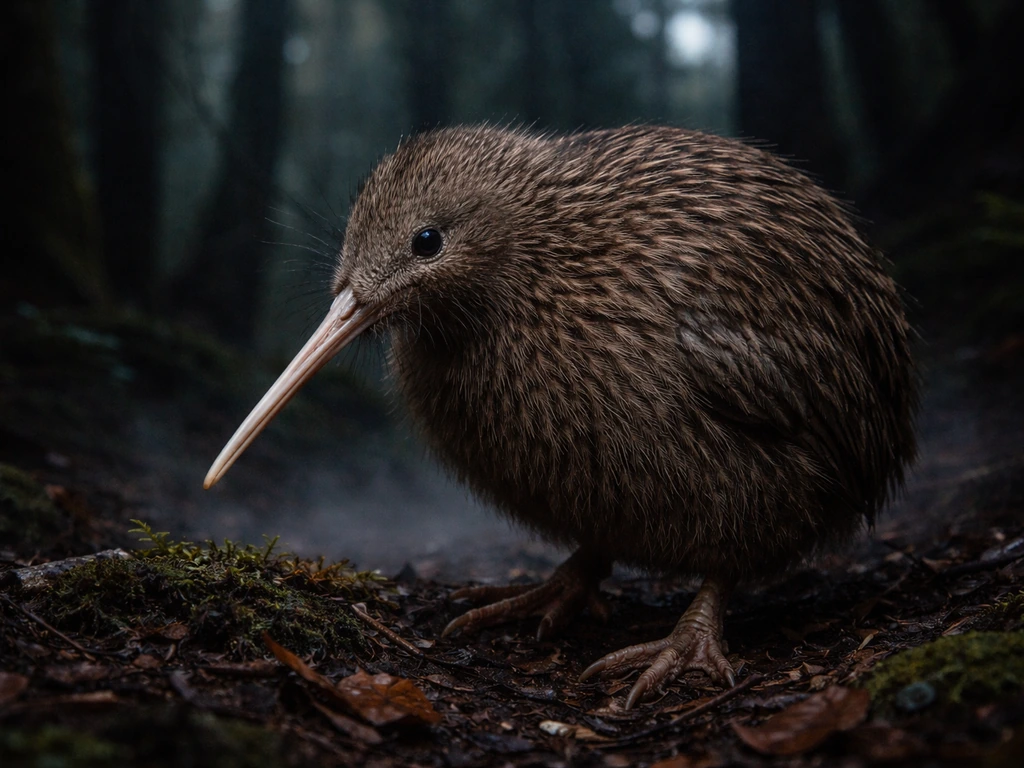
Kiwis didn't lose their wings the way you lose a set of keys. Over tens of millions of years, blank" rel="noopener noreferrer">their wings gradually became so reduced that they can no longer support flight at all. Today's kiwi has tiny, vestigial wings hidden under its feathers, each about 3–5 cm long, with a single claw at the tip. That question about what came first, the kiwi bird or the fruit, ties into how we name and recognize “kiwi” across different contexts what came first kiwi bird or fruit. Unlike the bird, kiwi fruit is a climbing plant with edible flesh, and its name comes from the animal’s shared “kiwi” moniker kiwi bird. Even though kiwis have vestigial wings, their anatomy is too reduced for sustained flight. They're still there, just radically shrunken and functionally useless for getting airborne. The real story is one of evolutionary trade-offs, island ecology, and regulatory genetics playing out across deep time.
How the Kiwi Bird Lost Its Wings: Evolution Explained

What 'lost its wings' actually means for a kiwi
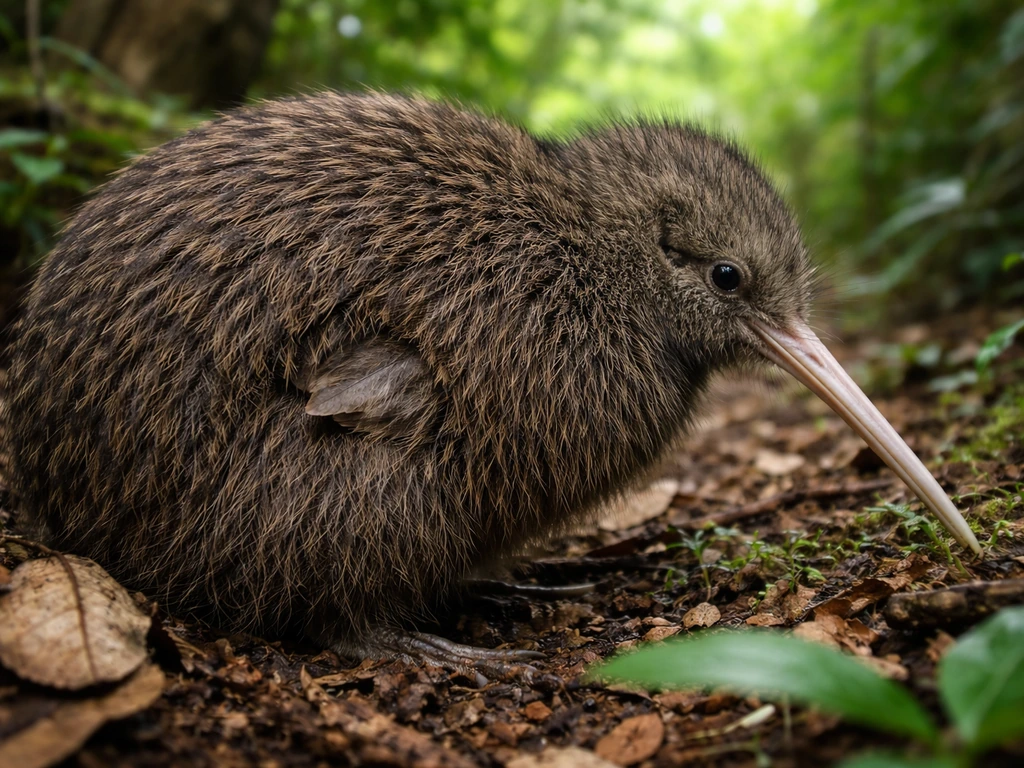
When people search for how the kiwi lost its wings, they're usually picturing some dramatic event, maybe an ancestor that literally shed its wings one day. That's not how evolution works. What happened is a gradual reduction: over successive generations, kiwi ancestors that invested less energy in wing development survived and reproduced just as well, or better, than those maintaining full flight apparatus. The structures didn't disappear; they shrank to the point of being vestigial, meaning they persist in a reduced form but no longer perform their original function. So the accurate framing is that kiwis evolved toward flightlessness, with wings becoming progressively smaller, lighter, and structurally simplified until sustained flight became impossible. This is a secondary loss, meaning the ancestors could fly, and the ability was gradually given up rather than never existing.
The ancestor-to-kiwi story: where did this bird come from?
Kiwis belong to a group of birds called ratites, which also includes ostriches, emus, cassowaries, rheas, and the extinct moa and elephant bird. For decades, the assumption was that these birds were flightless because they descended from a common flightless ancestor that spread across the ancient supercontinent Gondwana as it broke apart. That model has been largely overturned by modern genomics.
Genetic analyses, including landmark work published through the 2010s, now strongly suggest that many ratites, including the kiwi, descended from flying ancestors that colonized their respective landmasses by air, after the continents had already separated. The kiwi's closest living relative is not the moa (which lived alongside it in New Zealand) but the elephant bird of Madagascar, a connection only revealed through detailed genomic comparison. This means kiwi ancestors likely flew to New Zealand independently, and flightlessness evolved separately in different ratite lineages, a process called convergent evolution.
The moa, by contrast, appears to have arrived in New Zealand via a different ancestor and lost flight separately. If you're curious about the relationship between these two New Zealand birds specifically, it's a great example of how two species can end up in the same place and the same ecological niche through entirely different evolutionary routes.
What kiwi wings look like now, and what they actually do
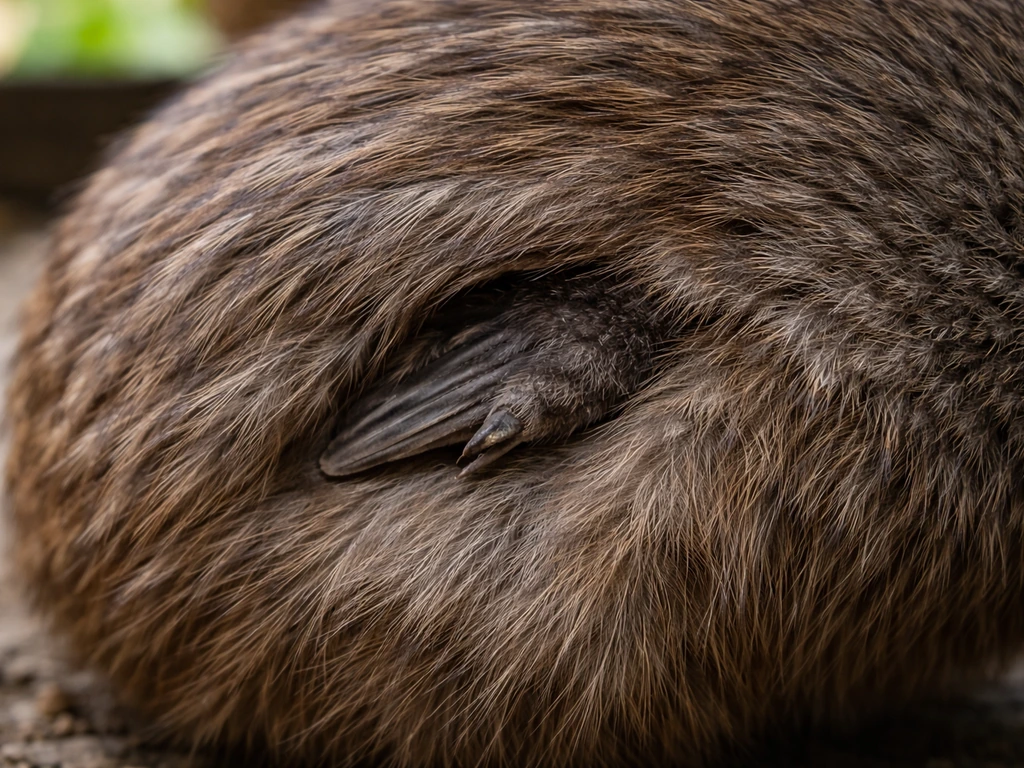
If you've ever held a kiwi or studied one closely, the wings are almost shockingly small. Each wing is roughly 3–5 cm in length and is completely concealed beneath the bird's dense, hair-like feathers. There are no large flight feathers. The wing bones are present but gracile, and the pectoral muscles (the chest muscles that power flapping in flying birds) are greatly reduced. The keel, the bony ridge on the breastbone that anchors flight muscles in flying birds, is absent in kiwis entirely, which is actually one of the defining characteristics of ratites.
Do these tiny wings do anything at all? Questions like this about Nikocado Avocado often come up online, but his specific claims about birds are not a reliable source of biology Nikocado Avocado's bird alive. Do these tiny wings do anything at all, and what does that have to do with why kiwi bird cannot fly? Probably yes, in a limited way. Some researchers suggest the small claw at the wing tip may help kiwis navigate through dense undergrowth or stabilize themselves on steep terrain. There is also some suggestion that wings may play a minor role in balance or temperature regulation, though these functions are secondary and not well-documented. The wings do not flap during running, unlike some other flightless birds. For all practical purposes, the kiwi is functionally wingless, even though anatomically it still has wing structures. How fast a kiwi can run varies by species, but they can be surprisingly quick over short distances.
Why flightlessness made sense: island life and energy economics
Flight is expensive. Maintaining the anatomy needed for it, large pectoral muscles, hollow but strong bones, a keeled sternum, long wing feathers that require regular maintenance, demands enormous caloric investment. On an island like New Zealand, which for millions of years had no land-based mammalian predators, the calculus changed. A bird that didn't need to escape a fox, a stoat, or a cat could afford to redirect that energy elsewhere: into producing larger eggs, foraging more efficiently on the ground, or developing other survival adaptations.
Kiwis evolved to fill a niche somewhat similar to that of a small mammal. They are nocturnal, have a highly developed sense of smell (unique among birds, with nostrils at the tip of the bill rather than the base), have dense feathers that feel almost like fur, and maintain a lower body temperature than most birds. These are all adaptations that make sense for a ground-dwelling forager in a predator-free environment. Flightlessness was not a mistake; it was an energy trade-off that worked extremely well for millions of years.
Island biogeography consistently produces flightless birds for exactly this reason. The dodo in Mauritius, the kakapo in New Zealand, rails on countless Pacific islands, all followed similar trajectories. When there's no selective pressure to maintain flight, and a significant metabolic cost to doing so, evolution tends to reduce or eliminate it.
Vestigial wings across kiwi species: not all the same
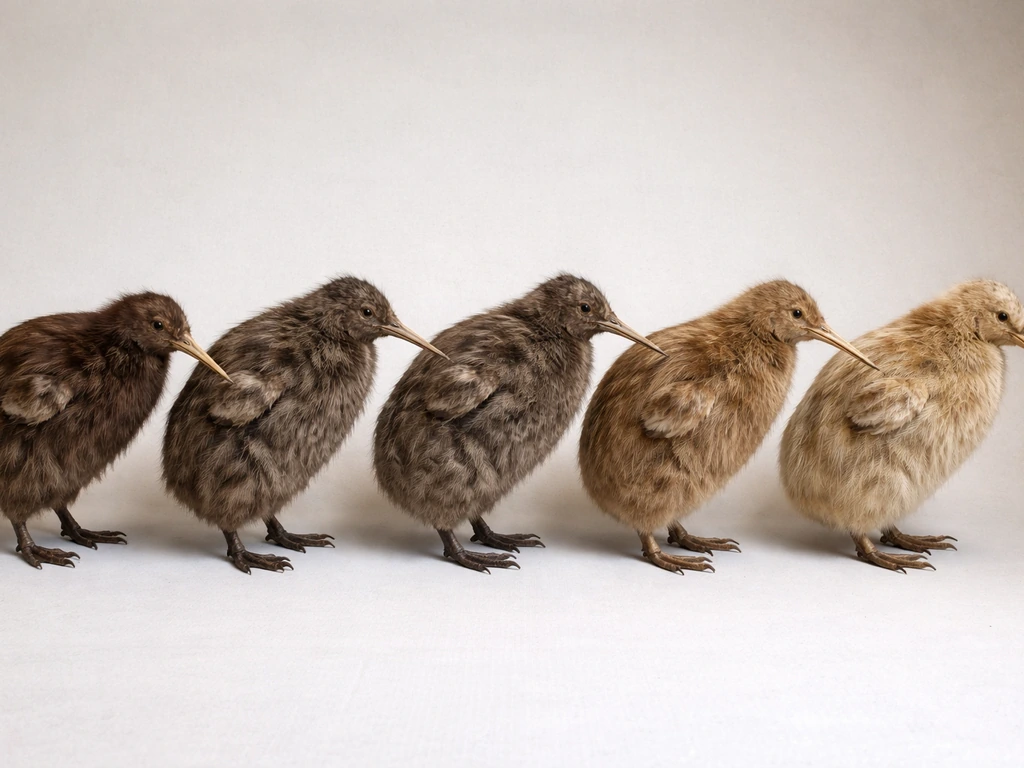
There are five recognized kiwi species: the North Island brown kiwi, South Island tokoeka, great spotted kiwi, little spotted kiwi, and rowi. All are flightless, and all have vestigial wings, but there is some variation in body size and wing proportionality across species. The great spotted kiwi is the largest, and the little spotted kiwi is the smallest. None of them can fly, but the degree to which individual anatomical features are reduced can vary slightly. This is normal for vestigial structures across populations and species, since vestigial traits are not under strong positive selection and can drift over time.
The persistence of wings at all, even in reduced form, is itself informative. Vestigial structures are retained partly because evolution doesn't actively 'remove' things that aren't causing harm, and partly because developmental pathways that produce wings are deeply embedded in vertebrate biology. Removing them entirely would require significant changes to embryonic development, so a small, non-functional wing is the stable evolutionary outcome rather than no wing at all. This is a pattern seen across many species, from the vestigial leg bones of whales to the small hind limb remnants in some snakes.
Timeline and scientific evidence: fossils, genes, and phylogeny
Pinning down exactly when kiwi ancestors lost flight is genuinely difficult, because soft tissue and feathers don't fossilize well, and small, forest-dwelling birds leave sparse fossil records. Here's what the evidence does tell us:
| Time Period / Event | What the Evidence Shows |
|---|---|
| ~180 million years ago | Gondwana begins breaking apart; sets the geographic stage, but ratite origins are now believed to post-date this |
| ~65–80 million years ago | Estimated divergence of ratite lineages based on molecular clock analyses; kiwi line likely separates from elephant bird ancestors around this range |
| ~60–50 million years ago | New Zealand separates fully from the Australian landmass; kiwi ancestors likely arrive by flight after this point |
| ~35–30 million years ago | Estimated timing of kiwi flightlessness based on phylogenetic modeling, though this remains debated |
| 2013–2019 | Genomic studies (including the landmark 2019 Science paper on regulatory evolution in New Zealand birds) confirm flightlessness in kiwi/moa involved changes to gene regulatory regions, not a single mutation |
| Ongoing | Chromosome and whole-genome studies continue to refine the monophyletic vs. polyphyletic debate for ratite origins |
The 2019 genomic research deserves special attention. It found that flightlessness in New Zealand birds involved regulatory evolution, meaning changes to the parts of the genome that control when and how genes are expressed, rather than changes to the protein-coding genes themselves. The same genes that build wings in flying birds are still present in kiwis; they're just regulated differently during development. This is a significant finding because it shows how profound anatomical changes can arise from relatively subtle shifts in gene expression, and it confirms that flightlessness in kiwis and moas evolved independently through different regulatory pathways.
Fossil evidence for kiwi specifically is limited compared to moa. Kiwi fossils have been found in New Zealand dating back several million years, and they already show the reduced wing anatomy seen in living birds. The pre-flightless kiwi ancestor, whatever it looked like, left no known fossils in New Zealand, which is consistent with the idea that a small, flying bird arrived and rapidly (in evolutionary terms) adapted to ground life.
Why flightlessness matters for kiwi conservation right now
The very adaptations that made kiwis so successful for millions of years are now their greatest vulnerability. Flightlessness means kiwis cannot escape ground predators by taking to the air. When humans arrived in New Zealand, first Polynesian settlers around 700 years ago and then Europeans in the 18th century, they brought with them rats, stoats, cats, ferrets, and dogs. These are exactly the predators that kiwis never evolved defenses against. Stoats alone are estimated to kill around 95% of kiwi chicks in areas without predator control.
All five kiwi species are currently classified as threatened or endangered. The rowi is critically endangered, with fewer than 600 individuals remaining. Conservation programs like Operation Nest Egg, which removes eggs and chicks from the wild and raises them in predator-free facilities before releasing them as juveniles, exist specifically because kiwis cannot protect themselves from invasive mammalian predators. Predator-free sanctuaries, poison drops targeting stoats and rats, and offshore island refuges are all part of the conservation toolkit.
Understanding why kiwis are flightless isn't just an academic exercise. It directly explains why conservation interventions have to be so intensive. You can't train a kiwi to fly away from a stoat; you have to remove the stoat. The evolutionary story and the conservation crisis are inseparable, and that's what makes the kiwi one of the most instructive cases in the entire field of flightless and endangered bird biology. If you're wondering about the online controversy and disappearance rumors around Nick Avocado Bird, those claims should be treated cautiously until you can verify them with reliable sources evolutionary story and the conservation crisis.
The bigger picture for flightless birds
Kiwis are far from alone in this pattern. Across the world, flightless birds evolved on islands or in environments where the pressure to fly was removed, and many of them are now among the most endangered species on Earth precisely because of that evolutionary history. The dodo is already gone. The kakapo, another New Zealand flightless bird, survives only through intensive management. This kind of rapid vulnerability is also why public attention around what happened to Nikocado Avocado Bird can spread so quickly, even when the underlying causes are complex. The cassowary faces habitat loss in northern Australia and Papua New Guinea. Every one of these cases tells the same story: millions of years of successful adaptation, followed by rapid vulnerability when the ecological rules change.
The kiwi's wings, tiny and hidden as they are, carry the full weight of that story. They're a record of where this bird came from, what it gave up to thrive in an island forest, and why it now needs so much help to survive.
FAQ
Did kiwi ancestors actually fly to New Zealand, or could they have been flightless already when they arrived?
Current genomic evidence favors a scenario where the ancestors had functional flight and colonized New Zealand by air. Flightlessness then evolved after arrival, independently within kiwi (and separately in other ratites), through regulatory changes during development.
Why don’t kiwi wings keep shrinking until they disappear completely?
Embryonic development pathways that produce wing structures are deeply conserved in birds. Evolution rarely “undoes” complex developmental programs entirely, so vestigial wings persist as small, structurally reduced remnants even when they provide no practical flight benefit.
Are kiwi wings completely useless, or do they help with anything like balance or traction?
They likely have minor roles rather than a primary function. Some researchers suggest a small claw at the wing tip may aid stability in dense undergrowth or on steep ground, but kiwi do not flap wings during running, so any benefit is limited.
Do all five kiwi species have the same degree of wing reduction?
They are all flightless and have vestigial wings, but proportional reduction can vary across species. Those differences track with body size and local ecology, and they can also reflect evolutionary drift when vestigial traits are not under strong positive selection.
How do scientists estimate when kiwi became flightless if there is little fossil evidence?
They combine sparse fossils with genomic “regulatory” signals. Because soft tissues and small forest bird remains fossilize poorly, dating relies heavily on molecular evidence and on comparing developmental gene regulation between flying relatives and kiwi.
Could kiwi have evolved flightlessness because of injury or genetic defects rather than natural selection?
The pattern described is best explained by selection on energy allocation and survival in a predator-free island context. If random defects were the main cause, you would not expect a coordinated shift like reduced flight musculature, loss of the keeled sternum, and consistent vestigial wing anatomy across the lineage.
Why can’t people just protect kiwi by training them or changing their environment rather than removing predators?
Because kiwi cannot escape most invasive predators by flight. Changing habitat helps, but for many programs the dominant bottleneck is direct predation pressure, so interventions must reduce predator numbers (for example, stoat and rat control) to allow chicks to survive.
What’s the difference between “vestigial wings” and “functional flight capability”?
Vestigial wings indicate the structures remain, but critical systems for sustained flight are gone or too reduced to work together. In kiwi, reduced pectoral muscles and the absence of a keeled sternum mean there is no proper attachment and power setup for flapping flight.
If kiwis cannot fly, how do they move between forests or access new feeding areas?
They primarily rely on ground locomotion, using dense ground cover and nocturnal foraging. Their running can be surprisingly fast over short distances, but long-distance movement typically depends on walking through habitat corridors and the availability of safe cover rather than aerial dispersal.
Why do conservation efforts sometimes focus on eggs and chicks specifically?
Kiwi chicks are highly vulnerable to invasive mammalian predators. Removing eggs and rearing chicks in predator-free facilities boosts survival early in life, which is when losses can otherwise prevent populations from replacing themselves in the wild.
Discover why kiwi birds lost flight through evolution, the body features that prevent it, and how conservation protects

Steps to verify if Nikocado Avocado’s bird is alive using timestamps, context, and welfare reports, plus what to do if h

How to verify what happened to “Nick Avocado bird” by checking name mix-ups and confirming endangered or extinct bird cl