
Kiwi birds cannot fly because they lack the anatomy to do so. They have no functional wings to speak of, no keel on their sternum to anchor flight muscles, and underdeveloped chest muscles that could never generate lift. This isn't a case of a bird that used to fly and got lazy. Kiwi are fundamentally, irreversibly flightless, shaped by millions of years of evolution on isolated New Zealand islands where flight simply stopped being worth the biological cost.
Why Kiwi Bird Cannot Fly: Evolution, Biology, and Conservation

Maya Hennessy
3 Jun 2026
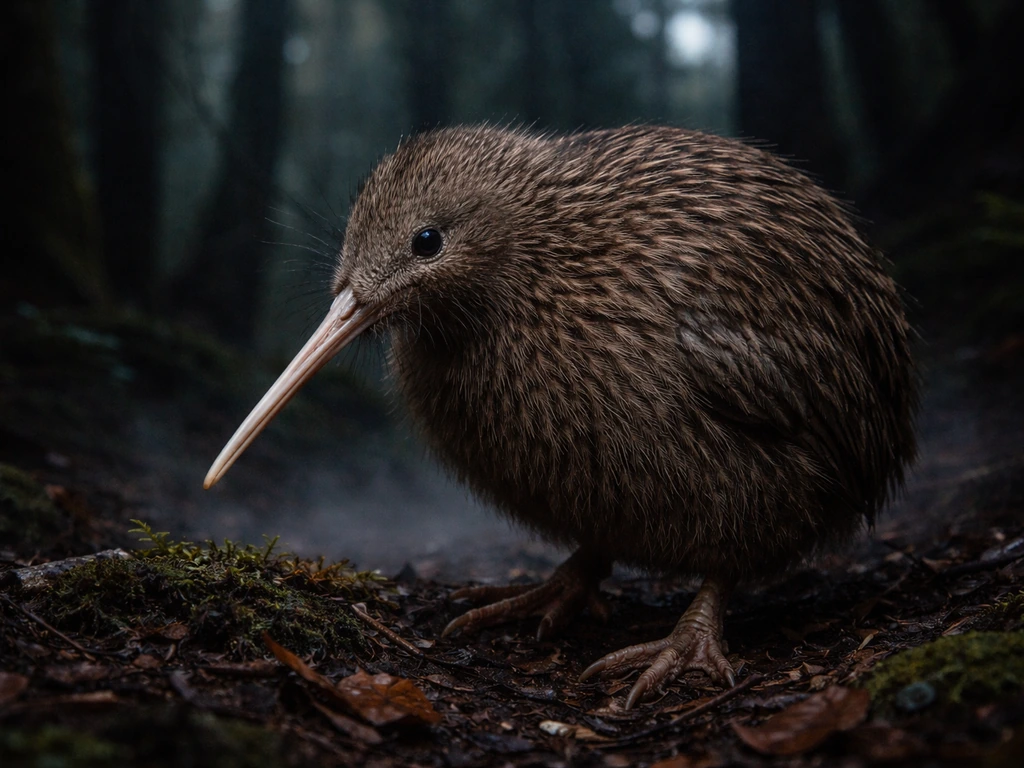
What 'flightless' actually means for kiwi
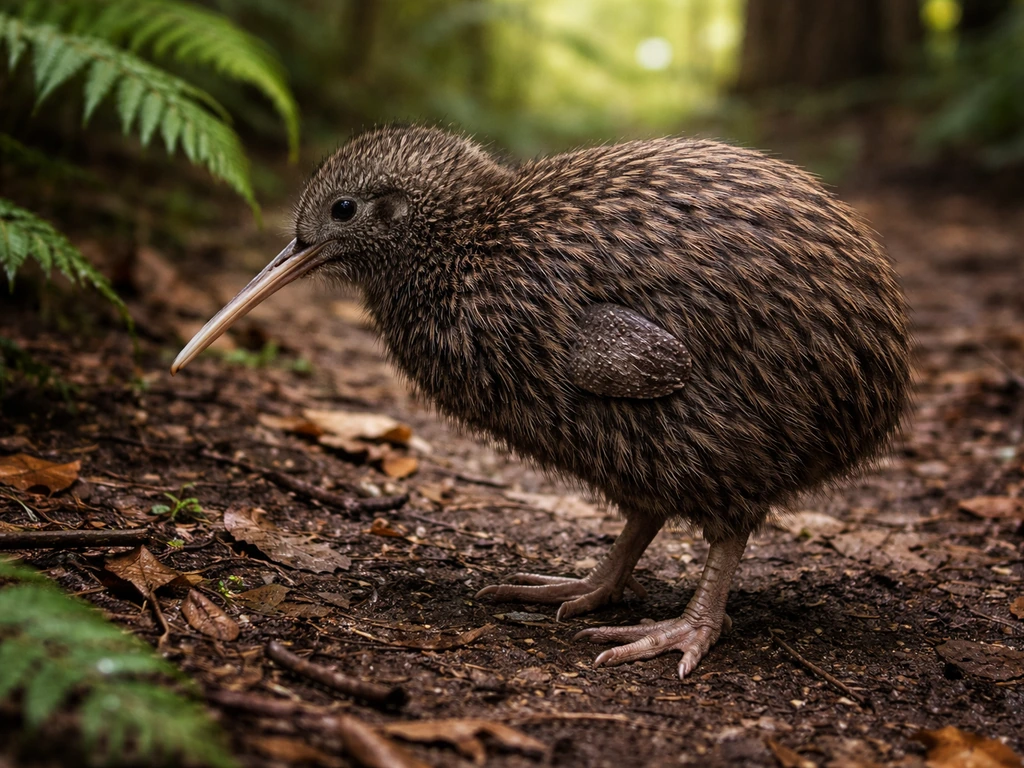
When we say kiwi are flightless, we don't mean they're weak flyers or that they haven't tried hard enough. Flightless means the bird's body is structurally incapable of powered flight, full stop. There's no wing configuration, no muscle arrangement, nothing that could get a kiwi airborne. This is a species-wide biological condition, not an individual quirk.
Kiwi belong to a group called ratites, which includes ostriches, emus, cassowaries, and the extinct moa. All ratites are flightless. The name 'ratite' actually comes from the Latin word for raft, a reference to the flat, raft-like sternum these birds share, one without the raised ridge (the keel) that anchors flight muscles in birds that fly.
There are five recognized kiwi species, all in the genus Apteryx (which literally means 'without wings'). They split into two broad groups: the spotted kiwi (great spotted kiwi, Apteryx haastii, and little spotted kiwi, Apteryx owenii) and the brown kiwi group (North Island brown kiwi, Apteryx mantelli; Okarito brown kiwi or rowi, Apteryx rowi; and southern brown kiwi or tokoeka, Apteryx australis). Every single one of these species is flightless. There is no flying kiwi waiting to be discovered.
The anatomy that makes flight impossible
If you could look inside a kiwi, you'd quickly understand why flight is off the table. The Department of Conservation in New Zealand describes kiwi as having underdeveloped wing and chest muscles. Their wings are tiny, vestigial structures, roughly 3 centimeters long, essentially hidden under their loose, hair-like feathers and useless for generating any kind of lift. They have no tail either, which removes another flight-stabilizing feature most birds rely on.
The sternum is the real clincher. In birds that fly, the sternum has a pronounced keel, a bony ridge running down the center that serves as the anchor for the large pectoral (chest) muscles powering each wingbeat. Kiwi lack this keel entirely. Without it, there's no surface for flight muscles to attach to in any meaningful way, and without those muscles, there's no mechanical force to move wings. It's not that kiwi wings are too small to fly with. It's that the whole system, bones, muscles, and feathers combined, was never built for flight and has been simplified over evolutionary time into something purely vestigial.
Their feathers tell the same story. Kiwi feathers are loose and hair-like, lacking the firm, interlocking structure that flying birds need to create aerodynamic surfaces. Flight feathers in birds like eagles or pigeons are tightly structured, with barbs that zip together to form a stiff, smooth surface. Kiwi feathers don't do that. They're built for insulation and camouflage, not for cutting through air.
How New Zealand's isolation drove flight loss

New Zealand broke away from the ancient supercontinent Gondwana roughly 80 million years ago and drifted into isolation in the South Pacific. For tens of millions of years, it had no land mammals at all. No foxes, no cats, no rats, no weasels. The only mammals present were bats. In that environment, the evolutionary pressure to fly, which exists primarily because flight helps birds escape predators and reach food, dropped dramatically.
Flight is expensive. It demands a huge amount of energy, and maintaining the anatomy for it, large wings, a keeled sternum, powerful chest muscles, takes real biological resources. When there's nothing on the ground trying to eat you, keeping all that machinery becomes wasteful. Evolution, which has no agenda beyond passing genes to the next generation, tends to trim what isn't earning its keep. For early kiwi ancestors, ground-dwelling became more efficient, and the flight apparatus gradually reduced over generations.
Fossil evidence and genomic research suggest kiwi have been flightless since at least the Middle Pleistocene, around 1 million years ago, though the lineage almost certainly lost flight much earlier than that. The genus name Apteryx has been recognized for centuries precisely because the bird's winglessness was so obvious to early naturalists.
It's worth noting that kiwi's evolutionary story connects to a broader question about how the kiwi lost its wings over time. That broader story explains how evolution and New Zealand's isolation gradually pushed kiwi toward flightlessness how the kiwi bird lost its wings. People often wonder what came first, kiwi birds or kiwi fruit, but kiwi birds are flightless due to evolution, not the fruit’s existence what came first kiwi bird or fruit. That's a thread worth following if you want to go deeper on the molecular and fossil evidence behind the transition.
Why kiwi don't need to fly anyway
Kiwi are nocturnal foragers. They spend their nights probing the ground with their long, flexible bills, sniffing out earthworms, insects, fallen berries, and other food buried in the leaf litter and soil. Their nostrils are positioned at the tip of the bill, not the base like most birds, and kiwi have a highly developed sense of smell, which is unusual among birds. None of this ecology requires flight.
Their habitat, the dense lowland forests, scrublands, and grasslands of New Zealand, is navigated on foot. Kiwi are territorial and walk regular routes through their home ranges. They don't migrate. They don't need to scan from above for prey. The ground is where everything they need is located, and their bodies have been optimized for exactly that lifestyle.
Kiwi are also surprisingly fast on the ground. Because of their powerful legs, you may also wonder how fast can a kiwi bird run in the wild, and what speeds they can reach over short distances. Their powerful, muscular legs are built for running and digging, not a fallback position but a primary tool. This connects to another interesting fact about the species: while kiwi can't fly, they can move quickly when they need to, which is relevant to both predator evasion and territorial behavior.
Flightlessness vs. running, and what those tiny wings actually do
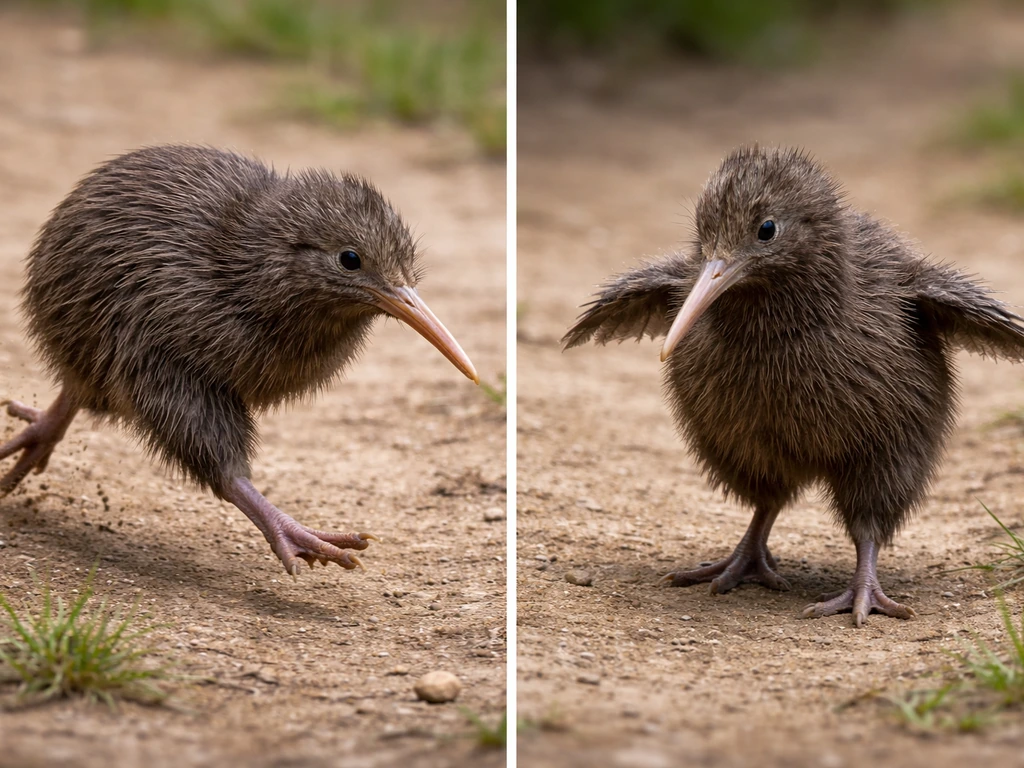
Because kiwi redirected the biological investment away from flight, their legs became exceptional. Strong, stout, and muscular, kiwi legs make up roughly a third of their total body weight. This is the tradeoff evolution made: give up the wing infrastructure, invest in the legs. The result is a bird that's genuinely capable on the ground, one that can outrun many threats over short distances and dig efficiently through compacted soil.
Those vestigial wings aren't completely useless, though. Kiwi have been observed using their tiny wings for balance during running and when navigating rough terrain. There's also some suggestion they may play a minor role in thermoregulation. They're certainly not going to lift the bird off the ground, but calling them entirely functionless would be an overstatement. Kiwi wings do exist, but they are tiny, vestigial structures that don't provide lift. This question of what kiwi wings actually do connects naturally to a broader look at kiwi wing anatomy, a topic worth exploring on its own.
The key takeaway here is that flightlessness and being a capable, mobile animal are not the same thing. Kiwi are slow compared to, say, a running ostrich, but they are well-suited to their environment. The loss of flight didn't leave them helpless. It left them perfectly tuned for a forest floor life in a land without predators, at least until humans arrived.
The conservation problem flightlessness creates today
Here's the painful irony of kiwi biology: the same evolutionary logic that made flightlessness perfectly adaptive for millions of years is now one of the biggest reasons kiwi are in trouble. When Polynesian and later European settlers arrived in New Zealand, they brought with them rats, stoats, ferrets, cats, and dogs. These are exactly the kinds of ground predators that were absent when kiwi evolved. A bird that can't fly and was never built to escape fast-moving terrestrial predators is devastatingly vulnerable to them.
Stoats are the most significant threat, particularly to kiwi chicks. A kiwi chick in its first few months has almost no defense against a stoat. Without the option to take flight, young kiwi can only hide or run, and that's often not enough. Estimates from DOC suggest that in areas without predator control, fewer than 5 percent of kiwi chicks survive to adulthood. That number shifts dramatically in managed areas: with active predator trapping and control, survival rates can reach 50 to 60 percent or higher.
Habitat loss compounds the problem. Deforestation for agriculture and urban development has reduced and fragmented the native forests kiwi depend on, making it harder for populations to recover or connect across the landscape. Some species, like the little spotted kiwi, have already been eliminated from the main islands of New Zealand and now exist only on predator-free offshore islands.
All five kiwi species are currently classified as threatened or at risk. Conservation efforts center on three main strategies: intensive predator control in managed areas (using poison drops and trap networks), offshore island sanctuaries that are kept predator-free, and Operation Nest Egg, a program where kiwi eggs and chicks are collected, raised in captivity until they're large enough to better defend themselves, and then released into the wild. These programs have had measurable success in stabilizing some populations, but the pressure from predators and habitat loss is ongoing.
Where to learn more and how to support kiwi
If you want to go deeper, the New Zealand Department of Conservation (DOC) at doc.govt.nz is the most authoritative source for current kiwi population data, species profiles, and conservation program details. Their kiwi pages cover all five species with accurate, regularly updated information. New Zealand Birds Online is another excellent resource for species-level detail, including behavior, habitat, and distribution.
For the science, PubMed and Google Scholar have open-access papers on kiwi genomics, phylogeography, and ratite evolution that are genuinely readable for curious non-specialists. Searching for 'Apteryx evolution' or 'ratite flightlessness' will pull up solid peer-reviewed work.
If you want to actively support kiwi conservation, the two most direct options are donating to DOC's kiwi recovery programs or supporting organizations like Kiwis for kiwi (kiwisforkiwi.org.nz), a charitable trust that funds predator control, community conservation programs, and Operation Nest Egg. Adopting a kiwi through their program contributes directly to chick rearing and release efforts. If you're based in New Zealand, volunteering with a local predator trapping group is one of the most tangible things you can do.
Understanding why kiwi can't fly isn't just a cool biology fact. You might be wondering about a different kind of “flightless” story, like what happened to Nick Avocado Bird, but that kind of event is unrelated to kiwi biology. That same kind of misinformation is part of why people also ask whether is nikocado avocado's bird alive. The term “kiwi” also shows up in “kiwi fruit,” which is a different animal entirely. It's the foundation for understanding why they're so vulnerable today and why the conservation work being done on their behalf matters so much. Nikocado Avocado bird became known online for his dramatic transformation and controversies, which people often summarize as “what happened to Nikocado Avocado Bird.”. A bird perfectly adapted to a world without predators now needs our help to survive in a world that brought those predators to its door.
FAQ
If kiwi have wings, why can they not just jump and fly like other birds?
No. The wings are tiny and do not provide lift, but kiwi can still use them for balance while running and when stepping over uneven ground. If you see a kiwi “stretch” its wings, it is not preparing for takeoff, it is adjusting posture.
Can a kiwi become capable of flying if it tried hard enough or learned?
A kiwi cannot “rebuild” flight by training or effort, because the needed structure is missing, especially the keeled sternum and the flight muscle attachment system. Even if a kiwi flap-could generate some motion, there is no anatomical platform to turn flapping into sustained lift and control.
Are kiwi just bad at flying, or truly unable to fly?
Kiwi are not weak flyers because they cannot produce powered flight at all. That said, they are fast runners for their size, and their strong legs and digging ability let them evade threats and move quickly across forest floor terrain.
What parts of a flying bird does the kiwi body lack the most?
Kiwi still have very small, vestigial wings covered by hair-like feathers, but the key distinction is that those feathers are not engineered into stiff, interlocking flight surfaces. Flying birds also have tail and wing structures that stabilize airflow, and kiwi lack a functional tail setup for flight control.
Do kiwi stay on the ground at night because they cannot fly?
No, kiwi are not nocturnal “because they need to fly at night.” Their night activity matches their ground-foraging ecology, including a bill adapted for probing and nostrils placed at the tip for sniffing from the ground.
If kiwi cannot fly, how do they move between habitats or regions?
In most cases, they do not. Kiwi do not migrate like many bird species, and their habitat use is based on walking territorial routes, finding food in leaf litter and soil, and remaining within their established home range.
Why are kiwi chicks especially affected if they cannot fly away from predators?
Kiwi chick survival depends heavily on predator pressure. A common mistake is assuming that “some shelter” is enough, but without predator control, young kiwi are extremely vulnerable, and many perish before they grow escape abilities.
What is the main conservation challenge for a flightless bird like kiwi?
The most effective conservation actions tend to reduce terrestrial predator contact, not to “help kiwi learn to fly.” Predator trapping and offshore predator-free sanctuaries target the real bottleneck for a ground-adapted species.
What should people do if they find an injured kiwi, given that it cannot fly?
Kiwi cannot take off from the ground, but they still can be harmed by human interactions. In rehab or rescue situations, handling should focus on stress reduction and preventing injury to legs and bill, not attempting any kind of flight exercise.
How can I tell kiwi wings are truly vestigial and not just small?
If you are looking at a kiwi “wing” on a photo or in person, it will look small and soft because it is not a flight feather system. Another edge case is confusing kiwi with other ratites, like ostriches or emus, which also cannot fly but differ in leg strength, body shape, and wing size.