
The dodo bird is not dangerous to humans today, and frankly, it never really was. The dodo has been extinct since the late 17th century, so there are no living individuals anywhere in the wild or in captivity. Even when it was alive, every piece of historical and scientific evidence points to a bird that was curious and approachable rather than aggressive or threatening. The short version: you have nothing to fear from a dodo, and if you could somehow travel back to 17th-century Mauritius, your biggest safety concern would not be the bird. If you are wondering, can a dodo bird kill you, the evidence suggests it is extremely unlikely, especially compared with genuinely dangerous animals.
Is the Dodo Bird Dangerous to Humans? Clear Answer

Maya Hennessy
24 May 2026
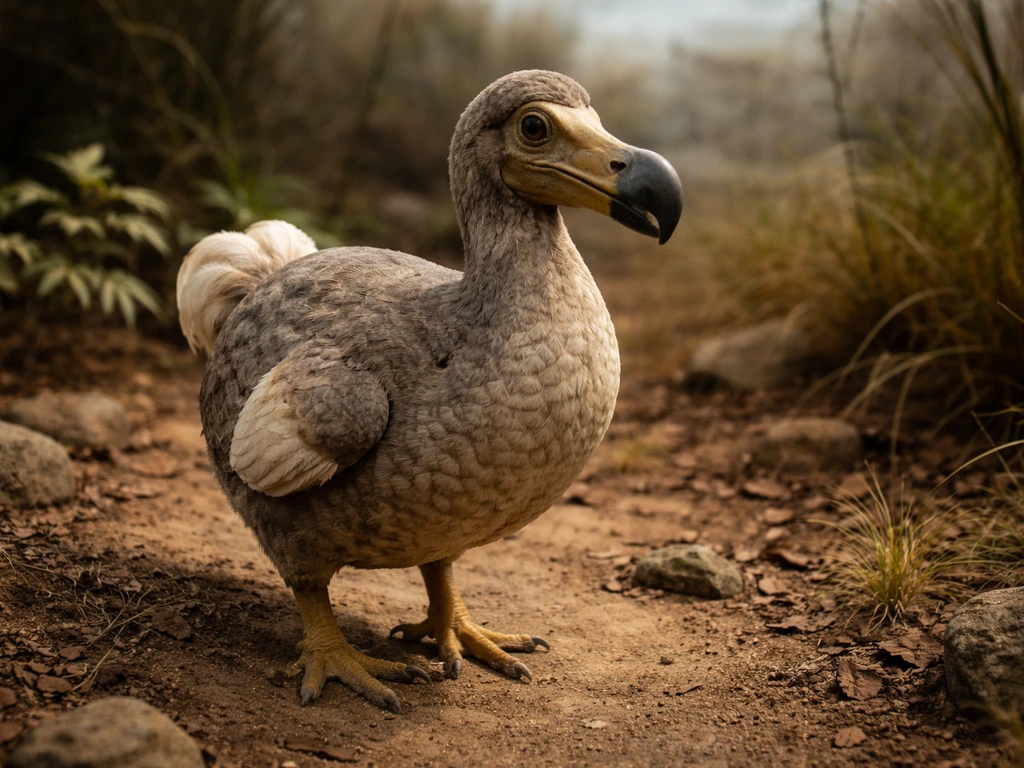
Could dodos hurt people back when they existed?
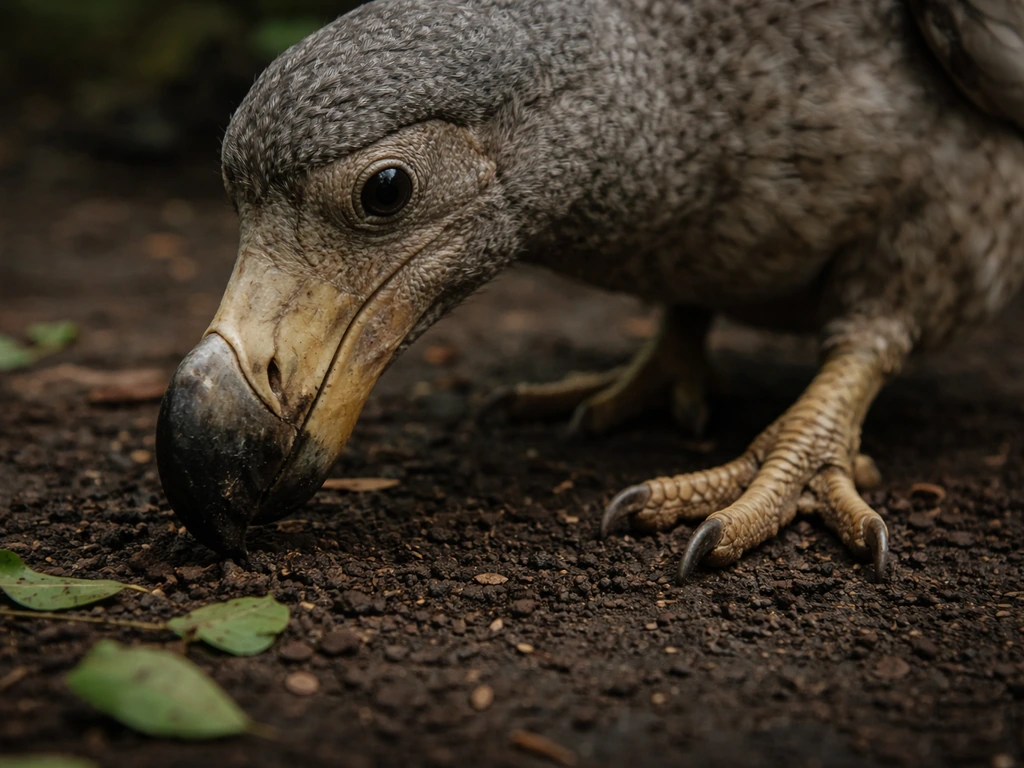
Technically, yes, a dodo could have caused minor injuries in the right circumstances. At roughly 9.5 to 14 kg (about 21 to 31 lbs), it was a solidly built bird with a large, hooked beak that it used to crack open tough seeds and fruit. A bite from that beak would have stung, and a startled or cornered dodo might have pecked or flapped its stubby wings in protest. But "could cause a bruise if provoked" is a very different thing from being genuinely dangerous. There is no historical record of dodos attacking sailors or colonizers unprovoked, no accounts of injuries caused by dodo aggression, and no physical evidence suggesting the bird had adaptations for fighting off threats larger than itself.
The bone histology research published in Scientific Reports in 2017 reconstructed a surprising amount of dodo life history from skeletal microstructure, including breeding timing around August and rapid chick growth to reach robust size before cyclone season. None of that research, and none of the fossil record, points to a bird evolved for aggression toward large animals. If you are wondering whether a dodo bird is a dinosaur, it is not, because it is a pigeon, not a reptile is a dodo bird a dinosaur. What it does point to is a bird that invested energy in growing fast and surviving its island environment, not in fighting off predators that simply did not exist on Mauritius before humans arrived.
What the dodo was actually like
Behavior and temperament
The Animal Diversity Web compiles early eyewitness narratives from Dutch sailors who visited Mauritius in the late 1500s and 1600s. These accounts consistently describe dodos as slow-moving, curious, and easy to approach. Sailors reportedly found them amusing precisely because the birds showed no fear. That fearlessness was not stupidity or a death wish. It was a perfectly rational adaptation for an island that had no land predators. The dodo had never needed to evolve a flight-or-fight response to terrestrial threats, so it simply did not have one. Humans, arriving with clubs and dogs, exploited that completely.
Physical traits
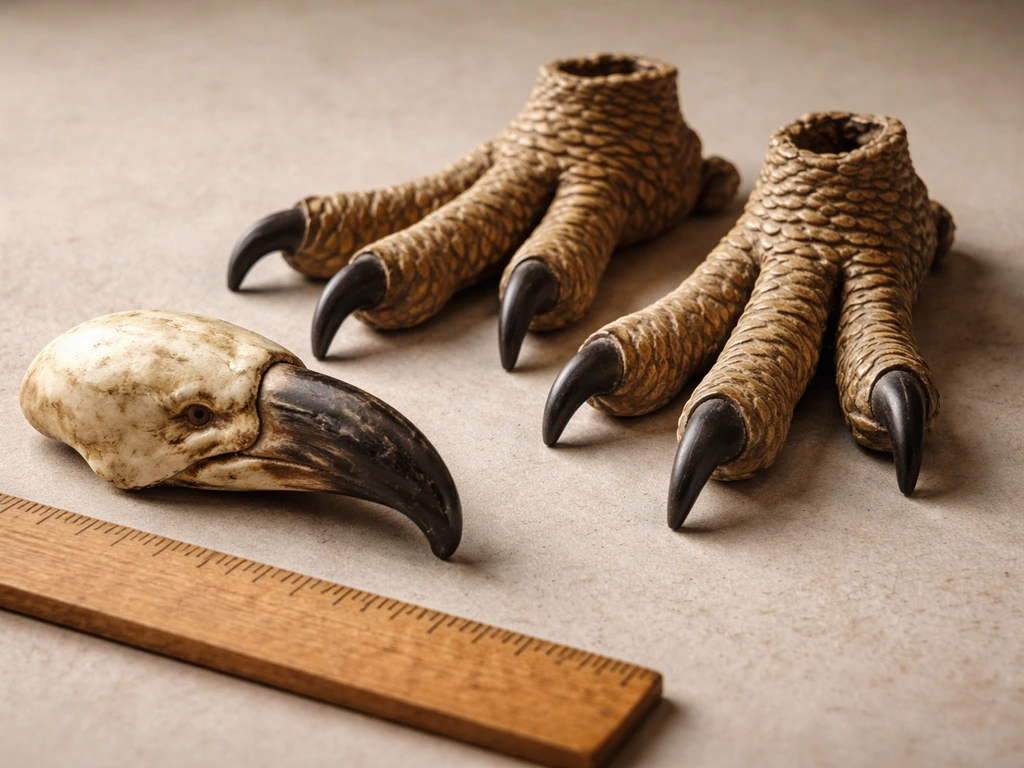
The dodo was a large, flightless pigeon (Raphus cucullatus) with a body mass estimated at around 14.1 kg based on regression analysis of a large fossil bone sample, though estimates range depending on the method used. It stood roughly a meter tall, had tiny vestigial wings, powerful legs, and that distinctive large hooked beak. The beak was its primary tool for foraging, not a weapon it wielded in combat. Its legs were strong enough to carry its considerable bulk and to kick, but again, there is no evidence it used those legs defensively against humans. Compare that to the cassowary, a living flightless bird with a razor-sharp inner toe capable of serious injury, and the difference in danger level becomes obvious immediately. Compare that to the cassowary, a living flightless bird with a razor-sharp inner toe capable of serious injury, and the difference in danger level becomes obvious immediately, and if you are wondering whether a dodo bird is a dodo bird a mammal, it is not.
What historical accounts say, and what modern science adds
Here is the tricky part: most of what early naturalists wrote about the dodo was assembled from scattered specimens, secondhand reports, and a handful of live birds brought to Europe in the 1600s. A Cambridge Core history-of-science study makes this explicit, noting that "dodo knowledge" in the early modern period was built from scant material under enormous uncertainty. That means some of the vivid descriptions you might read of dodo behavior, including characterizations of the bird as clumsy, dull, or helplessly passive, need to be taken with a grain of salt.
Modern science has filled in some gaps. The American Museum of Natural History published research suggesting that the dodo's brain-to-body ratio was comparable to that of modern pigeons, which directly pushes back on the popular image of a cognitively hopeless bird. Pigeons are actually quite capable navigators and learners. The dodo was probably not the bumbling fool of popular culture. What it was, behaviorally, was simply naive about humans, and that naivety cost it everything. National Geographic has noted that scientists today, armed with fossils, CT scans, and museum specimens, actually understand dodo biology better than the naturalists who lived alongside the last individuals.
Why the dodo was never a predator risk

Mauritius before human arrival was an island ecosystem without large terrestrial predators. The dodo's entire evolutionary history played out in an environment where nothing was trying to eat it on land. That context explains everything about its temperament. Birds that evolve alongside predators develop wariness, camouflage, defensive behaviors, or flight capability. The dodo evolved none of those because it did not need them. It was what biologists call a "naive prey" species: not inherently incapable of self-defense, but simply unequipped by evolutionary history to recognize or respond to large land-based threats. But the evidence suggests the dodo was not equipped to defend itself against large threats the way predator birds do self-defense.
The Natural History Museum in London emphasizes using fossil evidence and environmental reconstructions, particularly from the Mare aux Songes fossil site in Mauritius, to understand the dodo's ecological role. That evidence paints a picture of a bird occupying a specific ground-foraging niche in a stable island forest, not a predator or competitor for any large animal. The Smithsonian has noted that forensic analysis of the Oxford dodo specimen showed it was shot, which tells us something useful: the human-dodo interaction was entirely one-directional in terms of violence.
Common myths about how dangerous the dodo was
A few misconceptions about the dodo's danger level come up repeatedly, and it is worth clearing them up directly.
- "The dodo's beak was a serious weapon." The hooked beak was large and strong, but it was adapted for opening hard fruit and seeds, not for combat. There is no evidence it was used aggressively against humans.
- "The dodo was too stupid to defend itself." This oversimplifies the situation. The dodo was not cognitively deficient. It simply lacked an evolved response to a threat type it had never encountered before humans arrived.
- "Dodos were dangerous and sailors feared them." The historical accounts say the opposite. Sailors described them as easy to approach and capture, often in groups, without any reported aggression.
- "Because it was flightless and large, it must have been aggressive like an emu or cassowary." Flightlessness does not equal aggression. The dodo's island environment, with no land predators, meant there was no selection pressure to develop aggressive defensive behavior.
- "The dodo could have survived if it had been more dangerous." The dodo's extinction was driven by hunting, habitat destruction, and invasive species (rats, pigs, cats) introduced by humans. No level of individual aggression would have saved it from those systemic pressures.
How the dodo compares to other flightless birds in terms of danger
To put the dodo's risk level in real perspective, it helps to look at other flightless birds, some extinct and some very much alive.
| Bird | Status | Weight (approx.) | Danger to Humans | Key Reason |
|---|---|---|---|---|
| Dodo (Raphus cucullatus) | Extinct | 10–14 kg | Negligible (historical), None (today) | Tame, no evolutionary predator exposure, now extinct |
| Cassowary (Casuarius spp.) | Extant (vulnerable) | Up to 85 kg | High — documented fatalities | Powerful legs, sharp inner toe, highly territorial |
| Ostrich (Struthio camelus) | Extant (least concern) | Up to 160 kg | Significant — powerful kick | Large size, strong legs, can be aggressive when threatened |
| Emu (Dromaius novaehollandiae) | Extant (least concern) | Up to 60 kg | Moderate — can kick hard | Strong legs, but generally less aggressive than cassowary |
| Moa (Dinornithiformes) | Extinct | Up to 230 kg (largest) | Potentially significant if threatened | Large size, but likely had similar naivety to dodo on predator-free islands |
The contrast with the cassowary is striking. The cassowary is the closest thing to a genuinely dangerous flightless bird alive today, capable of delivering a kick that has caused at least one confirmed human death. The dodo shared the "flightless" trait but almost nothing else in terms of danger profile. Its island isolation, smaller size, and evolutionary history put it in an entirely different category. If you are curious about what bird danger actually looks like in practice, the cassowary is the benchmark, not the dodo.
Where to go from here
If you are researching the dodo for school or just satisfying your curiosity, the most reliable sources are peer-reviewed studies (the 2017 Scientific Reports bone histology paper is a good one), the Natural History Museum London's dodo pages, and the American Museum of Natural History's research on dodo brain anatomy. These give you grounded, evidence-based information rather than the exaggerated popular-culture version of the bird. Dodo (Raphus cucullatus) is classified as extinct, with an IUCN consensus status of Extinct.
Be cautious with older natural history texts and some online summaries that repeat myths about the dodo being uniquely stupid or defenseless. As the Cambridge Core research on early modern natural history makes clear, a lot of early dodo "facts" were assembled under conditions that would not meet modern scientific standards. The bird deserves a more accurate reputation: not a bumbling victim, not a predator, just a fascinating, well-adapted island species that ran out of time.
If questions like whether the dodo could fly, whether it was actually a dinosaur relative in any meaningful sense, or how it defended itself from the threats it did face interest you, those threads are worth following. Each one adds a layer to understanding why the dodo was the kind of animal it was, and why it was so catastrophically unprepared for the world that arrived on its shores in the 1600s.
FAQ
Is the dodo bird dangerous to humans today, like in a zoo or wildlife park?
No. There are no living dodos anywhere, so you cannot encounter one in the wild or in legitimate captivity. If you see a “dodo” advertised in an attraction or online, it is almost certainly a mislabel or an educational prop.
Could a dodo ever seriously injure someone if it were alive?
The only realistic risk would come from a specimen you can actually touch, such as a captive animal in a fictional scenario. For historical animals, there is a plausible route to minor injuries (a startled beak peck), but the article notes there are no credible accounts of unprovoked attacks or serious harm.
What injuries are most plausible from a dodo encounter?
Even if a dodo bite or peck happened, it would be classified as an accidental minor injury rather than a “predator attack.” The dodo’s anatomy supported foraging with its hooked beak more than combat, and there is no evidence of adaptations for fighting larger threats.
Would dodos be more dangerous if people tried to corner or handle them?
Yes, but the danger is not about “violence by the bird.” If humans introduced dogs, hunted, or cornered dodos, the birds could respond defensively in small ways. The main danger factor is human action that causes stress or confinement.
Why do some old accounts make the dodo seem more dangerous or helpless than modern evidence does?
Do not rely on vivid storytelling from early naturalists. The article explains that some early “dodo behavior” descriptions were assembled from scattered specimens and secondhand reports under high uncertainty, so exaggerations about clumsiness or passivity may not reflect what was actually happening.
Does the dodo’s lack of fear mean it would attack people?
It is unlikely. The article frames dodos as “naive prey,” meaning they were not evolutionarily trained to recognize or respond to large terrestrial threats. That naivety can increase risk in close, human-involved situations, but it does not imply the bird had a predator mindset.
How does the dodo compare to truly dangerous flightless birds like the cassowary?
If you are comparing risk across animals, use a concrete benchmark like other flightless birds. The article highlights the cassowary as a real-world example of a flightless bird with serious, documented injury potential, which helps show the dodo belongs to a very different danger category.
Where should I look if I want evidence-based answers about dodo behavior and danger?
For practical research, prioritize peer-reviewed studies and museum references rather than summaries that repeat myths. The article points to peer-reviewed work on bone microstructure and museum-supported interpretations using fossils and reconstructions as more reliable ways to understand behavior and ecology.