
If the population of an endangered bird is decreasing, the most important thing you can do right now is identify the specific driver behind the decline, because the fix depends entirely on the cause. Habitat loss needs different intervention than predator pressure, which needs different intervention than disease. Getting that diagnosis right is step one, and the good news is that there are clear frameworks, public tools, and local organizations that can help you get there fast.
The Population of an Endangered Bird Is Decreasing: What to Do Now

Maya Hennessy
2 Jun 2026
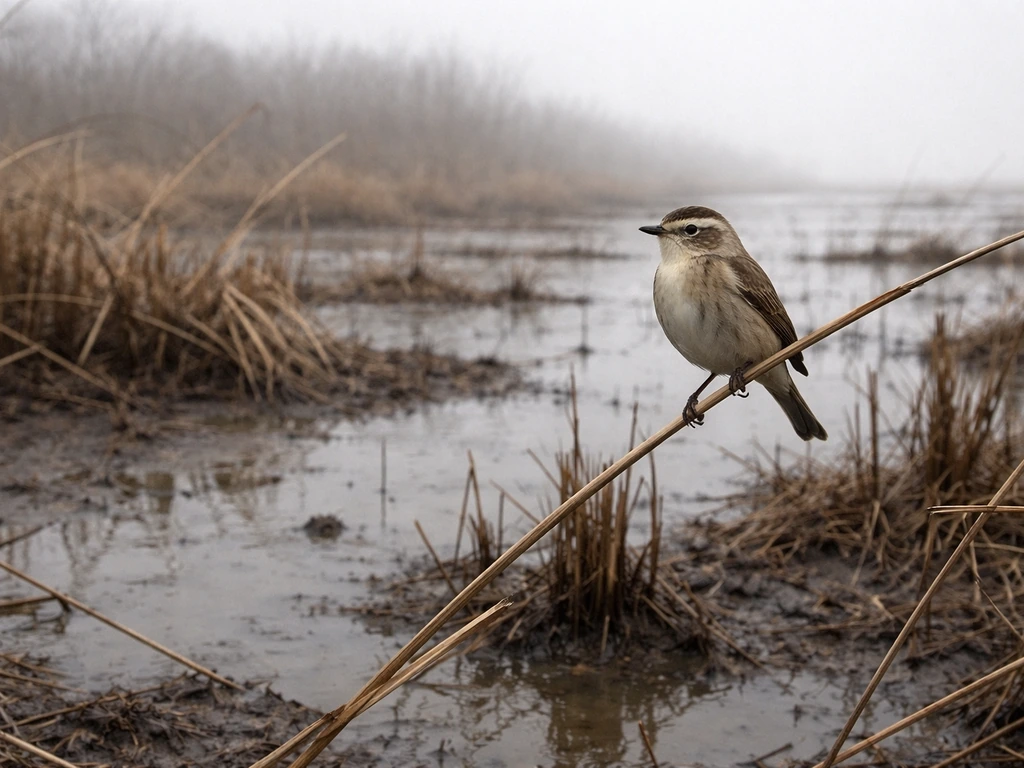
What 'decreasing population' really means and how declines are measured
Not every drop in bird numbers means a species is in freefall. Conservation scientists distinguish between natural fluctuation and a genuine trend, and the difference matters. A breeding population might dip one season due to drought and recover the next. What scientists look for is a sustained directional decline over multiple years, usually measured across several key metrics at once.
The main tools used to track population change include structured surveys, banding programs, and range mapping. In North America, the Breeding Bird Survey (BBS), run through USGS, generates annual abundance indices and population trend estimates at local, regional, and continental scales. These aren't just counts; they're statistical models that can detect a real decline even when individual survey routes have noisy data. The USGS Bird Banding Laboratory (BBL) adds another layer, tracking individual birds through banding and encounter records submitted by both professional researchers and the public, with data going back to 1960.
For IUCN Red List purposes, a species is classified as Endangered when it faces a very high risk of extinction in the wild. To answer what is an endangered bird, it helps to start with the criteria used to determine that a species faces a very high risk of extinction in the wild classified as Endangered. For context, many people also ask what the #1 most endangered bird is and how that status is determined.
The thresholds are concrete: a population reduction of at least 50 percent over ten years or three generations (whichever is longer), a range restricted to under 5,000 square kilometers with ongoing fragmentation or decline, or a total population estimated at fewer than 2,500 mature individuals. When you see 'population decreasing' listed in an IUCN profile, it reflects documented trends from surveys, not guesswork.
- Annual abundance indices from structured surveys like the BBS show whether numbers are going up, down, or holding steady
- Breeding pair counts and productivity rates (chicks fledged per pair) reveal whether a population can replace itself
- Range and occurrence trends show whether a species is retreating from parts of its former habitat
- IUCN population size categories flag when total mature individuals fall below critical thresholds (2,500 or 250)
- Banding and resighting data track survival rates and can pinpoint where mortality is highest in the life cycle
Common causes of endangered bird declines
Before you can help, you need to know what you're up against. Most bird population declines trace back to one or more of these drivers, often acting together in ways that compound each other.
| Threat | How it drives decline | Examples |
|---|---|---|
| Habitat loss and fragmentation | Removes nesting, foraging, and sheltering sites; isolates populations | Forest clearance for agriculture, urban sprawl, wetland drainage |
| Invasive predators | Kills adults, eggs, or chicks at rates native species cannot absorb | Rats, cats, stoats, and mongooses on island bird populations |
| Invasive competitors | Outcompetes native birds for nest sites or food | Common mynas displacing native cavity nesters |
| Disease | Spreads rapidly through small, genetically similar populations | Avian malaria in Hawaiian honeycreepers; avian influenza in waterbirds |
| Climate change | Shifts timing of food availability, alters habitat, increases extreme weather | Mismatched hatching and peak insect emergence; intensified cyclones |
| Hunting and poaching | Directly removes individuals from the population | Illegal trapping of songbirds; subsistence hunting of large birds |
| Pollution | Poisoning from pesticides, lead, plastic ingestion, oil spills | Lead poisoning in raptors from ammunition; microplastics in seabirds |
| Breeding failure | Reduces recruitment even when adults survive | Disturbance at nest sites; nest flooding from sea-level rise |
In practice, most critically endangered birds face several threats at once. The kakapo of New Zealand, for instance, was hammered by introduced predators and habitat clearance simultaneously. The California condor was pushed to nine individuals by a combination of lead poisoning, habitat loss, and hunting. Understanding which threats are dominant for your specific species and region is essential before any action makes sense. One endangered bird species found in the Thar Desert is the Great Indian Bustard.
How to pinpoint the specific problem for your bird species
If you've noticed a local decline or you're reading about a species you care about, here's the practical process for getting a clear picture of what's actually going on.
- Identify the species precisely. Common names are unreliable. Look up the scientific name and confirm it on a source like the IUCN Red List (iucnredlist.org), which gives you the current status, population trend, and documented threats for that exact taxon.
- Read the IUCN assessment for your species. Every Endangered or Critically Endangered listing includes a threats section ranked by impact and a summary of past population data. This is your starting point for understanding the primary driver.
- Check regional monitoring data. In North America, the BBS and eBird both provide species-level trend maps you can filter by region. Outside North America, national bird atlas projects and government wildlife agencies often publish similar data.
- Contact the local wildlife agency or conservation NGO. They will know whether the decline you're seeing is a known trend, a new alert, or a local blip. In the US, that's typically the state Fish and Wildlife agency or the US Fish and Wildlife Service. In Australia, New Zealand, or the UK, equivalent bodies exist at the national level.
- Look for a species recovery plan. Many Endangered and Critically Endangered species have formal recovery plans written by government scientists that spell out exactly what threats are prioritized and what interventions are underway. These are usually public documents.
- Talk to banders and researchers. The USGS BBL maintains a network of licensed bird banders. If your species is banded in your region, banders will have first-hand population data that hasn't been published yet.
One practical shortcut: if you're in North America and the species is covered by the BBS, the USGS public web tools let you explore banding and encounter data by species group going back to 1960. This can show you whether a decline is recent or has been building for decades, which dramatically narrows down likely causes.
What you can do today: steps for individuals and communities

Most people underestimate how much individuals can contribute, and a few overestimate what's possible without coordination. Here's an honest breakdown of what actually moves the needle.
If you're an individual
- Submit observations to a citizen science platform (eBird, iNaturalist, or your country's equivalent). Every confirmed sighting with location and count data feeds into the monitoring infrastructure researchers rely on.
- Remove or control predators on your property where legal and appropriate. Keeping cats indoors, using predator-proof nest boxes, and trapping invasive rats (with guidance from your local wildlife authority) can have measurable local effects.
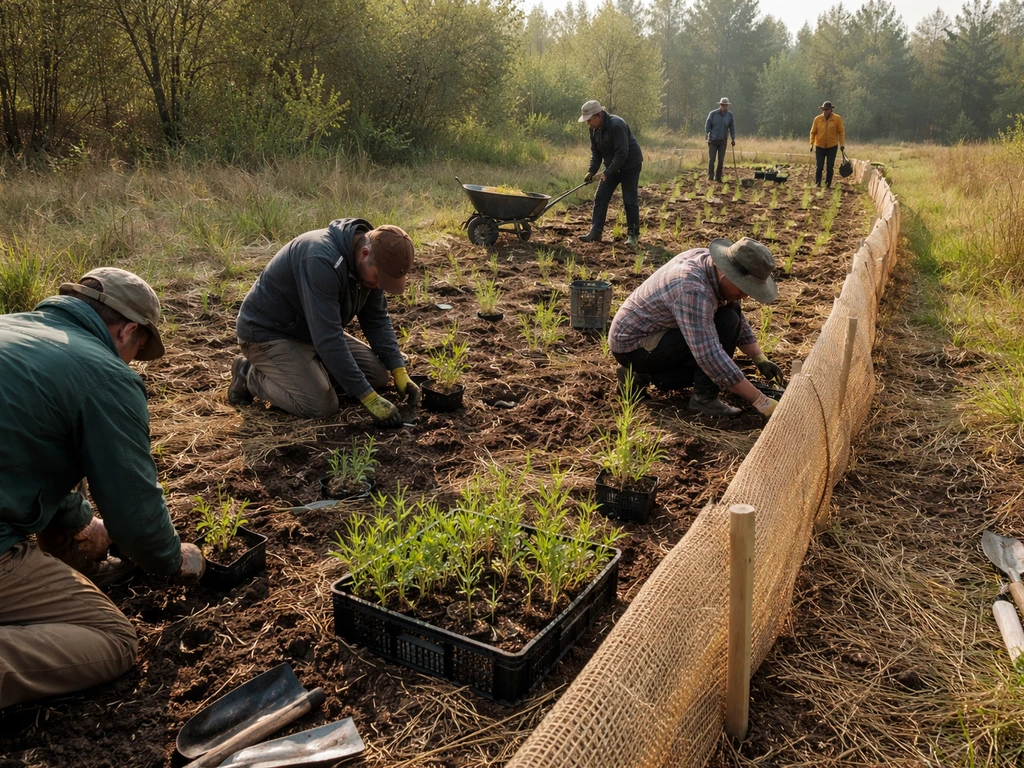
- Restore native vegetation on your land. Even a small garden planted with native species provides foraging and nesting habitat in a fragmented landscape.
- Stop using rodenticides that cause secondary poisoning in raptors and other birds. Switch to snap traps if pest control is necessary.
- Donate to species-specific conservation funds. Organizations running on-the-ground programs for Critically Endangered species often have small budgets where individual donations create direct impact.
- Advocate locally. Attend planning meetings, comment on development applications near critical habitat, and contact elected representatives about habitat protection.
If you're a community group or organization
- Partner with local wildlife agencies to run coordinated predator control or habitat restoration across a larger landscape than any individual property allows.
- Establish a nest monitoring program with trained volunteers. Consistent productivity data (eggs laid, chicks hatched, chicks fledged) is often more valuable than presence/absence counts for diagnosing declines.
- Create wildlife corridors between fragmented patches by working with neighboring landowners or local government on conservation easements.
- Run community biosecurity programs in areas where disease is a known threat, including awareness campaigns about not moving wildlife between sites.
Evidence-based conservation actions that actually work
Conservation science has accumulated enough track record now to say clearly which interventions deliver results. Here's what the evidence shows, matched to the main threat categories.
Habitat protection and restoration
Protecting existing high-quality habitat is the single most cost-effective conservation action for most bird species. Restoration is harder and slower but essential where original habitat is gone. Key steps include native revegetation, removal of invasive plants, and restoring hydrology in wetland systems. For species like the whooping crane, restoring stopover wetland habitat along migration routes was critical to the population's recovery from 15 individuals in the 1940s to over 800 today.
Predator management
For island species and some mainland birds, invasive predator removal is the most transformative intervention available. New Zealand's island eradication programs have demonstrated this repeatedly: removing rats and stoats from islands like Tiritiri Matangi produced measurable increases in native bird populations within a few years. Predator-free mainland sanctuaries fenced against invasive mammals now support populations of kiwi, kākāpō, and other species that cannot persist in unmanaged landscapes. Predator control needs to be sustained, not one-off, or populations rebound and declines resume.
Disease prevention and management
Disease management in wild birds is genuinely difficult. For Hawaiian honeycreepers devastated by avian malaria transmitted by introduced mosquitoes, researchers have begun trials using incompatible insect technique (releasing lab-modified mosquitoes to suppress populations) after decades of limited options. The core principle for most field situations is biosecurity: preventing the introduction of disease to naive populations, reducing stress on captive populations before release, and monitoring for signs of outbreak early. If you're working with captive or reintroduced birds, standard biosecurity protocols (quarantine of new individuals, equipment disinfection, limiting human contact during sensitive periods) matter enormously.
Nest protection and productivity improvement
Sometimes a population isn't losing adults, it's simply failing to produce enough young. Productivity interventions include: installing predator-proof nest boxes or guards, running nest monitoring programs to detect and address failures quickly, egg fostering and double-clutching in managed species (removing the first clutch to stimulate a second), and reducing human disturbance at known nest sites during breeding season. For ground-nesting birds especially, fencing nest sites or staffing ranger presence during critical periods can dramatically improve fledgling output.
Captive breeding and reintroduction
Captive breeding is a last resort, not a first move, but it works when applied correctly and when wild habitat exists or can be restored to receive released birds. The California condor program, the black-footed ferret, and New Zealand's kākāpō recovery all demonstrate that captive insurance populations can prevent extinction and provide founders for reintroduction. The failure mode is releasing birds into habitat that still contains the threats that drove the original decline. Reintroduction only makes sense once the receiving environment is secure.
How to report sightings, support monitoring, and avoid common mistakes
Good intentions can harm birds if they're applied without knowledge. Here are the most important dos and don'ts for anyone trying to help.
Reporting sightings correctly
- Use a structured platform so your data is usable. eBird is the global standard for most bird groups. In New Zealand, NatureWatch NZ captures broader species data including birds. In Australia, BirdLife Australia's Atlas is the go-to.
- Record the count as precisely as you can (exact number if possible, not just 'present'), the location as a GPS point or precise description, the date and time, and any behavior you observed.
- Report unusual sightings (dead birds, sick birds, unexpected absences from known territories) directly to your local wildlife authority, not just to citizen science apps. Sick or dead birds may be disease sentinels.
Mistakes to avoid
- Don't approach active nest sites, especially for ground nesters or colonial waterbirds. Even brief disturbance can cause nest abandonment.
- Don't handle wild birds without appropriate permits and training. Banding and health assessments require licensing for good reason.
- Don't release captive or exotic birds into the wild. Well-meaning releases can introduce disease, disrupt local gene pools, or compete with wild individuals.
- Don't publicize precise nest locations on social media for Endangered species. Egg collectors and curious visitors are both real threats.
- Don't assume a local increase means the species is recovering range-wide. Population trends need to be assessed at the appropriate scale.
If you're in the US and want to engage more formally with monitoring, the USGS BBL maintains records submitted by licensed banders and by members of the public who encounter banded birds. You can report a band online and your encounter data goes directly into the scientific database used for waterfowl management and population studies.
What progress looks like and how long conservation takes
Conservation is slow, and anyone telling you otherwise is setting you up for disappointment or abandonment. But it does work, and there are clear signs to watch for that tell you efforts are on track even before the population number turns around.
Early indicators that things are improving
- Breeding productivity improves before overall population numbers do. More chicks fledged per pair is the first signal.
- Adult survival rates stabilize. If the main mortality source is being addressed, you'll see fewer dead or missing banded individuals.
- Range contractions slow or stop. Even before expansion, halting retreat is meaningful.
- The IUCN reassesses the species to a less threatened category. Downgrades from Critically Endangered to Endangered, or Endangered to Vulnerable, reflect quantified improvements.
Realistic timelines
For species with short generation times (small songbirds, for example), you might see measurable population response to effective intervention within five to ten years. For long-lived birds, including large raptors, parrots, and flightless birds like the kiwi or cassowary, a single generation can span decades. Whether ostrich populations are endangered depends on region and current survey data, so it helps to check the latest IUCN status is ostrich an endangered bird.
The whooping crane took over 70 years of intensive, coordinated effort to move from near-extinction to a partially self-sustaining wild population. You might wonder whether the killdeer bird is the next endangered species, and the answer depends on current population trends and local threats is the killdeer bird endangered. The kākāpō, with fewer than 250 individuals as of recent counts, requires essentially indefinite intensive management because its habitat remains compromised and its reproduction is slow.
Why conservation efforts fail
- Treating symptoms instead of causes: controlling predators without addressing why invasives are present, or supplementary feeding without fixing habitat.
- Insufficient scale: interventions that are too small relative to the population's range or the threat's footprint.
- Funding discontinuity: predator control and monitoring programs that collapse between funding cycles, allowing threats to rebound.
- Ignoring multiple interacting threats: managing for one driver while another continues operating at full force.
- Releasing reintroduced birds before the receiving habitat is secure enough to sustain them.
The most successful recoveries share a common pattern: a clear diagnosis of the primary threat, sustained funding over decades, broad coordination between government agencies, NGOs, landowners, and local communities, and honest adaptive management where the approach changes when data shows it isn't working. You don't need to be a professional conservationist to contribute to all of those things. Reporting sightings, supporting habitat restoration, and staying engaged with local wildlife issues all feed into the system that keeps endangered bird populations from sliding toward the kind of extinction stories this site covers for species like the dodo and the moa. The difference between those outcomes and a genuine recovery often comes down to whether people paid attention and acted early enough.
FAQ
If I’m seeing fewer birds in my area, how can I tell whether it’s a real long-term decline or just seasonal variation?
Not necessarily. Look for whether the decline is consistent across years and multiple measures (breeding success, abundance indices, or range occupancy), not just one survey or one local hotspot. A short-term dip after a drought or severe storm can be a natural fluctuation, even when overall concern is justified.
What if I suspect one cause (like habitat loss), but other threats might be involved too?
Yes, and the risk is that you fix the wrong problem. Even when the headline driver is clear (habitat loss, predators, or disease), secondary drivers like pesticide exposure, disturbance at nesting sites, or reduced food availability can determine whether interventions succeed or fail. Ask local groups which threats are currently considered dominant for your specific species and site.
Does an IUCN “Endangered” label tell me exactly what is causing the decline where I live?
For IUCN-style “Endangered” assessments, the population metric is about mature individuals and trends across generations, but local actions usually depend on site-level ecology. So a species can be officially listed as Endangered while the local population is stable (or vice versa). Use the listing for context, but align your local help with the threats affecting the specific breeding or feeding area you care about.
Can citizen sightings replace formal monitoring like structured surveys or banding?
Be careful with “more effort” claims. Volunteer counts can be useful for early warning, but they need consistent methods (same locations, timing, and reporting approach) to distinguish real trends from observer variation. If you submit observations, provide the most precise location and date you can, and follow the protocol recommended by the local project or monitoring program.
When should I focus my help, does timing matter for habitat restoration, predator control, or nest interventions?
Different threats often require different timing. For example, predator control is most effective when maintained through the nesting season, nest protection must cover the vulnerable incubation-to-fledging window, and disease biosecurity is about preventing introductions and catching outbreaks early. When in doubt, coordinate your timing with the species’ breeding calendar and the local conservation plan.
What are common “well-meaning” actions that can accidentally make nesting declines worse?
Disturbance is not only about loud activity. Even frequent foot traffic near nests, off-trail hiking during breeding season, pets running loose, or repeated drone flights can reduce productivity. If you want to assist, choose low-impact actions like supporting habitat work and keeping clear of known nesting areas during sensitive periods.
I found an injured or apparently displaced endangered bird, what should I do before trying to help?
If you’re tempted to move a “rescued” bird, avoid it unless you are following a wildlife rehabilitation protocol. In many cases, relocating a bird can increase stress, expose it to unfamiliar pathogens, or place it into habitat that cannot support it. The safest default is to contact a licensed wildlife rehabilitator or the appropriate conservation authority before any transport or release.
If banded birds are showing up less often, does that automatically mean the population is declining?
Do not rely on band numbers alone to track a population without context. A single encounter does not tell you survival rate or population trajectory. For trend assessment, you need repeated measurements and enough coverage across the species’ range, which is why structured survey designs and long-running banding databases are so valuable.
Why do some conservation interventions seem to work at first and then decline again?
If the intervention depends on predator suppression or disease prevention, one-off actions can fail quickly. For predator control, maintenance matters, because immigration from surrounding areas can restart predation pressure. For disease work, early detection and strict biosecurity reduce the chance of sudden outbreaks that reverse recovery.
How should we measure whether our efforts are truly working, and not just producing temporary improvements?
Yes, but you need to define “success” clearly. Productivity-focused actions aim to increase fledglings, while habitat restoration aims to support survival and long-term carrying capacity. Choose metrics that match the intervention (nest success rate, fledgling counts, survival proxies, habitat quality indicators) so you can tell within a reasonable timeframe whether the approach is working.