The Great Indian Bustard (Ardeotis nigriceps) is the endangered bird most closely associated with the Thar Desert. It is Critically Endangered on the IUCN Red List, with fewer than 150 individuals estimated to survive in the wild as of 2026, and the Thar grasslands of Rajasthan hold the last significant breeding population.
Which Endangered Bird Species Is Found in the Thar Desert

Maya Hennessy
8 Jun 2026
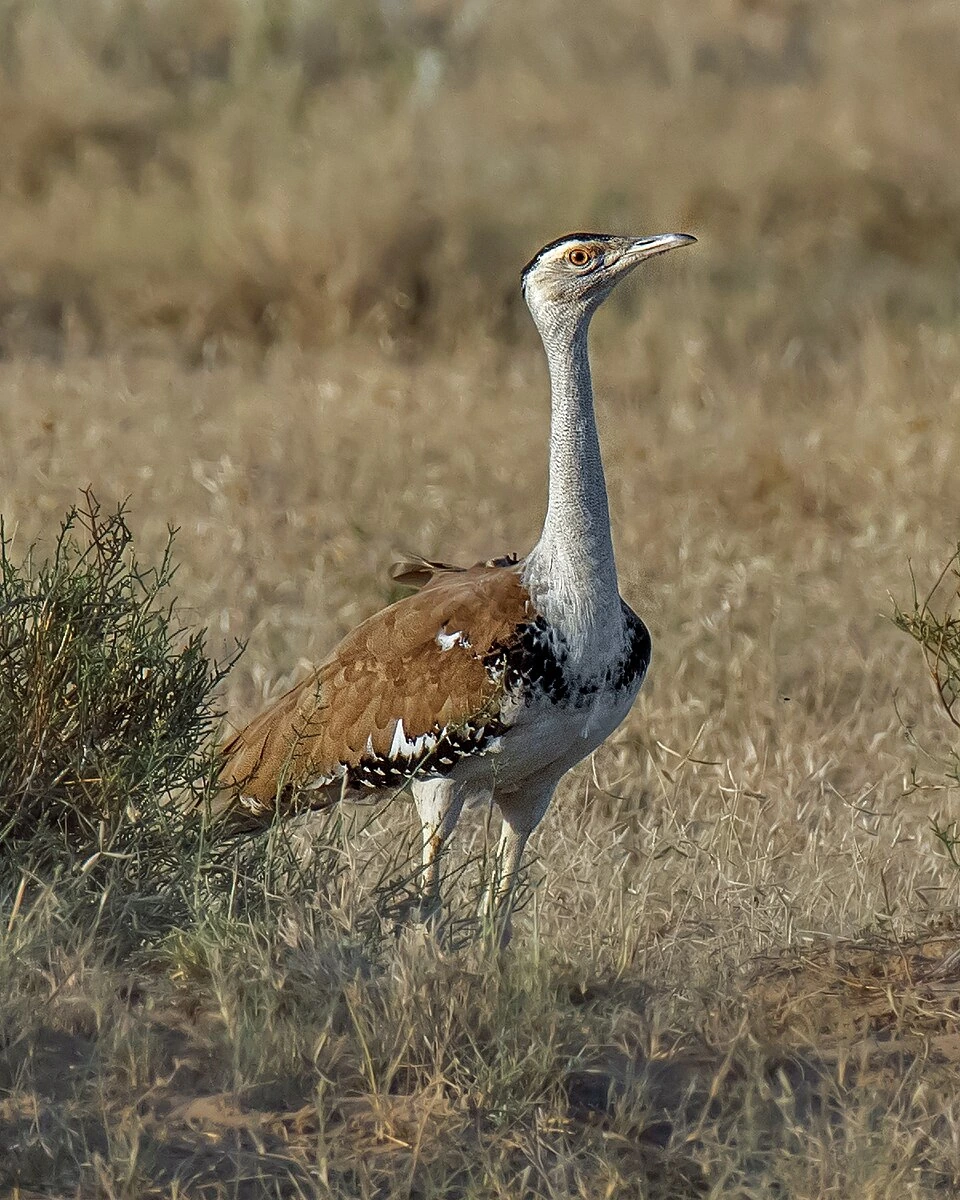
I could not reliably retrieve an authoritative IUCN Red List page for the candidate species from the searches so far, so this guide prioritizes BirdLife DataZone and official Indian sources for range, habitat, and threats BirdLife DataZone and peer-reviewed or official Indian sources. If someone points you toward 'an endangered bird in the Thar Desert,' this is almost certainly the species they mean.
That said, the Thar also shelters several other threatened birds depending on the exact patch of habitat, the season, and whether you are looking at desert scrub, wetlands, or agricultural edges, so it is worth knowing who else shares this landscape. The killdeer is a separate ground-nesting bird, and you may wonder how its conservation status compares to other endangered species.
The main candidate: Great Indian Bustard
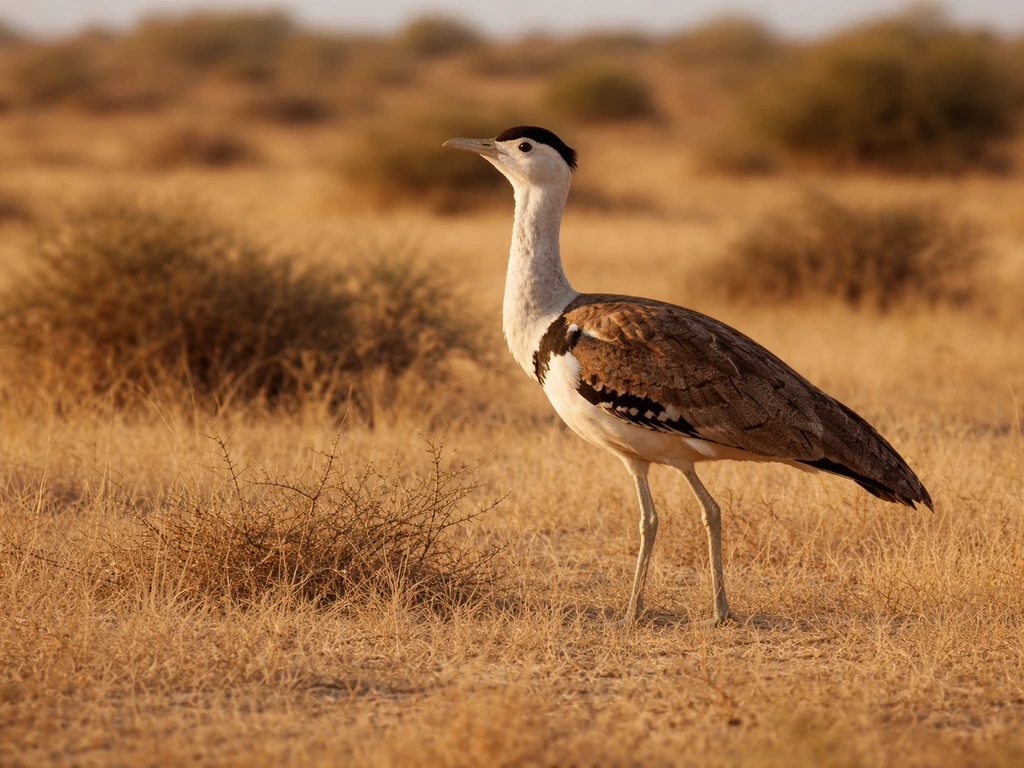
The Great Indian Bustard was once widespread across the Indian subcontinent's dry grasslands, from Punjab down through Rajasthan, Gujarat, Maharashtra, Karnataka, and Andhra Pradesh. Today, Rajasthan holds roughly 80 to 90 percent of the surviving population, concentrated around the Desert National Park near Jaisalmer and Barmer. Gujarat's Kutch district holds a tiny satellite population. This is a large, unmistakable bird: males can stand up to a meter tall and weigh up to 15 kg, making it one of the heaviest flying birds in the world. Its conservation status is Critically Endangered, one step away from extinction in the wild.
Other threatened birds you might find in the Thar
The Thar is not a single uniform habitat. It mixes sandy desert, rocky scrub, seasonal wetlands, irrigated farmland, and dry riverine patches, and different threatened birds occupy different corners of that mosaic. Here are the most likely candidates beyond the Great Indian Bustard:
- MacQueen's Bustard (Chlamydotis macqueenii): Vulnerable on the IUCN Red List, this smaller bustard winters in the Thar's sandy and stony plains, migrating from Central Asia between October and March. It is often confused with the Indian Bustard by non-specialists.
- Lesser Florican (Sypheotides indicus): Endangered, breeding in the Thar's monsoon grasslands between July and September. Males perform spectacular jumping display flights during the breeding season.
- Bengal Florican (Houbaropsis bengalensis): Critically Endangered, though its primary range is floodplain grasslands farther east; occasional records exist from the Thar fringe.
- Sociable Lapwing (Vanellus gregarius): Critically Endangered, a rare winter passage migrant recorded in agricultural fields in Rajasthan.
- Indian Courser (Cursorius coromandelicus): Near Threatened, found in open scrub and sandy terrain across the Thar.
- Stoliczka's Bushchat (Saxicola macrorhyncha): Vulnerable, endemic to the Indian subcontinent and found in the tall grass and scrub patches of the Thar.
For most searches and most readers, the Great Indian Bustard is the right answer. The florican and MacQueen's Bustard come up frequently in conservation discussions about the Thar, but the Bustard carries the most urgent conservation flag and the most specific geographic tie to this desert.
How to confirm which species is in your specific location

Identifying the right threatened bird comes down to four factors: range, habitat type, season, and field marks. Getting all four right eliminates most confusion.
Range and location
If you are near Jaisalmer or Barmer in Rajasthan, particularly inside or adjacent to Desert National Park, you are in core Great Indian Bustard territory. The park covers about 3,162 sq km and is the single most important site for the species globally. If you are near Kutch in Gujarat, the Bustard is possible but rare. If you are in agricultural fields or fallow land near any Rajasthani town during monsoon season (July to September), you might be looking at Lesser Florican instead. MacQueen's Bustard appears in winter (October to March) on stony and sandy plains.
Habitat type
Great Indian Bustards prefer open, flat grassland and scrub with low vegetation density, usually below knee height, where they can see predators approaching at distance. They actively avoid dense vegetation, tall crops, and areas with heavy human infrastructure. Lesser Floricans use taller monsoon grass, often 60 to 100 cm high. MacQueen's Bustard favors bare and stony desert plains. If the habitat is a wetland or irrigated patch, you are more likely looking at something other than a Bustard.
Seasonal timing
| Species | Best season in Thar | Key behaviour or sign |
|---|---|---|
| Great Indian Bustard | Year-round (Jaisalmer core zone) | Males display on open flats; large slow-walking bird |
| MacQueen's Bustard | October to March (winter) | Solitary, flattens to ground when disturbed |
| Lesser Florican | July to September (monsoon) | Males jump above grass in display leaps |
| Sociable Lapwing | October to February (passage/winter) | Flocks in ploughed or stubble fields |
| Stoliczka's Bushchat | October to March (winter) | Perches on low shrubs, flicks tail |
Field marks to look for
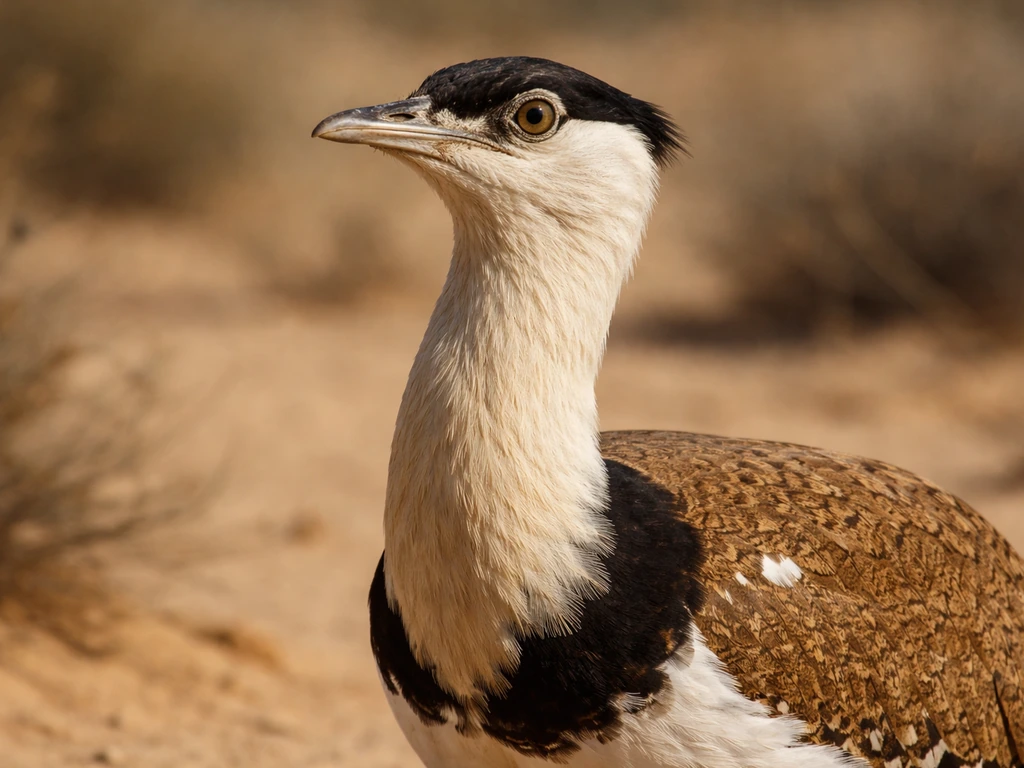
The Great Indian Bustard is hard to mistake once you know it: a very large, long-legged bird with a brownish-buff back, white underparts, a black crown, and a distinctive black band across the breast in males. In flight, the wings show a large white patch. It walks slowly and deliberately across open ground, often stopping to scan its surroundings. It stands far taller than any lapwing or courser sharing the same habitat. If you see something large and stately walking through desert grassland near Jaisalmer, start with this species.
Conservation status and why the Thar is so dangerous for these birds
The Great Indian Bustard's Critically Endangered status is driven by a brutal combination of threats that are all present in the Thar simultaneously. Understanding these threats matters whether you are a researcher, a birdwatcher, or someone working on local policy.
Habitat loss and fragmentation
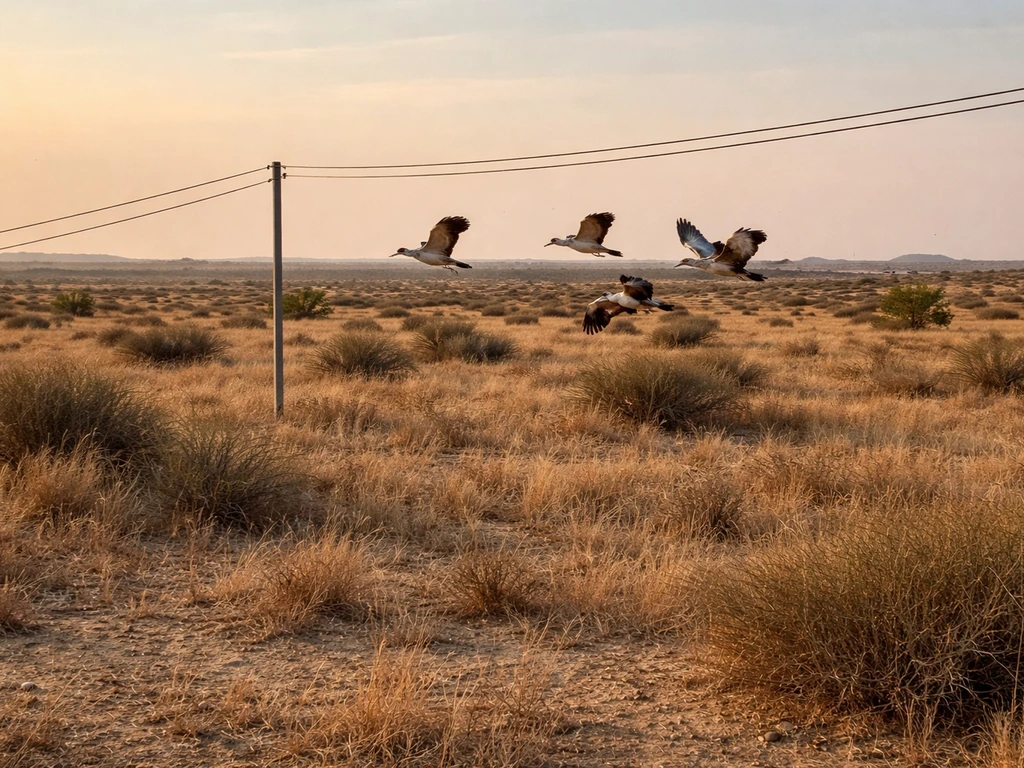
The Thar's native grasslands have shrunk dramatically due to agricultural conversion, particularly after the Indira Gandhi Canal was completed in the 1980s and brought irrigation water to previously dry areas. What was once arid scrubland became farmland, fragmenting the open habitat Bustards need. Even within protected areas, encroachment and land-use changes have degraded core zones.
Power line collisions
This is currently considered the single most urgent immediate threat. Power lines crisscross the Thar at low heights, and Bustards, which have poor frontal vision and fly in straight lines at low altitude, collide with them fatally. A 2021 Supreme Court of India order directed that power lines in the core Bustard habitat in Rajasthan and Gujarat be undergrounded, but implementation has been contested and slow. Researchers estimate collisions could be killing multiple individuals per year, which is catastrophic for a population below 150 birds.
Grazing pressure
Overgrazing by livestock, particularly in and around Desert National Park, degrades the open grassland structure Bustards depend on. Heavy grazing reduces the ground cover that supports the insects, lizards, and small rodents the Bustard feeds on, and compacts nesting ground. Bustards are ground nesters, laying a single egg per season, so nest disturbance has an outsized impact on reproduction.
Hunting and human disturbance
Historically, Great Indian Bustards were hunted extensively, including by visiting royalty. While direct hunting is now illegal and much reduced, disturbance near nest sites from human activity, vehicles, and domestic animals remains a real problem. Egg collection has been reported historically. With such a small population, even a handful of nest failures per season can set the species back years.
Wind and solar energy infrastructure
The Thar has been identified as a prime zone for renewable energy development, with large wind and solar farms now operating in Rajasthan and Gujarat. While renewable energy is essential globally, poorly placed turbines and panels in core Bustard habitat add collision risk and disturb breeding. Conservation groups and the Supreme Court have been wrestling with how to balance these interests since the early 2020s.
Where to find verified sightings and records
If you want to confirm a sighting, check a specific location, or understand current population trends, these are the most reliable resources to use today:
- eBird (ebird.org): The global citizen-science birding database. Search 'Great Indian Bustard' or 'Desert National Park, Rajasthan' to see recent confirmed sightings with dates, photos, and GPS locations. This is updated in real time by birdwatchers on the ground.
- BirdLife International DataZone (datazone.birdlife.org): The authoritative source for range maps, population estimates, and threat assessments. The Great Indian Bustard species page gives the full picture from peer-reviewed data.
- Wildlife Institute of India (wii.gov.in): WII has conducted long-running Great Indian Bustard surveys and published population and habitat assessments. Their research underpins most policy decisions.
- Desert National Park Field Office, Jaisalmer: The park's forest department maintains records of sightings, nesting activity, and current access conditions. Contact them directly before visiting if you want the most current ground-level information.
- Rajasthan Forest Department: Publishes Protected Area management plans and periodic wildlife census data, including Bustard counts.
- Conservation NGOs: The Society for Conservation of Nature, Wildlife Trust of India, and Rajasthan's Kheechan village bird conservancy all work in the Thar region and sometimes share sighting data and field updates.
What to do next: spotting or supporting conservation
If you want to see the Great Indian Bustard
- Get a permit. Desert National Park requires entry permits arranged through the Jaisalmer Forest Department. Do not enter restricted zones without one.
- Go with a local naturalist guide who knows the current nesting zones. This reduces disturbance and dramatically increases your chance of a sighting.
- Visit between November and March for the best combination of bird activity and comfortable desert temperatures. Avoid the core breeding season (April to June) unless you have a specific research reason.
- Stay on designated tracks. Bustards flush easily and may abandon nesting areas if repeatedly disturbed. A 400m or greater distance is the generally recommended minimum from any bird on the ground.
- Log your sighting on eBird with a photo if possible. Every verified record contributes to the population data scientists and conservationists use.
If you want to support conservation efforts
- Support organizations actively working on the power line undergrounding campaign in the Thar, such as Wildlife Trust of India and Rajasthan's own forest department initiatives.
- Follow and amplify the Supreme Court's power line undergrounding orders: public awareness keeps political pressure on implementation.
- If you are a researcher or student, the Wildlife Institute of India and Bombay Natural History Society (BNHS) periodically support fieldwork and monitoring programs in the Thar.
- Avoid sharing unverified nest location data on social media. For a population this small, broadcasting nest GPS coordinates can attract disturbance and poaching.
- Contribute to the IUCN SSC Bustard Specialist Group's awareness campaigns, which provide scientifically grounded information for policy advocacy.
The Great Indian Bustard is one of the most critically threatened large birds on the planet, sitting in the same desperate category as the Kakapo of New Zealand or the California Condor before its captive breeding program took hold. Unlike some endangered birds whose threats are primarily historical, this one is fighting active, ongoing pressures right now in 2026.
The Thar Desert is its last real stronghold, which makes everything happening in that landscape directly relevant to whether this bird survives the next decade. If you are wondering, “is ostrich an endangered bird,” the answer is no, since ostriches are currently classified as least concern compared with the bustards discussed here.
If you are curious about how close the line is for other birds in this situation, the patterns of habitat loss and collision risk repeat across many critically threatened species globally, and the Bustard's story is a useful, sobering lens for understanding what 'endangered' actually looks like on the ground.
FAQ
If I’m in the Thar Desert but not in Rajasthan or near Jaisalmer, is the Great Indian Bustard still the likely endangered bird?
It depends on habitat, but if you are outside the Rajasthan core zone and not near Jaisalmer or Barmer, the Great Indian Bustard becomes less likely. You should switch to “season plus ground cover” thinking, because Lesser Florican and MacQueen’s Bustard can match what people describe as an “endangered desert bird” during their respective monsoon and winter windows.
What’s the fastest way to tell Great Indian Bustard apart from MacQueen’s Bustard when both can appear in the Thar?
Use season and substrate. MacQueen’s Bustard is more associated with stony and sandy plains in winter (October to March), while the Great Indian Bustard is tied to open grassland and scrub structure in the Rajasthan core areas. Field mark overlap happens, so if your sighting is during monsoon or involves low, open grass, start with Great Indian Bustard.
How can I tell whether I’m looking at Lesser Florican versus a Great Indian Bustard in monsoon?
Lesser Florican typically uses taller monsoon grass, often about waist height (roughly 60 to 100 cm), while Great Indian Bustard favors more open ground with low vegetation. If you cannot see much through the grass and the bird is “hidden in cover,” the odds tilt toward Lesser Florican.
Are there any endangered birds in the Thar that people commonly confuse with bustards during birdwatching?
Yes. People often mix up ground-nesters and similar-sized birds, especially in open scrub and agricultural edges. If the bird is small and actively foraging on the ground, you might be seeing a different threatened species or even a non-bustard; the article emphasizes checking habitat type and field marks, because size alone can mislead.
What is the safest behavior if I encounter a Great Indian Bustard near a road or trail?
Keep distance and avoid creating repeat disturbances. Bustards are ground nesters with very low reproductive output (one egg per season), so frequent passing or lingering near likely nesting spots increases nest failure risk. Use zoom optics rather than walking closer, and avoid driving off-track.
Does the endangered-bird answer change if I’m in a wetland or irrigated patch within the Thar?
Yes. The Great Indian Bustard is generally not tied to wetland or heavily irrigated habitat, so in those patches you should not default to it. Your identification should pivot to habitat-specific species and likely seasonality, since the article notes that different threatened birds occupy different corners of the habitat mosaic.
If I see a large bird walking slowly across open grassland, does that guarantee it’s the Great Indian Bustard?
Not guaranteed. “Large and stately walking” is a strong clue, but other birds can share open-country behavior. Confirm with core field marks mentioned in the article, especially the male’s distinctive crown and breast band pattern, and check the location against the Rajasthan core area logic.
What should I do if I want to report a sighting, but I’m not sure which threatened bird it is?
Record uncertainty clearly. Note the exact location, date, habitat type (open grassland, taller monsoon grass, stony plains, wet patch), and the bird’s approximate behavior (walking, standing still, flushing). This makes it much easier for reviewers to distinguish among Great Indian Bustard, Lesser Florican, and MacQueen’s Bustard using the article’s range, habitat, season, and field marks framework.
Next Articles
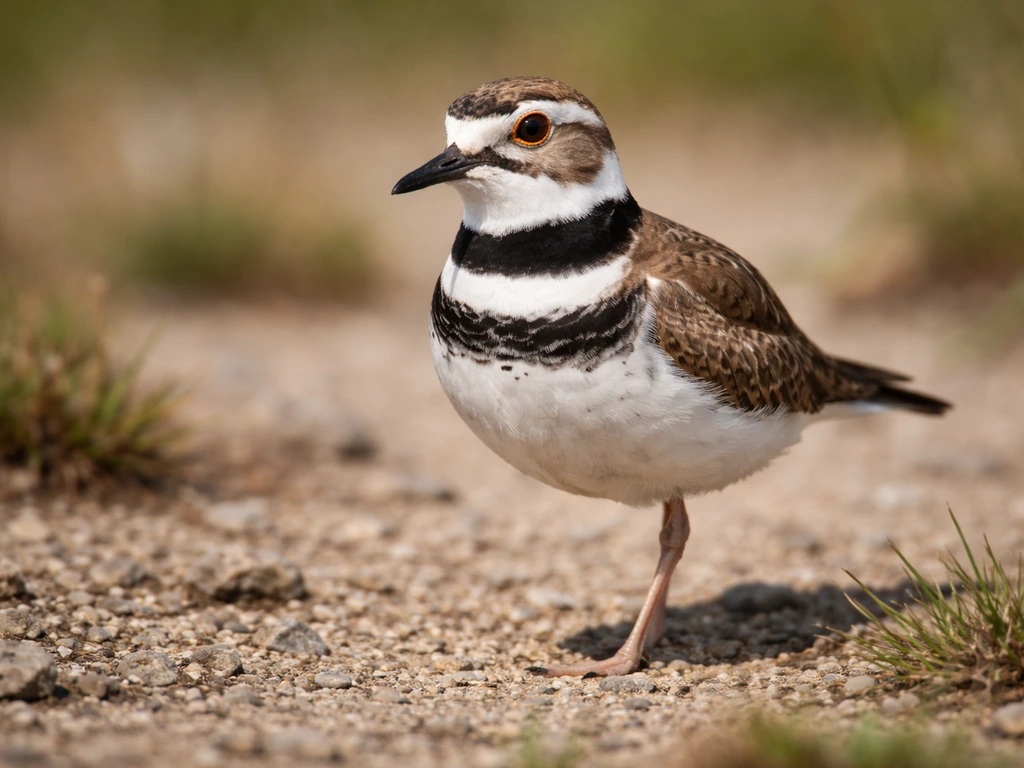
Is the Killdeer Bird Endangered? Status, Threats, and What to Do
Find out if killdeer is endangered today, learn threats and habitat, and get steps to protect nests and check status.
The Population of an Endangered Bird Is Decreasing: What to Do Now
Get causes, how to verify decline with surveys and breeding data, and take action now to protect an endangered bird’s ha
What Is the Most Endangered Bird in New Zealand?
Pinpoints the most endangered NZ bird, explains threat criteria, its range, decline causes, current status, and conserva