
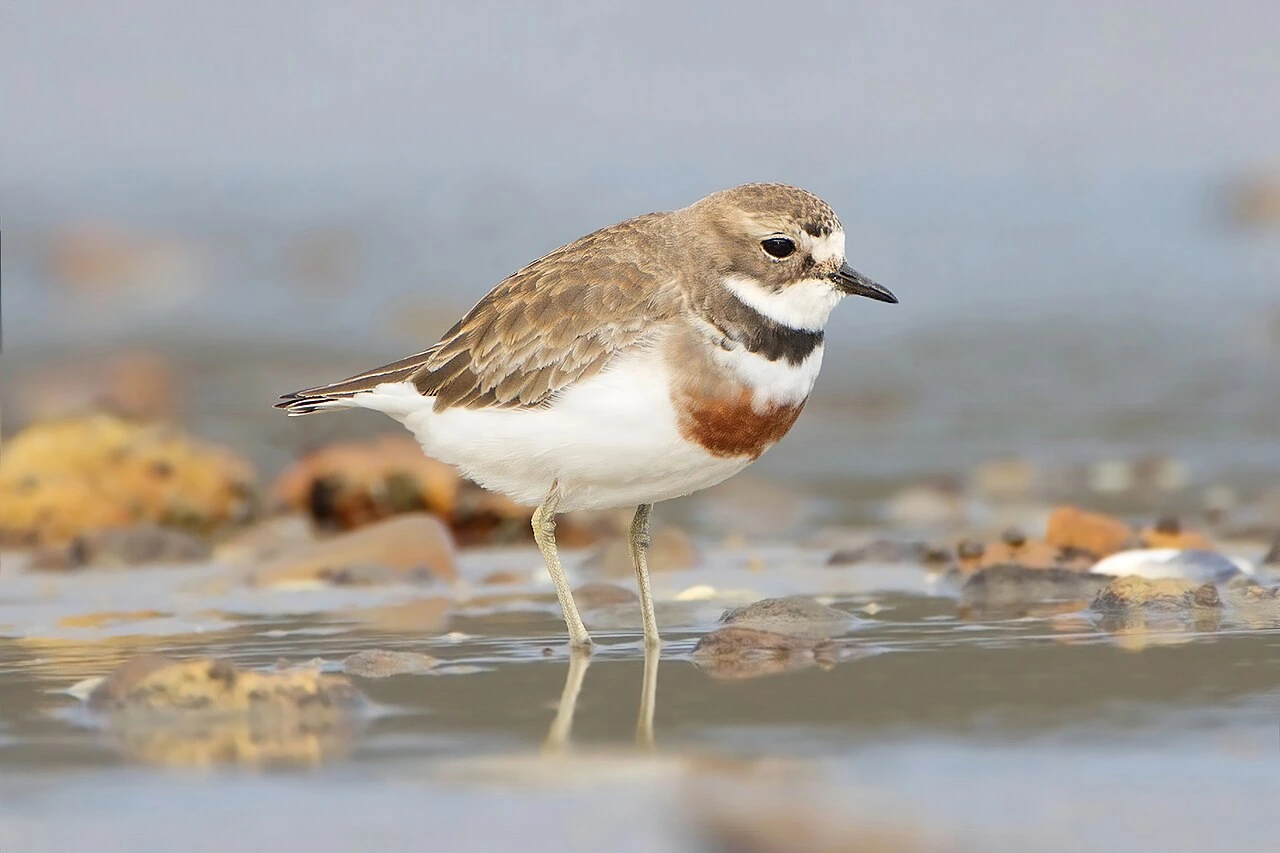
New Zealand's most endangered indigenous breeding bird is the tara iti, also known as the New Zealand fairy tern. As of July 2025, fewer than 40 adult birds remain, with only 10 known breeding females. That combination of tiny population, extremely restricted range, and low reproductive output puts it at the absolute sharp end of New Zealand's extinction risk ladder, classified as Nationally Critical under the New Zealand Threat Classification System and tracked as Critically Endangered on the global IUCN Red List.
What Is the Most Endangered Bird in New Zealand?

Maya Hennessy
31 May 2026
What 'most endangered' actually means here

The phrase 'most endangered' can mean different things depending on which framework you use. New Zealand runs its own system alongside the global IUCN Red List, and it is worth knowing how both work before accepting any single label at face value.
The IUCN Red List
The IUCN Red List assigns categories globally: Least Concern, Near Threatened, Vulnerable, Endangered, Critically Endangered, Extinct in the Wild, and Extinct. Critically Endangered is the worst category for a living wild population. Each entry shows two dates: when the assessment was completed and when it was published. That distinction matters because a published listing can lag behind recent fieldwork by a year or two, so always check the assessment date, not just the publication year, when you want the freshest picture.
New Zealand's Threat Classification System (NZTCS)
The NZTCS is administered by the Department of Conservation (DOC) and uses its own hierarchy tuned specifically to New Zealand's species. The highest risk category is Nationally Critical, which flags species facing an immediate and very high risk of extinction. Below that sit Nationally Endangered and Nationally Vulnerable, among others. DOC expert panels assess candidates against defined quantitative and qualitative criteria, so the system is rigorous rather than just opinion-based. Nationally Critical is the direct local equivalent of IUCN Critically Endangered, and tara iti sits at the top of that list.
Close contenders worth knowing about
Tara iti is not the only bird at this extreme edge. The southern New Zealand dotterel (pukunui) is also classified Nationally Critical under the NZTCS, with a population of just 101 individuals recorded in April 2024. It breeds exclusively on Stewart Island/Rakiura, making it highly site-dependent. Both species appear in the same highest-risk bracket, so depending on which metric you weight most, including raw population size, breeding female count, or rate of decline, you could argue either way. That said, DOC explicitly calls tara iti 'probably New Zealand's most endangered indigenous breeding bird,' and with only 10 breeding females, the reproductive base is terrifyingly thin. If you're interested in how conservationists rank birds like these globally, the question of what defines the single most endangered bird anywhere in the world touches similar complexity.
Where tara iti live and what they need
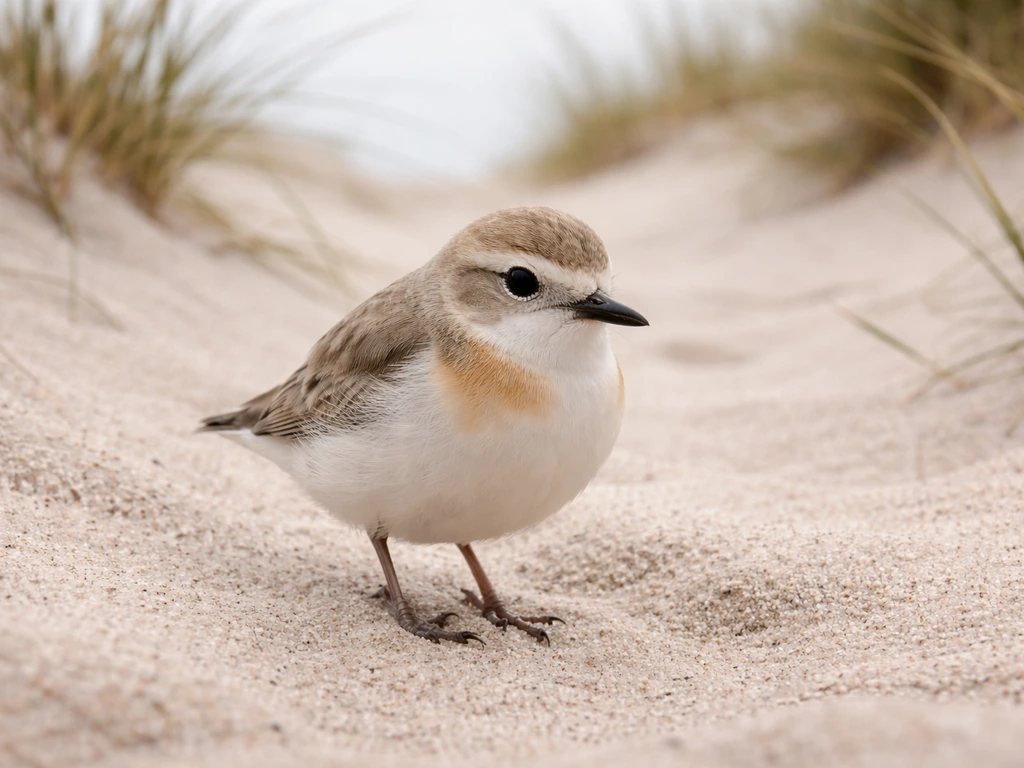
Tara iti once ranged widely around the North Island coast and parts of the eastern South Island. That range has collapsed dramatically. Today the entire wild population is confined to the lower Northland Peninsula, with breeding recorded at just four regular sites: Waipū, Mangawhai, Pākiri, and Papakānui on the South Kaipara Head. Two other sites, Te Ārai and Poutawa rivermouths, are used intermittently. That is the full extent of the species' breeding territory on Earth. The Thar Desert also supports its own rare endangered bird species, making this region a critical refuge for survival.
The birds depend on specific coastal sand dune habitat for nesting. They nest directly on open sand near rivermouths and estuary margins, which means every nest is essentially sitting at sea level. That habitat is not only scarce but also exposed: storm surges, high tides, and flooding can wipe out an entire clutch or even a whole season's nests in hours. A species with only 10 breeding females cannot absorb many failed seasons before the situation becomes irreversible.
Why tara iti are in such trouble
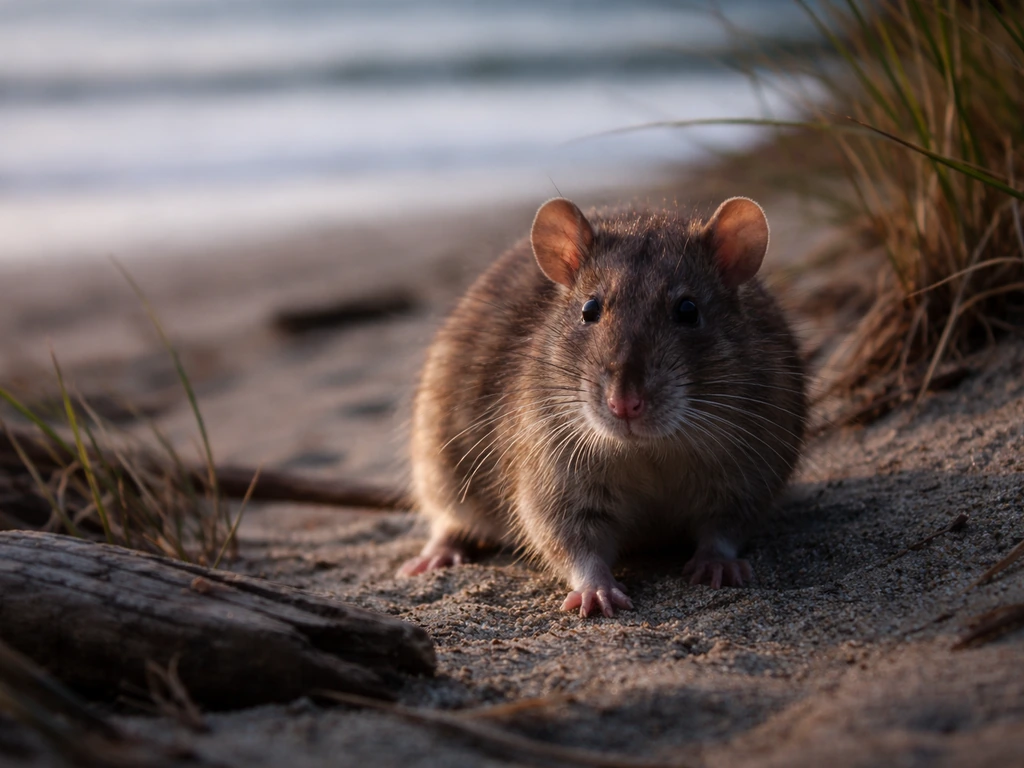
The drivers of decline are a familiar and grim combination for New Zealand birds: introduced predators, habitat destruction, and environmental vulnerability all working at the same time.
- Introduced predators: rats, cats, hedgehogs, and mustelids (stoats, ferrets, weasels) prey on eggs, chicks, and nesting adults, or disturb incubating birds long enough for embryos to die from heat or cold exposure.
- Habitat loss: coastal sand dune systems have been degraded and reduced by residential and lifestyle development, pine plantation establishment, and conversion to pastoral farming.
- Environmental events: high tides, storm surges, and flooding wash away nests entirely, and this risk is compounded by the birds' insistence on low-lying coastal sites.
- Fragmented range: the entire breeding population is now packed into a handful of Northland sites, meaning a single catastrophic predator incursion or storm season could affect a significant fraction of the global population at once.
The combination of ultra-low female count and these layered threats is what makes the situation so precarious. Each breeding female is irreplaceable at the population's current size. Losing even two or three birds to a predator event or a storm in a single season materially reduces the species' long-term viability.
Current status and population trend
As of July 2025, the global wild population stands at fewer than 40 adults, with 10 known breeding females. If you want the basics, knowing what an endangered bird means can help you interpret labels like critically low population and breeding risk what is an endangered bird. The species is classified Nationally Critical (NZTCS) and Critically Endangered (IUCN). The population has been critically low for decades, and while intensive management has prevented total collapse, there is no clear upward trend that would ease concerns. These updates matter because the population of an endangered bird is decreasing. The species has essentially no buffer: if the 10 breeding females fail to produce and fledge chicks across consecutive seasons, the trajectory becomes irreversible very quickly.
| Species | NZTCS Category | IUCN Category | Population (latest) | Breeding range |
|---|---|---|---|---|
| Tara iti / NZ fairy tern | Nationally Critical | Critically Endangered | Fewer than 40 adults; 10 breeding females (July 2025) | Lower Northland Peninsula, 4 regular sites |
| Southern NZ dotterel / pukunui | Nationally Critical | Critically Endangered | 101 individuals (April 2024) | Stewart Island/Rakiura only |
What is being done to protect tara iti

Conservation work for tara iti is intensive and multi-agency. DOC runs a formal recovery plan for the species, with structured decision-making processes that guide management priorities each season. Auckland Zoo is a key strategic partner, and as of the most recent reporting, the Tara Iti Recovery Programme had reached its fifth year of operation. The University of Auckland also has active PhD research focused on improving the species' survival prospects, which reflects how seriously the scientific community is treating the situation.
On the ground, the practical work includes predator control at all known breeding sites, nest monitoring and protection during the breeding season, and management of human disturbance at sensitive sites. The very low number of nesting females means each nest is individually monitored and, where possible, actively protected. Habitat management at breeding beaches is also part of the programme, addressing the coastal dune degradation that has reduced suitable nesting ground.
What you can do personally
- Keep dogs on leads and stay well back from marked nesting areas on Northland beaches during the September to February breeding season. A flushed bird can mean a failed clutch.
- Support or volunteer with DOC or Auckland Zoo's tara iti recovery programme. Both organisations take community involvement seriously, and monitoring work involves citizen hours.
- Donate to the Auckland Zoo Wildlife Conservation Fund or DOC-linked trusts that fund predator control at tara iti sites.
- Report disturbance at known nesting beaches to DOC's northern region. Early reporting of predator activity or human interference near nests can save individual clutches.
- Advocate for coastal sand dune protection in Northland. Council planning submissions and land-use decisions around these sites have a direct bearing on nesting habitat availability.
How to check the latest status and listings
Conservation statuses change, sometimes quickly for critically small populations. The best approach is to treat any figure you read, including in this article, as a snapshot and go directly to primary sources when you need the current picture.
- DOC's official tara iti species page (doc.govt.nz) is updated periodically and is the most reliable source for New Zealand-specific population counts and NZTCS classification.
- The NZTCS database at nztcs.org.nz lists all New Zealand taxa with their current threat categories and the year of the most recent assessment. You can search by species or browse by category.
- The IUCN Red List at iucnredlist.org carries the global assessment. When you look up a species, check the assessment date (not just the publication year) to understand how current the data is.
- Auckland Zoo's website posts seasonal updates from the Tara Iti Recovery Programme, including breeding season outcomes, which give real-time population context between formal assessments.
- University of Auckland research news covers ongoing scientific findings relevant to tara iti survival and recovery strategies.
With a population this small, a single good or bad breeding season can shift the numbers meaningfully. Checking these sources at the start of each calendar year, after the September to February breeding season wraps up, gives you the most current view of whether things are improving, holding, or deteriorating. Tara iti's situation is not hopeless, but it is genuinely on the edge, and staying informed is the first step to doing something useful about it.
FAQ
Is tara iti definitely the single most endangered bird in New Zealand, or could another species be worse depending on the measure?
“Most endangered” can flip between species because different metrics emphasize different risk components, like raw population size versus breeding female numbers versus trend rate. In the NZTCS, tara iti is the top indigenous breeding bird in the highest-risk tier, but the southern New Zealand dotterel (pukunui) is also Nationally Critical, so the “worst” label can depend on which statistic you prioritize.
What does “fewer than 40 adults and 10 breeding females” actually mean for extinction risk?
Those figures indicate an extremely limited reproductive base. Even if adults survive, the loss of one or two breeding females in a season can sharply reduce the number of chicks produced, because there is little replacement capacity. It is also a warning that population counts based only on total birds can mask reproductive bottlenecks.
How can the assessment dates affect what I read about tara iti and its status?
IUCN and NZTCS updates can have different review cycles, and global listings can lag behind recent field results. If you want the freshest status, use the assessment date (when the evaluation was completed) rather than only the publication year, and look for whether more recent monitoring reports have changed the outlook.
Why does habitat matter so much for a species that nests on open sand?
Nesting on bare sand near estuaries makes nests highly vulnerable to normal coastal dynamics, like storm surges, high tides, and flooding. With such a small breeding population, a single storm season can wipe out multiple nests, and the species cannot “make up” for failures quickly.
How does predator control work when there are only a few regular breeding sites?
With nests concentrated in a handful of locations, management can be site-specific and intense. Control usually targets the predators most likely to reach nesting areas, combined with nest monitoring and rapid protective responses during the breeding season, so every avoided nest loss has an outsized impact.
Could human disturbance realistically change outcomes for tara iti?
Yes, because each breeding female is irreplaceable at current population size. Even if disturbance seems minor in a broader conservation context, noise, vehicle access, trampling, or repeated visits can cause nest abandonment or reduce chick survival, so sites typically have strict access rules during breeding.
If tara iti is “on the edge,” is it improving or getting worse lately?
Any single number is a snapshot, and for very small populations the direction can change after one season. A practical approach is to check updates after the breeding period (typically following September to February) to see whether the adult and fledgling numbers are trending up, flat, or down, rather than relying on older headlines.
Why is the range information so specific, with only a few regular breeding sites?
Such narrow breeding-site concentration means the species has little spatial insurance. If conditions at one set of sites deteriorate (for example, flooding patterns, dune degradation, or predator pressure), there is limited ability to shift breeding to other areas, so monitoring and habitat management focus tightly on those exact sites.
Where does the answer change if I ask “most endangered bird in the world” instead of in New Zealand?
The “most endangered” bird globally depends on worldwide criteria and which assessments are most recent, and it can refer to a different species than any single New Zealand candidate. Global ranking also changes as new population surveys and assessment updates are published, so you would need to compare the latest IUCN assessments rather than extrapolating from New Zealand categories.