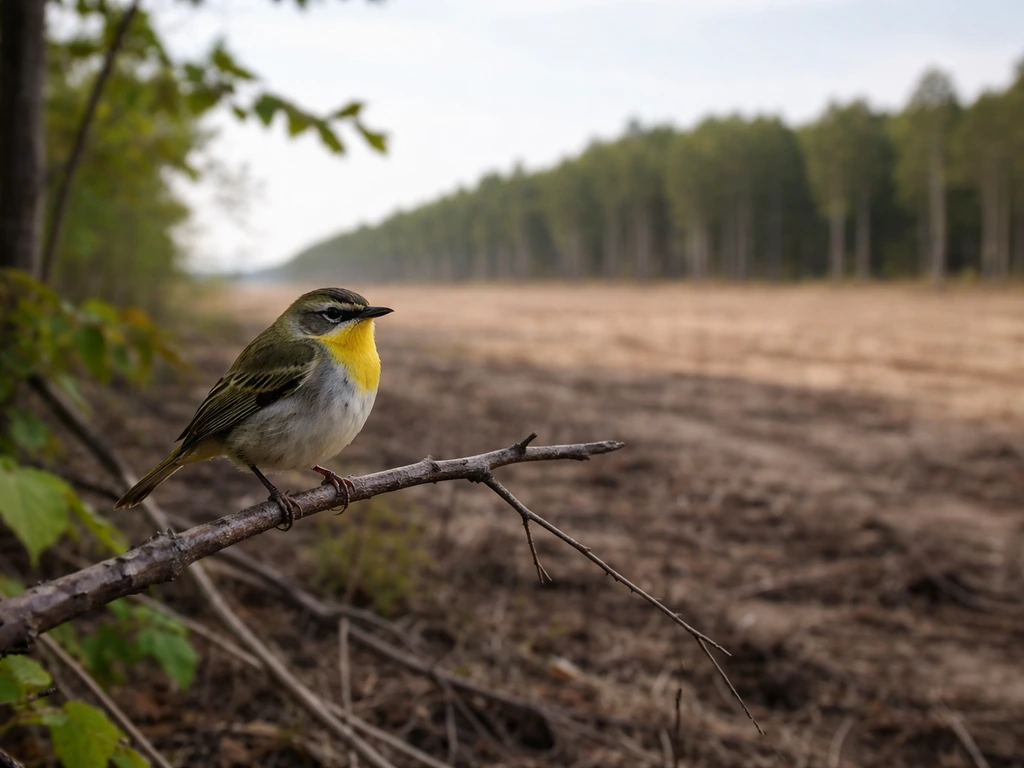
If the mother bird has not returned to the nest, your first move is not to intervene, it is to watch. Most parent birds leave the nest regularly to forage, scout for predators, or simply take a break. A one to two hour observation window from a distance is the standard triage step recommended by wildlife organizations including the BC SPCA and Audubon. If the parent returns within that window, the situation resolves itself. If she does not, and you can see chicks or eggs that are clearly distressed, exposed, or in danger, then it is time to call a wildlife rehabilitator, not to start feeding the birds yourself.
Mother Bird Has Not Returned to Nest: What to Do Now

Maya Hennessy
5 Jun 2026
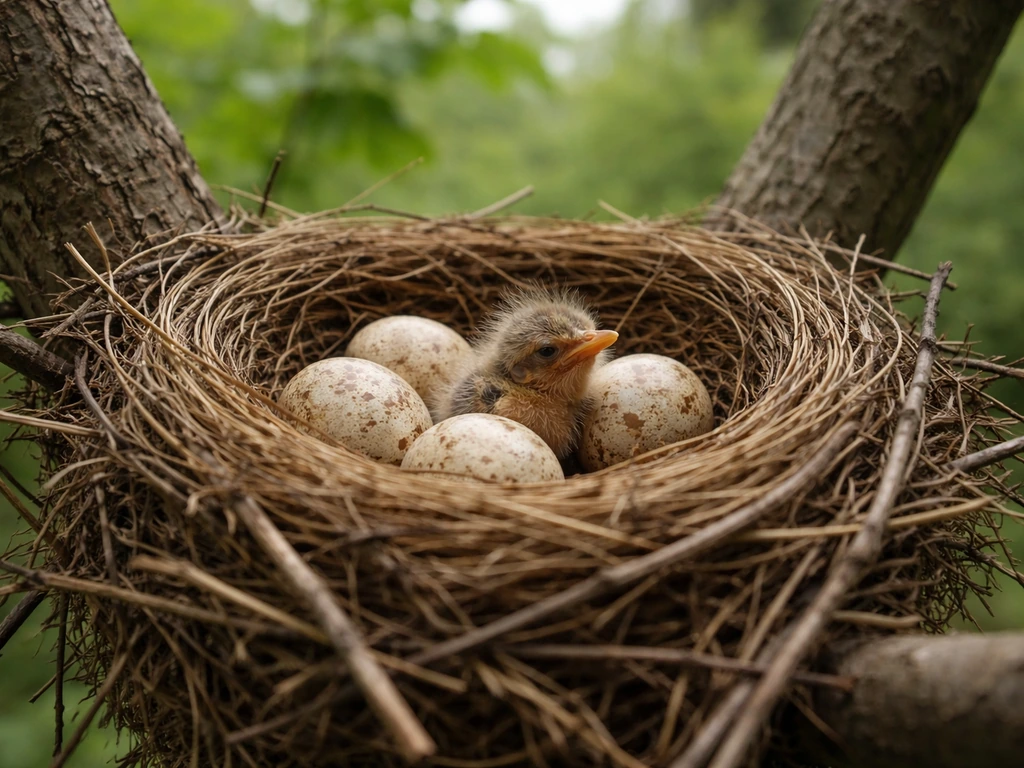
Is the mother bird actually gone, or just delayed?
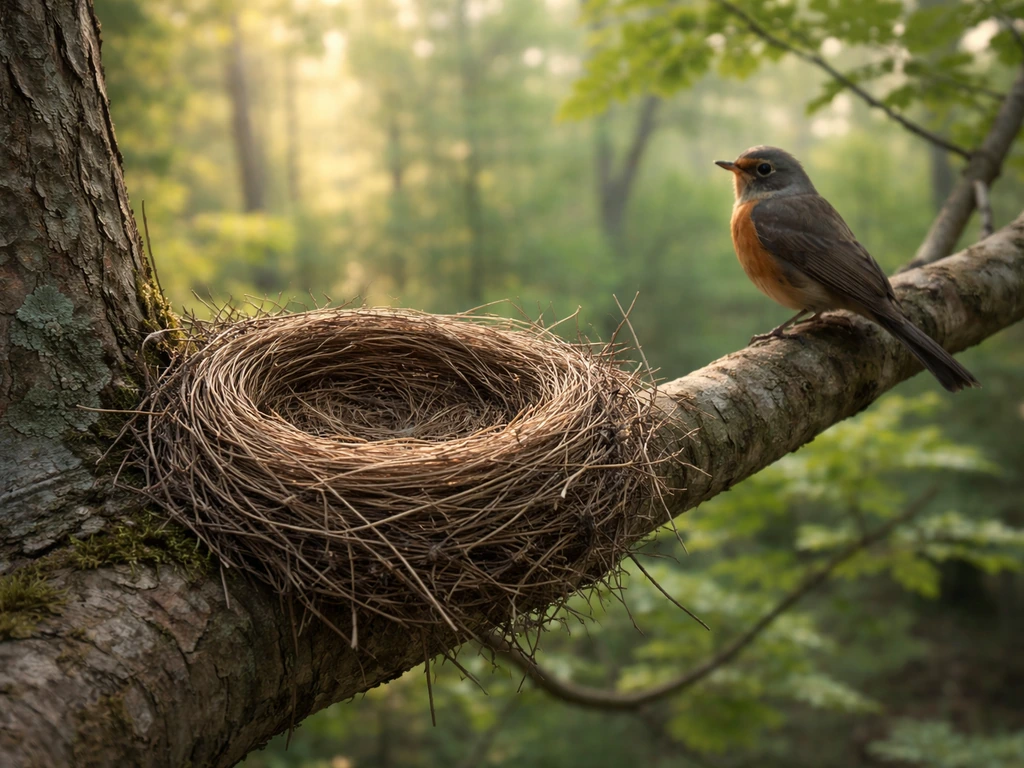
This is the most important question, and the answer is almost always: she is probably just delayed. Parent birds do not sit on the nest all day. They leave to feed, drink, bathe, and sometimes to draw predators away from the area deliberately. The nest looks empty because it is meant to look empty some of the time.
NestWatch, which runs one of the largest nest monitoring programs in North America, specifically notes that 'not seen' does not equal 'abandoned.' Eggs can be well along in incubation and chicks can be hours from hatching even when you have not spotted an adult in hours. For species with longer incubation periods, some shorebirds and raptors sit on eggs for 30 to 45 days, a few hours of quiet is completely routine.
The practical triage rule is one to two hours of quiet, distant observation. Set a timer, go inside or move well away from the nest, and watch. If the mother (or father, in many species both parents share incubation duty) returns within that window and resumes normal behavior, you are done. No intervention needed.
- Parent birds often leave the nest for 20 to 45 minutes at a stretch, especially on warm days when eggs do not need constant warming
- Both parents take incubation shifts in many species, so the bird you expect to see may simply be the one currently off duty
- Extreme heat can cause parents to deliberately shade the nest from a perch rather than sit on it
- If you or anyone else has been close to the nest recently, the parent will almost certainly wait until the area is quiet before returning
Keep your distance and avoid the most common mistakes
Audubon is direct about this: if you are standing right next to the nest, the parent bird will not come back until you leave. Your presence is the single biggest barrier to the bird returning. Human scent, movement, and noise near a nest triggers an anti-predator response in most species. The mother is not gone; she is waiting for you to go.
Beyond staying away, there are a few actions that seem helpful but cause real harm. Do not offer food or water to nestlings or eggs under any circumstances. Audubon's rehabilitator guidance is explicit: attempting to feed or water young birds is dangerous and can cause aspiration, crop impaction, or introduce the wrong nutrients for that species' developmental stage. Do not try to move the nest to a 'better' spot either. In many countries, including the UK under the Wildlife and Countryside Act 1981, disturbing or relocating an active bird nest is illegal and the RSPCA warns it frequently causes permanent abandonment.
- Do not feed nestlings — not bread, worms, water, or anything else
- Do not move the nest to a different location or height
- Do not handle eggs unless instructed by a licensed rehabilitator
- Do not attempt to 'reunite' a chick with the nest by picking it up repeatedly
- Do not keep the nest area lit with artificial lights at night, which disrupts natural behavior
- Do not post your location publicly if you suspect the bird may be a rare or protected species
What to actually look at: checking the nest and surroundings
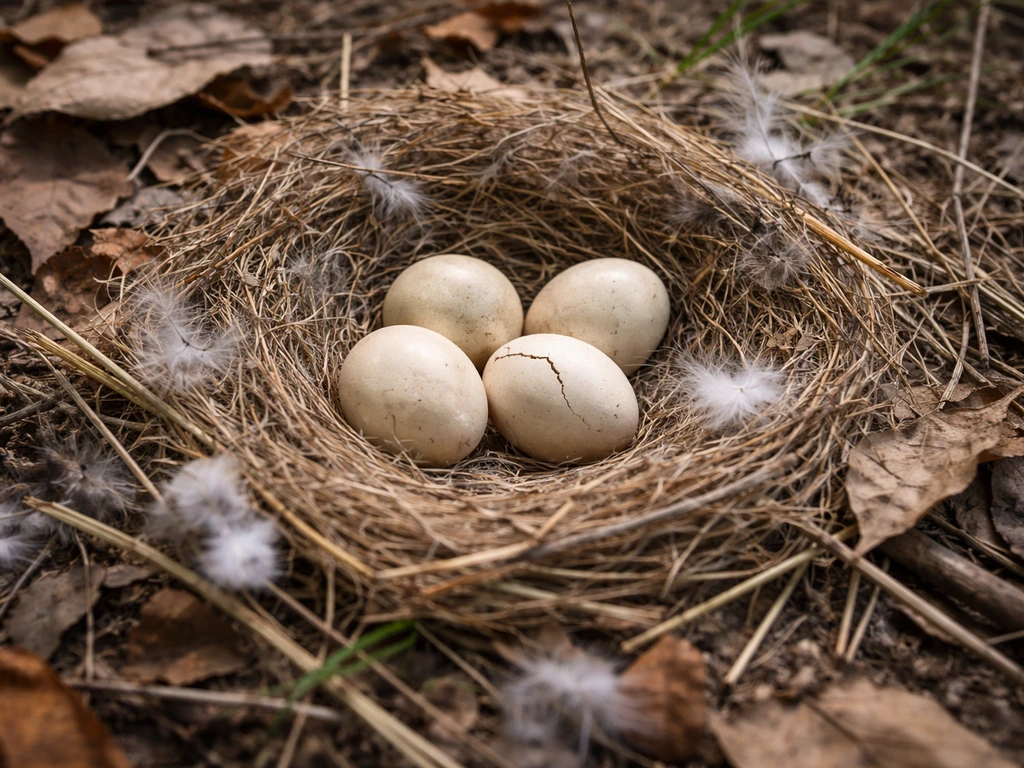
While you are observing from a distance, there are specific things worth noting because you will need this information if you end up calling for help. You are not going in for a close inspection, you are gathering what you can see from a few meters away.
Eggs
If the nest contains eggs, look for obvious cracks, broken shells, or eggs that have rolled to the edge of the nest. Healthy unhatched eggs should look intact and roughly centered. Cold eggs are not automatically dead, incubation takes days to weeks depending on species, but eggs that have been exposed for several hours in cold or very hot weather without any parental attention are at increasing risk.
Chicks
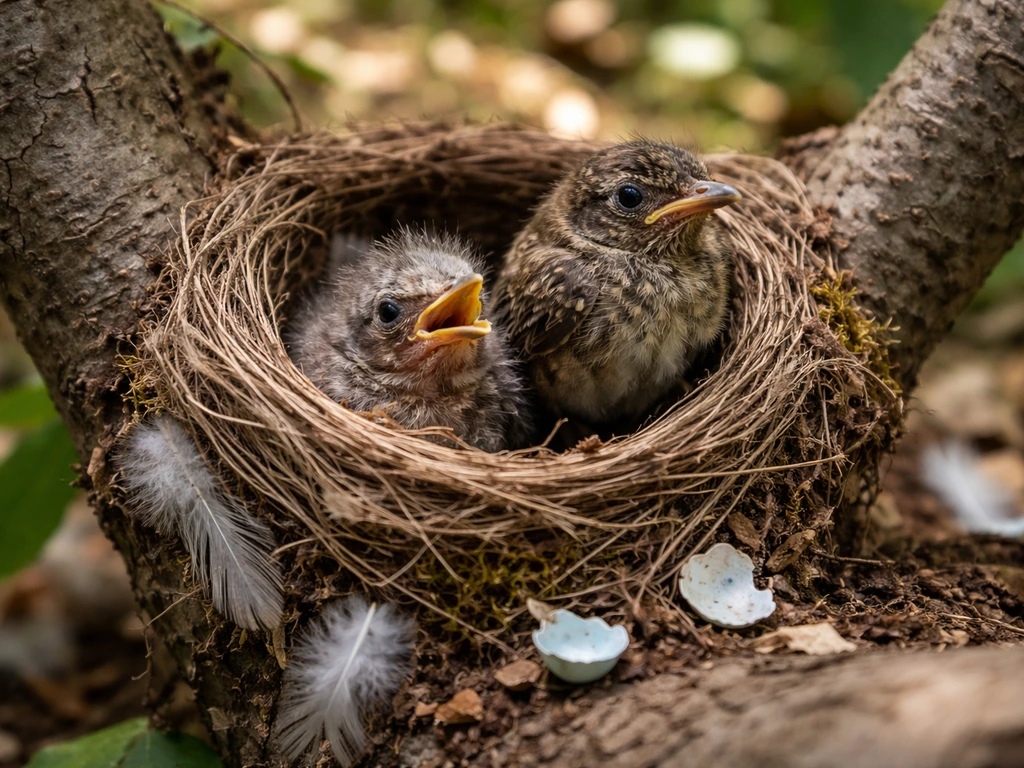
Nestlings (chicks that cannot yet fly and have little or no feathering) and fledglings (fully or mostly feathered young birds that have recently left the nest on their own) are very different situations. A fledgling hopping around on the ground near the nest is almost certainly not abandoned, it is going through the normal process of learning to fly over one to three days, and its parents are almost always nearby, just not visible. A naked or sparsely feathered nestling on the ground is more urgent because it cannot regulate its own temperature and has not left the nest voluntarily.
The surrounding area
Look around the base of the tree or structure for feathers, blood, eggshell fragments, or other signs of predator activity. Check whether the nest itself is damaged or has been partially pulled apart. Listen for alarm calls from other birds in the area, many songbirds and corvids will mob or vocally alert to predators, and persistent alarm calls near the nest site may tell you something has happened nearby. Note the time of day: early morning and late afternoon are peak feeding and visit times for most species, so absence at midday is far less significant.
Signs you need to call a wildlife rehabilitator now
After your observation window closes, the decision tree is fairly clear. The Wisconsin DNR uses roughly the one-hour mark for songbird nestlings: if a parent has not returned to resume care within about an hour of your watching, and the chick or eggs are in visible distress, professional guidance is the right next step. Here are the clearest signs that monitoring alone is no longer enough.
- No adult bird has visited the nest in two or more hours of uninterrupted, quiet observation from a distance
- A nestling (not a fledgling) is on the ground, cold to the touch, and the nest is too damaged or inaccessible to replace it
- Chicks are visibly injured — bleeding, drooping wings, unable to hold up their heads
- Eggs or chicks are exposed to extreme heat or cold and the parent has not returned in over an hour
- You found evidence of a predator attack and cannot locate the parent bird at all
- The nest has been completely destroyed and you have live nestlings
- The species involved may be protected, endangered, or a bird of conservation concern in your region
That last point matters more than it might seem. Some bird populations, particularly native songbirds, raptors, and species already under pressure from habitat loss or environmental stressors, deserve extra caution. Some bird species are already close to disappearing, so if you suspect the nest involves a species that is almost extinct, treat it as especially urgent and contact a wildlife rehabilitator right away bird populations globally have been under pressure. If you are dealing with a bird that looks unfamiliar to you, do not assume it is common. The broader decline of bird populations globally means that what looks like a routine backyard nest situation could involve a species of genuine conservation significance.
Who to call and what information to have ready
Your first call should be to a licensed local wildlife rehabilitator. In the US, you can find your nearest rehabilitator through the National Wildlife Rehabilitators Association (NWRA) or your state's wildlife agency. In the UK, the RSPCA operates a 24-hour line. In Canada, the BC SPCA and provincial wildlife agencies maintain referral networks. Audubon's advice is unambiguous: if you are unsure whether to intervene, call a wildlife rehabilitation center rather than attempting a rescue yourself.
When you call, the more specific you can be, the faster they can help you. Have the following information ready before you dial.
- Species or description: size, coloring, beak shape, leg color, any distinctive markings. Even a rough description helps narrow the species and determines the legal protection status and care requirements
- Location: urban, suburban, rural, near water, in a forest, on a cliff face, in a building — habitat context matters
- Nest type: cup nest, platform nest, cavity in a tree, ground nest, nest box, ledge, building structure
- Time since the parent was last observed: be as specific as possible
- Current condition of the chicks or eggs: how many, approximate age or feathering stage, any visible injuries
- Weather conditions now and over the past 24 hours: heat, cold, rain, wind all affect urgency
- Whether you or anyone else has touched or moved the nest, chicks, or eggs
If you suspect the bird may be a migratory species or a bird protected under the Migratory Bird Treaty Act (US), the Endangered Species Act, or equivalent legislation in your country, mention this immediately. Certain species require specialist care and cannot legally be handled by unlicensed individuals even with good intentions.
Reuniting vs. professional care: which path makes sense
Reunification, getting the parent back to the chick, is always the preferred outcome when it is biologically possible. A parent bird is better at raising its own chick than any human or rehabilitator can be, full stop. Hand-rearing wild birds is resource-intensive, has significant failure rates for some species, and results in birds that may never fully integrate back into the wild.
Reunification is realistic when: the chick is a fledgling that has simply left the nest early and both the chick and the nest are in reasonable condition; the nest is accessible and the chick can be safely returned to it (the old myth that parent birds reject chicks touched by humans is false, birds have a weak sense of smell and will not abandon a chick because you handled it briefly); and you can confirm that the parent bird is alive and in the area.
The RSPCA notes that if a chick is in immediate danger, you can move it a very short distance, no more than a few meters, to a safer spot where the parent can still locate it. The US Fish and Wildlife Service makes a similar recommendation: if you cannot locate the nest, place the nestling in a shaded area nearby rather than leaving it exposed to direct sun or predators you can place a nestling in a shaded area nearby rather than leaving it exposed to direct sun or predators. The US Fish and Wildlife Service similarly notes that if you cannot locate the nest, you can place a nestling in a shaded area nearby rather than leaving it exposed to direct sun or predators.
Professional care becomes the realistic path when the parent is confirmed dead or injured, the nest is completely destroyed with no way to reconstruct it in place, the chick is injured and requires medical treatment, or your two-hour observation confirms no parental return and the chick is deteriorating. In these cases, the kindest thing you can do is get the bird to a rehabilitator quickly, keep it warm (not hot) in a ventilated box lined with a soft cloth, in a dark and quiet place, and do not attempt feeding in the meantime.
| Situation | Best approach | Who acts |
|---|---|---|
| Parent absent less than 2 hours, chick appears healthy | Observe quietly from distance, do not disturb | You (wait and watch) |
| Fledgling on the ground, fully feathered, near nest | Leave it alone, keep pets indoors | You (leave it) |
| Nestling on the ground, no parent seen in 2+ hours | Call wildlife rehabilitator for guidance | Rehabilitator |
| Chick or eggs exposed to extreme weather, parent absent | Call rehabilitator immediately, keep chick warm | Rehabilitator |
| Visible injury to chick or signs of predator attack | Contact rehabilitator now, do not feed | Rehabilitator |
| Nest destroyed, live chicks present | Contact rehabilitator, keep chicks warm and dark | Rehabilitator |
| Suspected rare or protected species involved | Contact wildlife authority and rehabilitator | Authorities + Rehabilitator |
The bigger picture: why this matters for bird conservation
Every nest is a small piece of a much larger story. Cacao farms can also influence bird abundance, so understanding local habitat impacts helps interpret what you are seeing at a nest. Bird populations globally have been under pressure for decades from habitat loss, pesticide use, invasive predators, and climate-driven shifts in breeding timing. A key effect of the reduction in bird populations is that fewer birds remain to provide natural pest control and pollination services reduction in bird populations (effect). High concentrations of DDT in the environment have been shown to affect birds directly, leading to major declines in bird populations. The threats that caused the extinction of iconic species and pushed others to the edge of survival are still very much active today. The flightless bird that is extinct is often cited as an example of how quickly human pressures can eliminate a species entirely. How we respond to individual birds in distress is part of how those larger trends play out at the species level.
When you find a nest where the mother has not returned, there is a real chance the bird involved is a native species that has already lost ground in its local ecosystem. Some of the birds most likely to nest near human structures, swallows, swifts, sparrows, certain warblers, are species whose populations have declined sharply in recent decades. Treating that nest situation with care and getting professional help when needed is a genuine conservation action, not just a kindness to one individual bird.
If the species turns out to be something rarer, a bird of prey, a migratory species far from its typical range, or a bird that triggers your wildlife agency's interest, the information you gather and report could also contribute to local monitoring efforts. Wildlife rehabilitators and conservation organizations track nest failure events, predation patterns, and unusual sightings, and your careful observation can become useful data. For additional context on flightless bird news and how local agencies respond to unusual wildlife events, see our related guide.
The right instinct when you find a nest in trouble is not to fix it yourself, it is to watch carefully, stay calm, minimize disturbance, and connect with people who have the training and legal authorization to help. That combination of restraint and action is exactly what gives that nest the best possible chance.
FAQ
How long should I watch if it is getting dark or the weather is extreme (heat, cold, rain) and the mother bird has not returned to the nest?
Use the usual quiet window, but shorten it if conditions are harsh enough that exposed eggs or nestlings can chill or overheat quickly. If you can see eggs are cracked, nestlings look soaked, or the temperature is dropping rapidly, contact a licensed rehabilitator as soon as the problem is obvious rather than waiting for the full time window.
What if I can see the chicks or eggs, but I cannot clearly confirm whether they are distressed or just quiet?
Focus on objective cues from a few meters away: open mouths that do not change, visible gaping without movement, feathers that are very sparse, cold egg surfaces, or repeated movement patterns that look weak. If you cannot rule out distress and you do not see any adult return within about an hour, it is reasonable to call for guidance rather than guessing.
Do I need to worry if the mother bird never sits on the nest while I am watching?
It can be normal for adults to not be visible even during active hours, because they forage and may approach from different angles. Instead of only checking for a visible adult, watch for indirect signs like feeding behavior (parent landing near the nest, rapid visits) and nearby alarm calls from other birds.
Is it okay to put up a camera or binoculars when the mother bird has not returned to the nest?
Yes, as long as you keep your distance and avoid re-positioning that draws attention or increases your time near the nest. Use zoom from a fixed spot and keep movements slow. If setting up the camera requires lingering close, back away and wait until you can observe without disturbing.
My dog or cat is near the nest, and the mother bird has not returned. What should I do immediately?
The priority is predator prevention. Keep pets indoors or securely leashed and remove them from the area without approaching the nest. Do not attempt to chase the animals away from right next to the nest, as that can trigger more alarm behavior.
What if the nest is in a driveway, under a porch light, or near a busy walkway and the mother bird has not returned?
Change the human and pet traffic level around the nest rather than the nest itself. Block off access temporarily (for example, close a door, restrict a path) so parents can approach without constant disturbance. If you must reduce activity beyond what is safe or feasible, contact a rehabilitator to coordinate next steps.
Should I relocate the chicks because the mother bird has not returned?
Only in limited circumstances where you are trying to prevent immediate harm and a rehabilitator agrees with the approach. If the nest is unsafe and the chick is visible, you may move it a very short distance to a safer shaded spot where the parent can still locate it, but do not transport it far or perform repeated moves.
If I touch a chick to move it, will the mother abandon it?
In general, brief human handling is unlikely to cause abandonment. The bigger risk is repeated handling, extended exposure to cold or sun, and delaying reunification. Handle as little as possible, keep the time short, and then step back to observe from a distance.
How can I tell the difference between a fledgling that is learning and a nestling that urgently needs help when the mother bird has not returned?
A fledgling is typically feathered, active, and trying to move or hop, and it often looks slightly ragged while it learns. A nestling is usually naked or sparsely feathered and looks helpless and cold-prone. If you are unsure and the baby has little to no feathering, treat it as urgent and call for professional guidance.
What information should I collect before calling a wildlife rehabilitator for a mother bird that has not returned?
Share the location type (tree, eave, ground), approximate nest age if you can estimate (egg stage versus chick stage), the species if known, the time of day you first noticed the parent missing, weather conditions since then, and any visible injuries (broken shells, blood, damaged nest). Also note whether there are nearby predators or heavy disturbance.
What should I do if I suspect the nest involves a protected migratory bird and the mother bird has not returned?
Stop and call first. In many places, unlicensed handling is not allowed even with good intentions. A rehabilitator can advise what, if anything, you may do to prevent immediate harm and how to document the situation without breaking protections.
Is it ever appropriate to feed the chicks if the mother bird has not returned?
No, not as a rescue plan. Feeding or watering can cause aspiration and can supply the wrong diet for that species and developmental stage. If the rehabilitator instructs you to do something specific, follow their directions exactly, otherwise keep food and water away.
If there is no parent return after my observation window, what is the safest way to keep the baby alive until help arrives?
Keep the bird warm but not overheated, and place it in a ventilated container lined with a soft cloth. Keep it in a quiet, dark area. Avoid feeding and minimize handling, then transfer to the rehabilitator as soon as possible.
What if the nest is destroyed or the mother bird has not returned because a predator or storm damaged it?
Do not attempt to rebuild or reattach nests. If eggs are broken or the structure cannot be reconstructed safely, contact a rehabilitator. They can determine whether any intact eggs or injured chicks can be stabilized and what legal and practical steps apply.
How urgent is it if I only see eggs and the mother bird has not returned for several hours?
Urgency depends on exposure. Incubating eggs can remain unincubated for stretches without immediate death depending on species and weather, but eggs that have been chilled or overheated, cracked, or rolled out of the nest carry higher risk. If you see broken shells, rolling, or extreme temperatures, treat it as more urgent and call.
Next Article
Causes of Bird Extinction: Past Drivers and Today’s Threats
Learn the causes of bird extinction, from habitat loss to invasives and climate, plus how to identify and fix them.